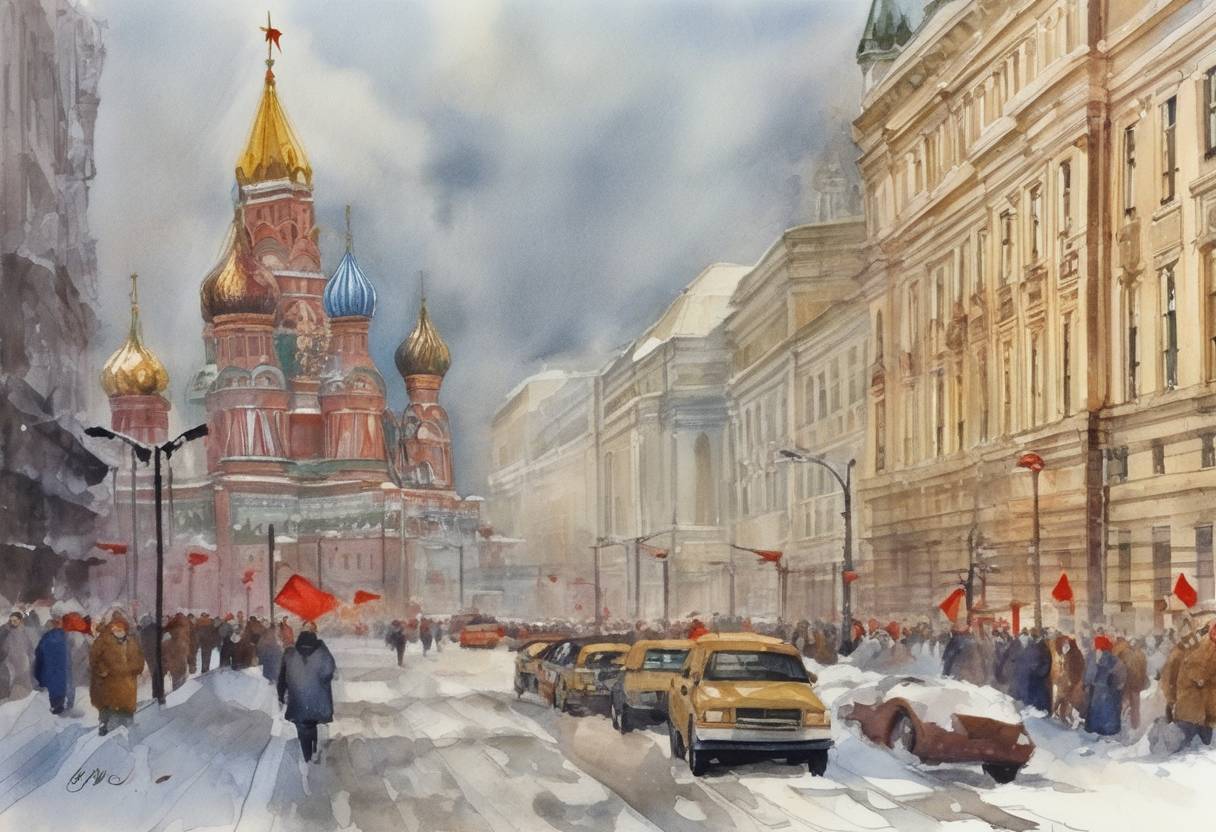
Dissolution of the Soviet Union: December 26, 1991
On December 26, 1991, the Supreme Soviet of the Soviet Union formally dissolved the Soviet Union, marking a pivotal moment in world history and the definitive end of the Cold War. This event was the culmination of a series of political changes and reforms that had been unfolding over the preceding years.
Context and Background
The dissolution of the Soviet Union was preceded by a period of significant political and economic turmoil. In the 1980s, the Soviet Union faced numerous challenges, including economic stagnation, political corruption, and increasing demands for autonomy from various Soviet republics.
Key Factors Leading to Dissolution:
Perestroika and Glasnost: Initiated by Mikhail Gorbachev, the General Secretary of the Communist Party, these policies aimed to reform the Soviet economy and increase transparency in government. However, they also exposed the deep-seated inefficiencies and corruption within the system.
Nationalist Movements: Throughout the late 1980s, nationalist movements gained momentum in several Soviet republics, including the Baltic states (Estonia, Latvia, and Lithuania), Ukraine, and Georgia. These movements sought greater independence from Moscow’s control.
Failed Coup of August 1991: A coup attempt by hardline members of the Communist Party in August 1991 aimed to reverse Gorbachev’s reforms. The coup failed, but it significantly weakened Gorbachev’s authority and accelerated the push for independence among the republics.
Economic Decline: The Soviet economy was in a dire state, with shortages of basic goods, declining industrial output, and a growing budget deficit. The economic crisis further eroded public confidence in the government.
The Dissolution Process
The formal dissolution process began with the Belavezha Accords, signed on December 8, 1991, by the leaders of Russia, Ukraine, and Belarus. These accords declared that the Soviet Union had effectively ceased to exist and established the Commonwealth of Independent States (CIS) in its place.
On December 25, 1991, Mikhail Gorbachev resigned as President of the Soviet Union, acknowledging the end of the Soviet state. The following day, December 26, the Supreme Soviet, the highest legislative body of the Soviet Union, voted to dissolve itself and formally recognized the independence of the republics.
Aftermath and Historical Significance
The dissolution of the Soviet Union had profound implications for global politics:
End of the Cold War: The dissolution marked the end of the Cold War, a period of geopolitical tension between the Soviet Union and the United States that had dominated international relations since the end of World War II.
Emergence of New States: Fifteen independent republics emerged from the former Soviet Union, each embarking on its own path toward political and economic reform.
Shift in Global Power Dynamics: The United States emerged as the sole superpower, leading to a unipolar world order in the immediate post-Cold War era.
Economic and Social Challenges: The transition from a centrally planned economy to market economies was fraught with difficulties, leading to economic hardship and social upheaval in many of the newly independent states.
The dissolution of the Soviet Union remains a significant event in world history, symbolizing the end of an era and the beginning of a new geopolitical landscape.