The Battle of Plattsburgh: A Pivotal American Victory
1814 · Plattsburgh, United States
The Battle of Plattsburgh ended in an American victory during the War of 1812, securing the northern border of the United States.
January 8, 1815
The Battle of New Orleans was fought, marking the last major battle of the War of 1812. American forces under General Andrew Jackson defeated the British Army, despite the war having officially ended with the Treaty of Ghent.
New Orleans, United States | United States Army
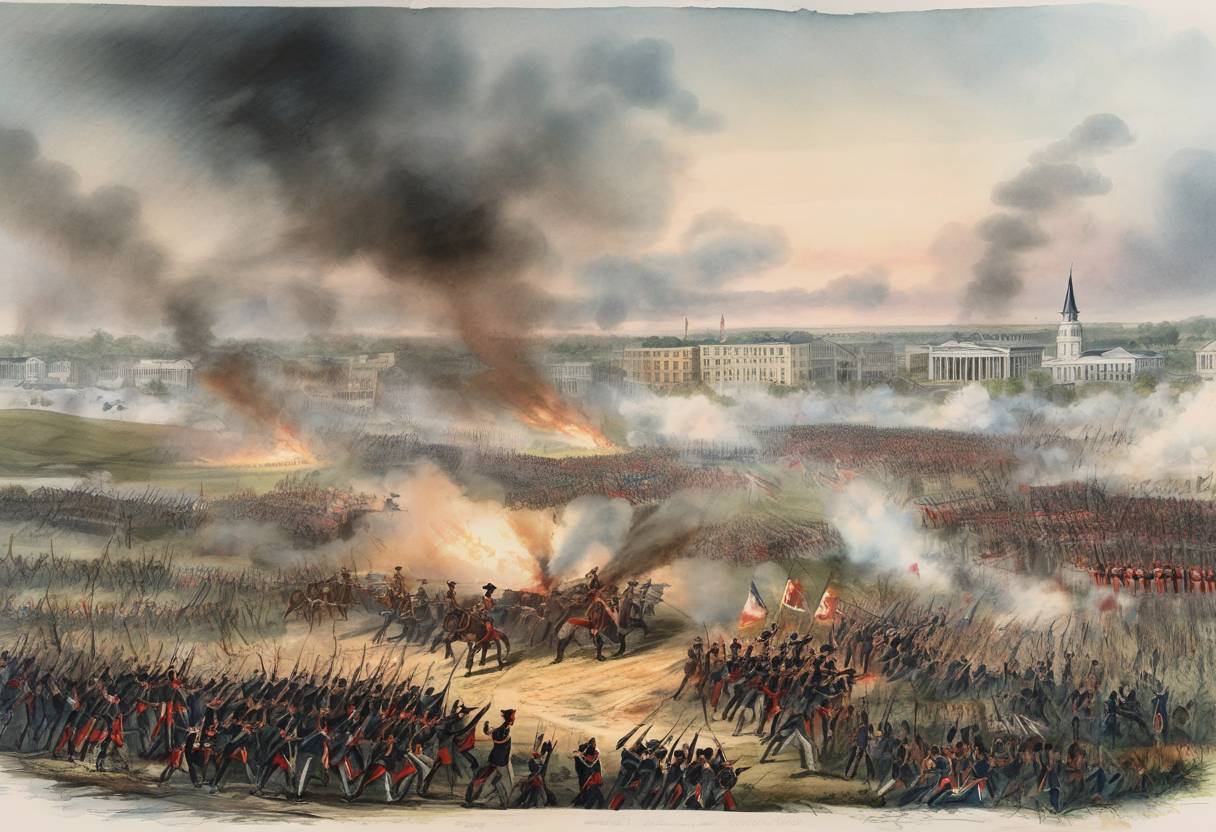
The Battle of New Orleans, fought on January 8, 1815, was the last major battle of the War of 1812. This significant engagement saw American forces, led by General Andrew Jackson, achieve a decisive victory over the British Army, despite the war having officially ended with the signing of the Treaty of Ghent on December 24, 1814.
War of 1812 Background: The War of 1812 was primarily a conflict between the United States and Great Britain, driven by issues such as trade restrictions due to Britain’s ongoing war with France, the impressment of American sailors into the British Navy, and American expansionist desires.
Treaty of Ghent: Negotiations for peace began in August 1814 in Ghent, Belgium. The treaty, signed on December 24, 1814, effectively ended the war, restoring relations between the two nations to status quo ante bellum, meaning no territorial gains for either side.
Communication Delays: Due to the slow communication methods of the time, news of the treaty did not reach the combatants in North America until weeks after the Battle of New Orleans.
American Forces: General Andrew Jackson commanded a diverse force comprising regular U.S. Army soldiers, state militia from Tennessee, Kentucky, and Louisiana, free African Americans, Native Americans, and even pirates led by Jean Lafitte.
British Forces: The British, commanded by Major General Sir Edward Pakenham, aimed to capture New Orleans and gain control of the Mississippi River, which was vital for trade and strategic military movements.
Battlefield: The battle took place on the Chalmette Plantation, just outside New Orleans. Jackson’s forces were well-entrenched behind earthworks, giving them a significant defensive advantage.
Outcome: The British launched a frontal assault on the American positions but were met with devastating artillery and musket fire. The British suffered heavy casualties, with over 2,000 soldiers killed, wounded, or captured, including General Pakenham. American casualties were significantly lower, with around 70 killed or wounded.
Impact on the War: Although the battle occurred after the peace treaty was signed, it was a significant morale booster for the United States and solidified Andrew Jackson as a national hero.
Political Consequences: The victory at New Orleans helped to foster a sense of national pride and unity, contributing to the “Era of Good Feelings” that followed the war.
Andrew Jackson’s Legacy: The battle propelled Jackson to national prominence, eventually leading to his election as the seventh President of the United States in 1828.
Historical Perspective: The Battle of New Orleans is often remembered for its dramatic and unexpected American victory, underscoring the importance of effective leadership and strategic defense.
In conclusion, the Battle of New Orleans remains a pivotal moment in American history, symbolizing resilience and the complexities of war in an era of slow communication and evolving national identities.
Source: en.wikipedia.org