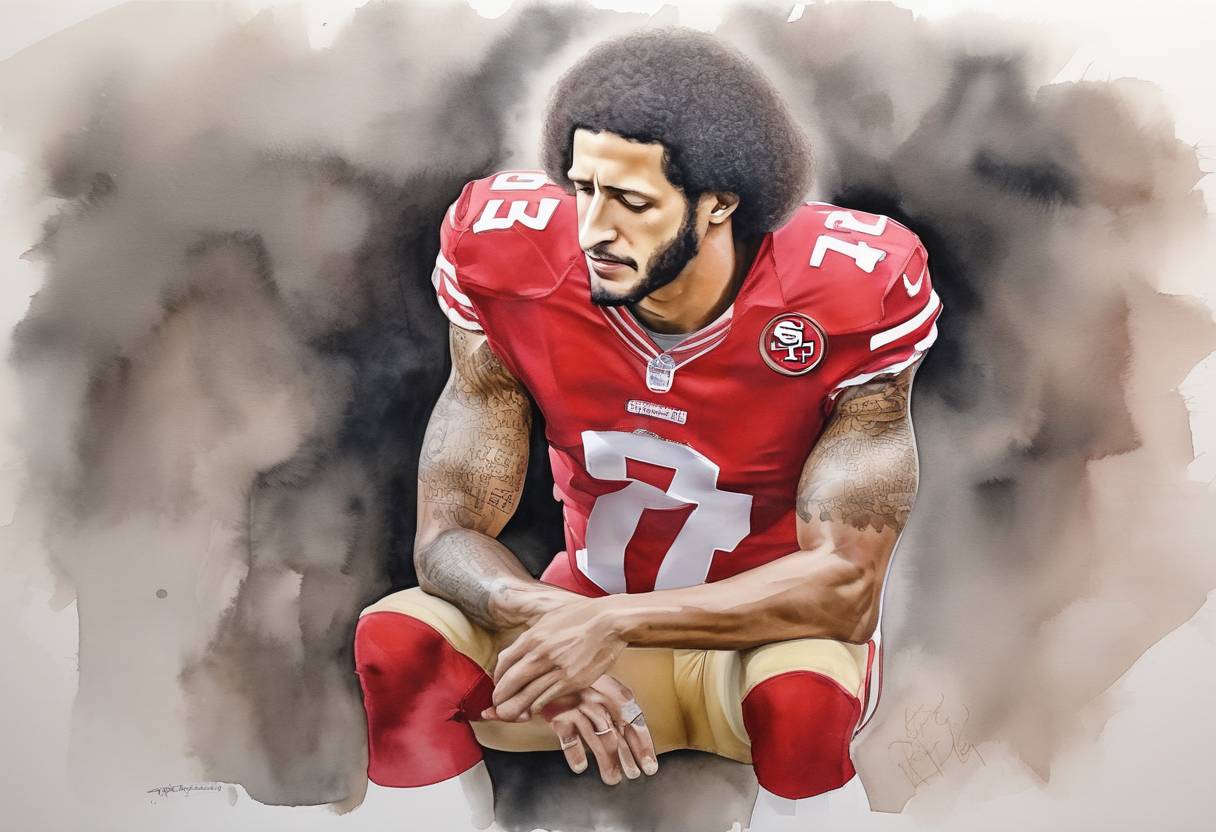
Colin Kaepernick’s Protest on August 29, 2016
On August 29, 2016, Colin Kaepernick, then a quarterback for the San Francisco 49ers, gained national attention for his protest against racial injustice and police brutality. This protest took place during a preseason NFL game against the Green Bay Packers. Kaepernick chose to kneel during the playing of the United States national anthem, a gesture that sparked widespread discussion and controversy.
Context and Background
- Initial Protest: Kaepernick’s protest actually began on August 26, 2016, when he sat on the bench during the national anthem in a game against the Green Bay Packers. However, it was on August 29 that his actions were widely noticed and reported.
- Reason for Protest: Kaepernick stated that he refused to “stand up to show pride in a flag for a country that oppresses black people and people of color.” His protest was a response to the numerous incidents of police brutality and systemic racism in the United States.
Key Events Leading Up to the Protest
- Social Climate: The United States was experiencing heightened tensions regarding race relations, with several high-profile cases of police shootings involving African Americans.
- Personal Conviction: Kaepernick, who had been increasingly vocal about social justice issues on social media, decided to use his platform as an NFL player to bring attention to these issues.
The Aftermath and Consequences
- Public Reaction: Kaepernick’s protest received mixed reactions. Some praised him for his courage and bringing attention to important social issues, while others criticized him for what they perceived as disrespect to the flag and military.
- Support and Criticism: The protest sparked a nationwide debate on patriotism, free speech, and the role of athletes in political discourse. Many athletes and public figures expressed support, while others, including some political leaders, condemned his actions.
- Career Impact: Kaepernick became a free agent in 2017 and has not been signed by an NFL team since, leading to allegations that he was blacklisted due to his activism. He filed a grievance against the NFL, which was settled in 2019.
Broader Historical Significance
- Movement and Legacy: Kaepernick’s protest inspired a movement among athletes across various sports, who began kneeling during the anthem in solidarity. It also contributed to a broader conversation about race, policing, and the role of protest in sports.
- Cultural Impact: The protest is seen as a pivotal moment in the intersection of sports and social justice, influencing how athletes engage with political and social issues.
Kaepernick’s actions on August 29, 2016, remain a significant moment in the ongoing dialogue about race and justice in America, highlighting the power of peaceful protest and the complex dynamics of activism within professional sports.