Establishment of the Irish Free State: December 6, 1922
1922 · Dublin, Ireland
The Irish Free State was established as a self-governing dominion of the British Commonwealth of Nations.
April 29, 1916
The Easter Rising in Ireland ends with the unconditional surrender of Irish nationalists to British forces.
Dublin, Ireland | Irish Volunteers
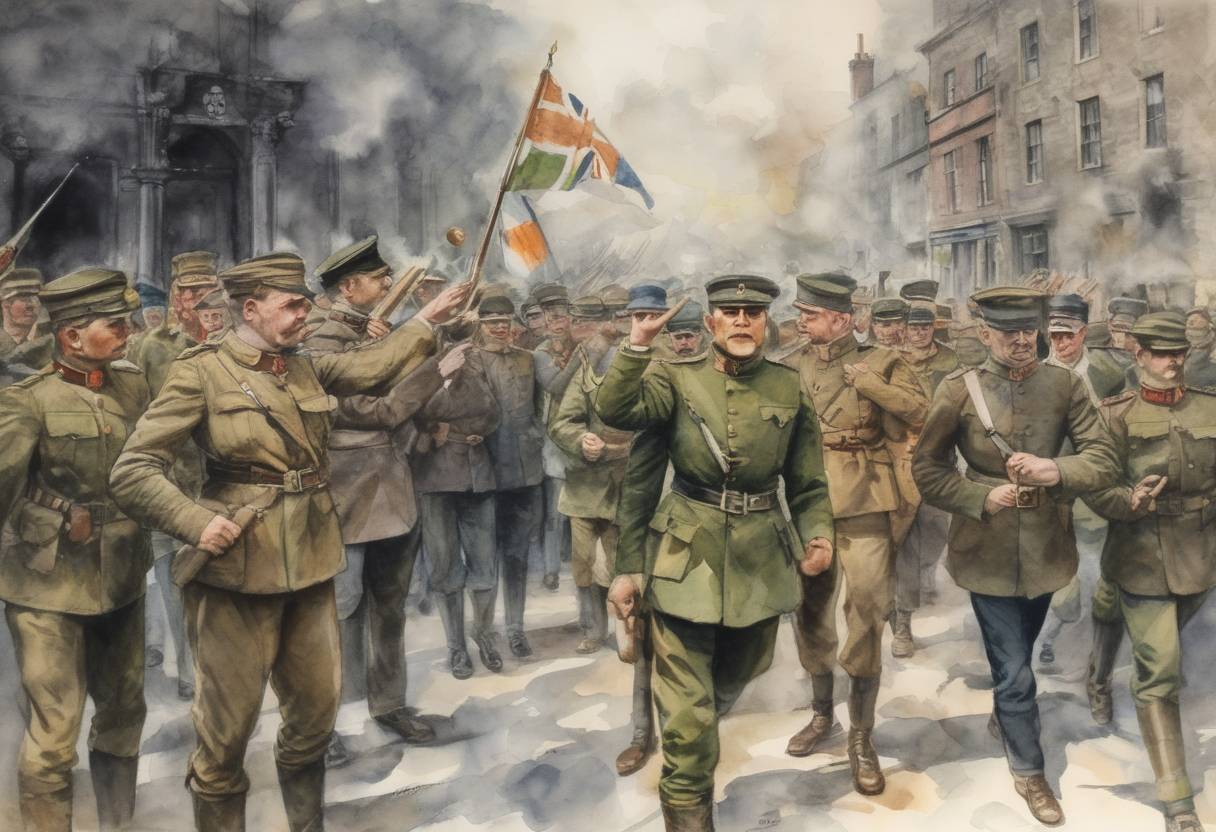
The Easter Rising, a pivotal event in Irish history, concluded with the unconditional surrender of Irish nationalists to British forces on April 29, 1916. This insurrection was a significant moment in the struggle for Irish independence, marking a turning point in the relationship between Ireland and Britain.
The Easter Rising began on April 24, 1916, when Irish republicans launched an armed insurrection against British rule in Ireland. The rebellion was primarily orchestrated by the Irish Republican Brotherhood, along with other nationalist groups like the Irish Volunteers and the Irish Citizen Army. The leaders aimed to establish an independent Irish Republic while Britain was heavily engaged in World War I.
The insurrection was strategically planned to coincide with Easter Week, and the rebels seized key locations in Dublin, including the General Post Office (GPO), which served as their headquarters. The Proclamation of the Irish Republic was read by Patrick Pearse, one of the leaders, declaring Ireland’s independence.
On April 29, 1916, Patrick Pearse, acting on behalf of the Irish republicans, formally surrendered to British Brigadier General William Lowe. The surrender took place at the British military headquarters in Dublin, marking the end of the six-day rebellion. The decision to surrender was influenced by the realization that continued resistance was futile and would only lead to more civilian deaths and destruction.
The Easter Rising remains a seminal event in Irish history, symbolizing the enduring struggle for national sovereignty and inspiring future generations in the quest for independence.
Source: en.wikipedia.org