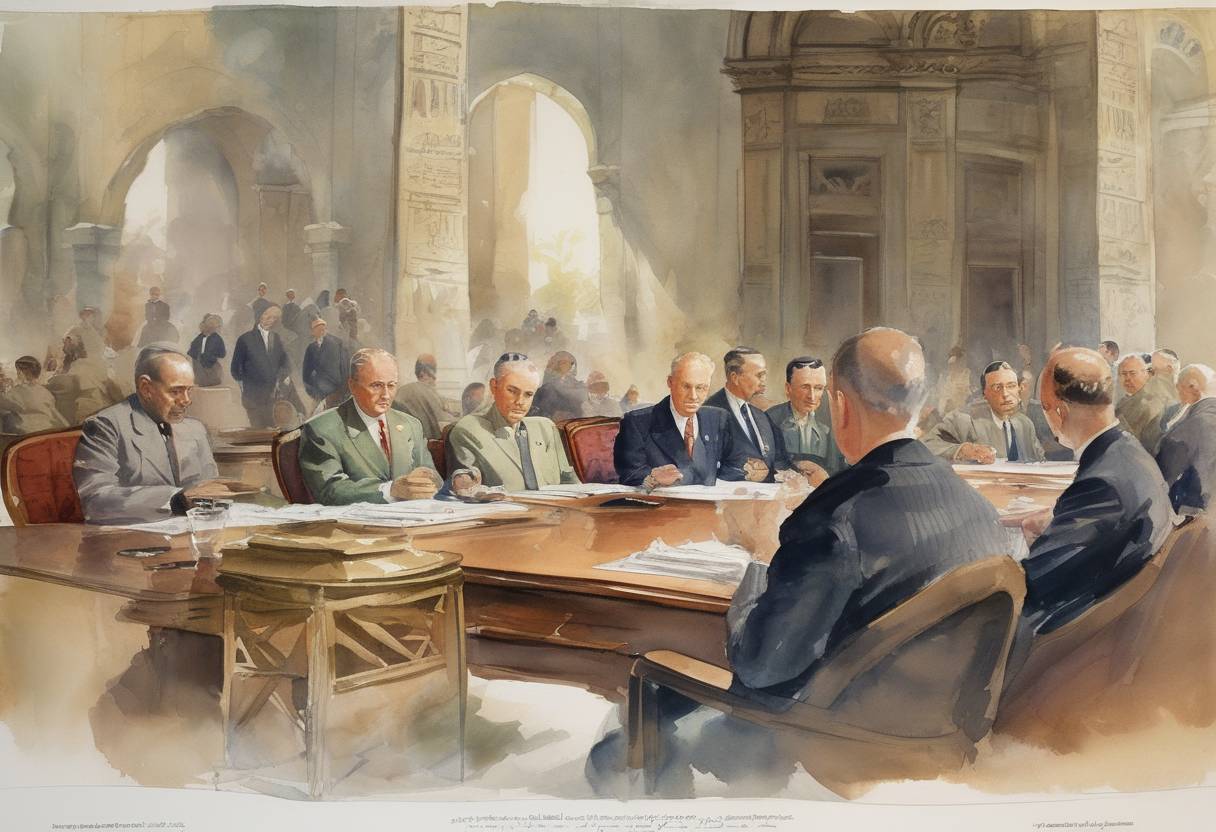
The Cairo Conference: November 22, 1943
The Cairo Conference, which began on November 22, 1943, was a significant meeting during World War II where Allied leaders gathered to discuss the ongoing war efforts against Japan and the future of Asia post-war. This conference was held in Cairo, Egypt, and was attended by key figures such as U.S. President Franklin D. Roosevelt, British Prime Minister Winston Churchill, and Generalissimo Chiang Kai-shek of the Republic of China.
Context and Background
By late 1943, the Allies had made considerable progress in the European and Pacific theaters. The need to strategize the next phases of the war and to plan for the geopolitical landscape after the defeat of the Axis powers was becoming increasingly urgent. The Cairo Conference was one of several high-level meetings aimed at coordinating military efforts and shaping the post-war world.
Key Objectives
Military Strategy Against Japan: The primary focus was on the ongoing war against Japan. The leaders discussed strategies to intensify military operations in the Pacific and to ensure the eventual unconditional surrender of Japan.
Post-War Asia: The conference aimed to address the future of territories occupied by Japan and to outline the post-war order in Asia. This included discussions on the independence and territorial integrity of countries affected by Japanese expansion.
Support for China: Recognizing China’s crucial role in the war against Japan, the Allies sought to bolster Chinese resistance and ensure its position as a major power in post-war Asia.
Outcomes and Significance
Cairo Declaration: The conference concluded with the issuance of the Cairo Declaration on December 1, 1943. This document outlined the Allies’ commitment to continue the war against Japan and specified that territories seized by Japan, such as Manchuria, Taiwan, and the Pescadores Islands, would be restored to China. It also emphasized the independence of Korea “in due course.”
Strengthening Alliances: The conference reinforced the alliance between the United States, the United Kingdom, and China, highlighting their shared goals and mutual support in the fight against Axis powers.
Foundation for Future Conferences: The discussions and agreements at Cairo set the stage for subsequent conferences, such as the Tehran Conference, which began shortly after Cairo and included discussions with Soviet leader Joseph Stalin.
Aftermath
The Cairo Conference played a crucial role in shaping Allied strategy in the Pacific and laid the groundwork for post-war arrangements in Asia. The decisions made at Cairo influenced the eventual outcomes of World War II and the geopolitical landscape of the region in the latter half of the 20th century.
In summary, the Cairo Conference was a pivotal moment in World War II diplomacy, reflecting the Allies’ commitment to a coordinated military strategy and a vision for a post-war world that would prevent future conflicts and promote stability in Asia.