Dr. Mae Jemison: First African American Woman in Space
1992 · Cape Canaveral, United States
Dr. Mae Jemison becomes the first African American woman in space aboard Space Shuttle Endeavour.
June 18, 1983
Sally Ride became the first American woman in space as a crew member on the Space Shuttle Challenger for mission STS-7. Her flight marked a significant milestone in the history of NASA and the role of women in space exploration.
Cape Canaveral, United States | NASA
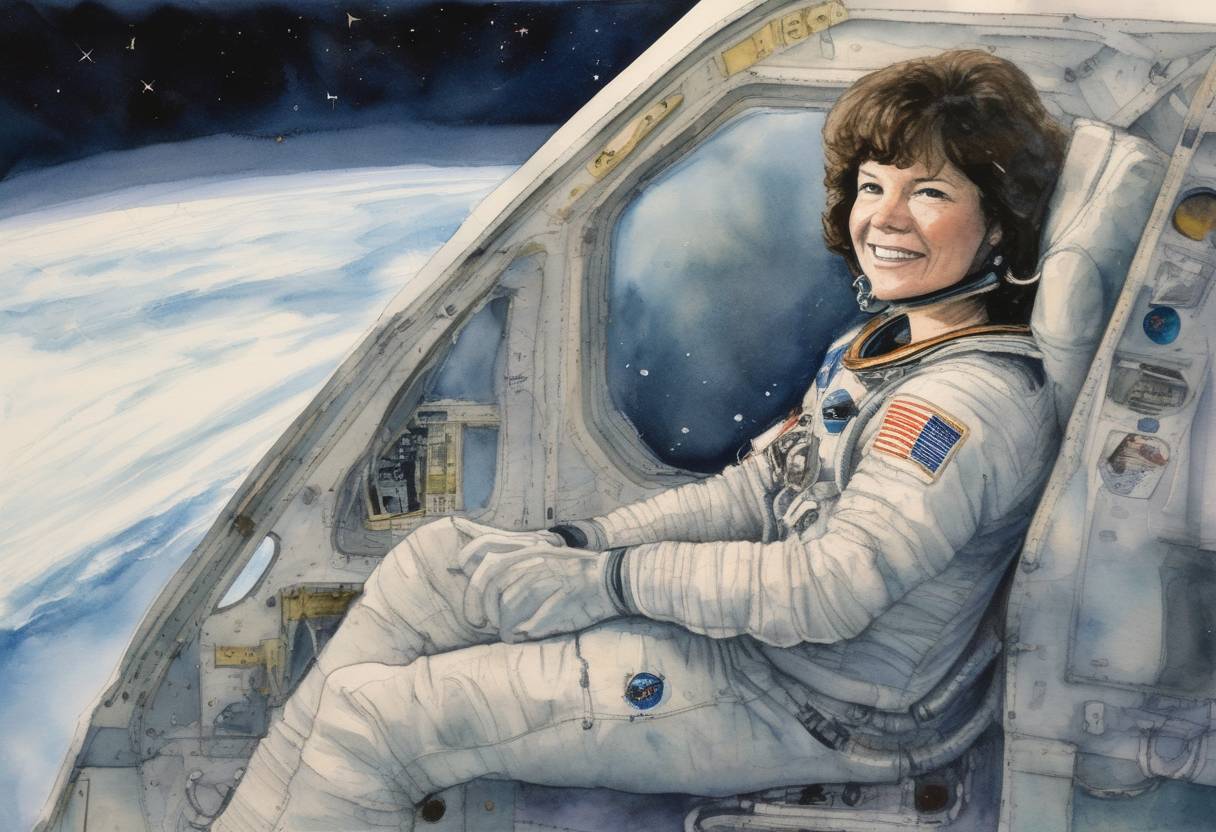
On June 18, 1983, Sally Ride made history as the first American woman to travel into space. She was a crew member on the Space Shuttle Challenger for mission STS-7, a landmark event in the history of NASA and a significant milestone for women in space exploration.
Before Sally Ride’s historic flight, the role of women in space exploration had been limited. The Soviet Union had already sent the first woman, Valentina Tereshkova, into space in 1963, but it took two decades for the United States to follow suit. The inclusion of women in NASA’s astronaut program began in earnest in the late 1970s, as the agency sought to diversify its astronaut corps.
Sally Ride was selected as an astronaut candidate in 1978, part of NASA’s first class to include women. She was a physicist with a Ph.D. from Stanford University and had a keen interest in space and science. Her selection was part of a broader effort to integrate women into roles traditionally dominated by men, reflecting changing societal attitudes towards gender equality.
STS-7 was the seventh mission of NASA’s Space Shuttle program and the second flight for the Challenger orbiter. The mission objectives included deploying two communications satellites, conducting scientific experiments, and testing the Shuttle’s robotic arm, the Canadarm.
Sally Ride’s responsibilities included operating the Canadarm to deploy and retrieve satellites, conducting experiments, and assisting with other mission objectives. Her presence on the mission was a powerful symbol of progress and inspired many young women to pursue careers in science and engineering.
Sally Ride’s journey into space was a pivotal moment in NASA’s history and the broader movement for gender equality in STEM fields. Her achievement demonstrated that women could perform the same demanding roles as their male counterparts in space exploration.
Following her historic flight, Ride became a prominent advocate for science education and the encouragement of young women to pursue careers in science, technology, engineering, and mathematics (STEM). She later served on the panels investigating the Challenger and Columbia shuttle disasters and founded Sally Ride Science, an organization dedicated to promoting STEM education.
Sally Ride flew on one more space mission, STS-41-G, in 1984, before retiring from NASA in 1987. Her legacy continues to inspire generations, and her contributions to space exploration and science education remain influential.
In recognition of her achievements, Ride received numerous awards and honors, including induction into the Astronaut Hall of Fame. Her life and career are celebrated as a testament to the power of determination and the importance of breaking barriers.
Sally Ride’s journey on June 18, 1983, remains a defining moment in the history of space exploration, marking the beginning of a more inclusive era in the field.
Source: www.nasa.gov