The Storm of 1360: Impact on the English Siege of Paris
1360 · Paris, France
A major storm forces the English army, led by King Edward III, to abandon its siege of Paris and retreat to the safety of the English-held territory of Calais.
November 26, 0885
The Siege of Paris by Viking forces begins. The Vikings, led by Sigfred and Sinric, launch an attack on the city, which was a significant event during the Viking invasions of France.
Paris, West Francia | Viking forces
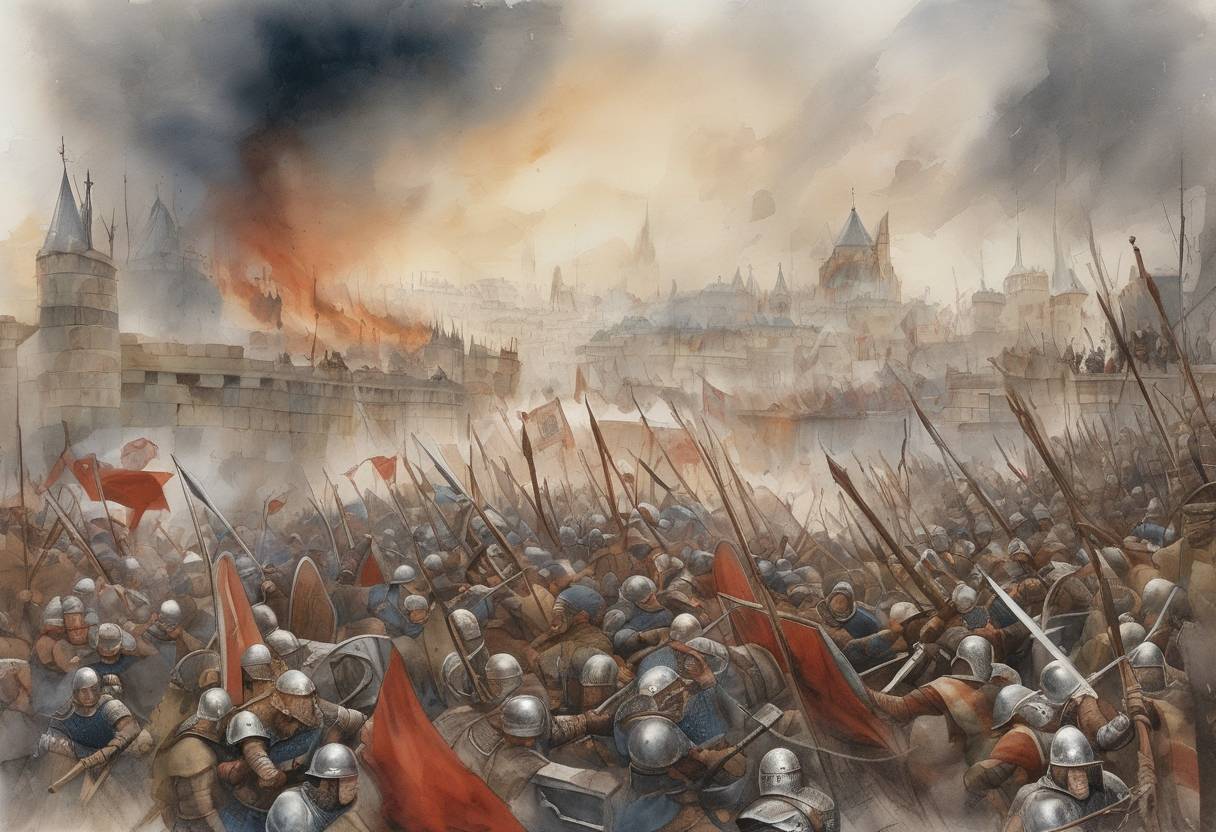
The Siege of Paris, which began on November 26, 885, was a pivotal event during the Viking invasions of the Frankish territories. This siege marked a significant confrontation between the Norse invaders and the Carolingian Empire, highlighting the persistent threat posed by Viking forces to European settlements during the late 9th century.
Viking Raids: By the late 9th century, Viking raids were a common occurrence across Europe. The Norsemen, known for their seafaring prowess, had been launching raids on the Frankish territories for decades, exploiting the region’s wealth and political fragmentation.
Frankish Empire: At the time, the Carolingian Empire, once unified under Charlemagne, was divided and weakened by internal strife. This fragmentation made it difficult to mount a coordinated defense against the Viking incursions.
Sigfred and Sinric: The Viking forces were led by Sigfred and Sinric. Sigfred was a prominent Viking chieftain, while Sinric’s role is less clearly defined in historical records, though he is often mentioned as a leader alongside Sigfred.
Odo, Count of Paris: The defense of Paris was led by Odo, Count of Paris, who would later become King of West Francia. His leadership during the siege was crucial in the city’s resistance against the Viking forces.
Initial Attack: On November 26, 885, the Viking fleet, reportedly consisting of hundreds of ships and thousands of warriors, arrived at Paris. The city, strategically located on the Île de la Cité in the Seine River, was a prime target due to its wealth and significance.
Defense of Paris: Despite being outnumbered, the defenders of Paris, under Odo’s command, fortified the city and prepared for a prolonged siege. The city’s strategic position and fortifications played a crucial role in its defense.
Viking Tactics: The Vikings employed various tactics, including direct assaults and attempts to undermine the city’s defenses. However, the defenders’ resilience and strategic use of the city’s fortifications thwarted these efforts.
Prolonged Siege: The siege lasted until October 886, with the Vikings unable to breach the city’s defenses. Eventually, they negotiated a withdrawal in exchange for a ransom, a common practice during Viking raids.
Political Consequences: The successful defense of Paris elevated Odo’s status, leading to his eventual election as King of West Francia. The siege also underscored the need for stronger defenses and more centralized authority to repel Viking invasions.
Legacy: The Siege of Paris is remembered as a testament to the resilience of the city’s defenders and a turning point in the Carolingian response to Viking threats. It highlighted the importance of fortified urban centers in medieval warfare and the shifting power dynamics within the Frankish territories.
The Siege of Paris remains a significant chapter in the history of Viking invasions, illustrating the complex interplay between invaders and defenders during this tumultuous period in European history.
Source: en.wikipedia.org