Joseph Smith Jr. and the Golden Plates: September 21, 1827
1827 · Manchester, United States
Joseph Smith Jr. is said to have obtained the golden plates, according to his account, which later became the basis of the Book of Mormon.
March 24, 1832
The Mormon founder Joseph Smith was tarred and feathered in Hiram, Ohio.
Hiram, United States | Church of Jesus Christ of Latter-day Saints
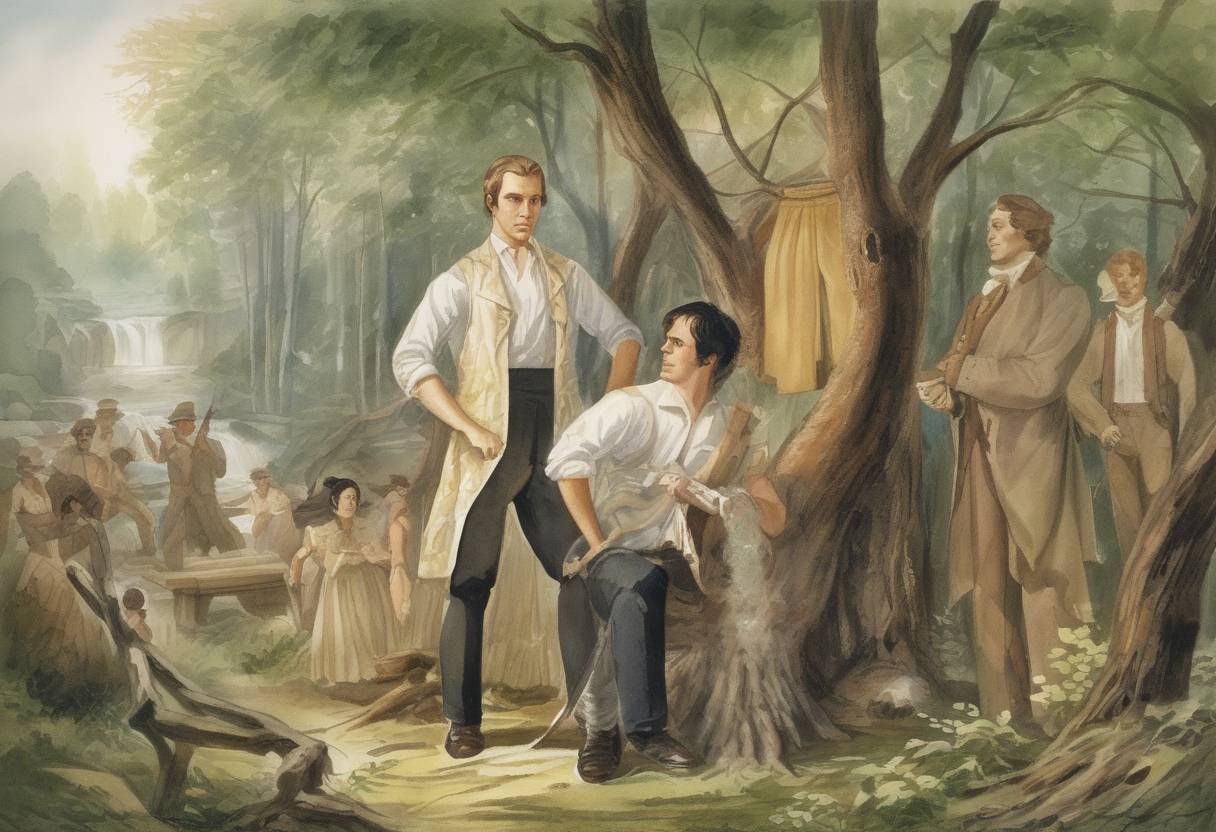
On the night of March 24, 1832, Joseph Smith, the founder of the Church of Jesus Christ of Latter-day Saints (commonly known as the Mormon Church), was subjected to a violent attack in Hiram, Ohio. This event is a significant moment in the early history of the Latter-day Saint movement, reflecting the intense opposition and persecution faced by its early leaders and followers.
Early Mormonism: Joseph Smith founded the Church in 1830, following what he described as a series of divine revelations. The movement quickly attracted followers but also faced significant opposition due to its unconventional beliefs and rapid growth.
Hiram, Ohio: By 1831, Smith had moved to Ohio, which became a center for the burgeoning church. He was staying in Hiram, Ohio, at the home of John Johnson, a church member, while working on the translation of the Bible and other church matters.
Tensions: The presence of the Mormons in Ohio, their communal lifestyle, and their religious claims stirred local animosity. Economic, religious, and social tensions contributed to the hostility against Smith and his followers.
The Incident: On the night of March 24, 1832, a mob of local men broke into the Johnson home. They dragged Joseph Smith from his bed, where he was staying with his infant son, and took him outside.
Tar and Feathering: The mob proceeded to tar and feather Smith, a form of public humiliation and punishment. This involved stripping him, covering him with hot tar, and then applying feathers, causing both physical pain and public disgrace.
Sidney Rigdon: Sidney Rigdon, a close associate of Smith and a prominent leader in the church, was also attacked that night. He was dragged by his heels, causing severe injuries.
Recovery and Resilience: Despite the attack, Smith continued his work and leadership of the church. The event did not deter him or his followers but rather strengthened their resolve.
Public Perception: The attack drew attention to the persecution faced by the Mormons, highlighting the religious intolerance of the time. It also garnered sympathy from some quarters, as the brutality of the attack was condemned.
Historical Impact: This incident is one of several that illustrate the early struggles of the Mormon Church. It underscores the challenges faced by new religious movements in 19th-century America and the broader context of religious freedom and intolerance.
Legacy: The resilience shown by Smith and his followers in the face of such persecution contributed to the eventual growth and establishment of the Church of Jesus Christ of Latter-day Saints as a significant religious movement in the United States and beyond.
This event is a poignant reminder of the difficulties faced by religious minorities and the enduring impact of faith and perseverance in the face of adversity.
Source: www.britannica.com