U.S. Government Rationing Commodities During World War II: March 23, 1942
1942 · Washington, D.C., United States
The U.S. government began rationing several commodities, including oil and rubber, during World War II.
April 5, 1933
U.S. President Franklin D. Roosevelt signed Executive Order 6102, which required Americans to surrender their gold coins, gold bullion, and gold certificates to the Federal Reserve in exchange for paper currency.
Washington, D.C., United States | Federal Reserve
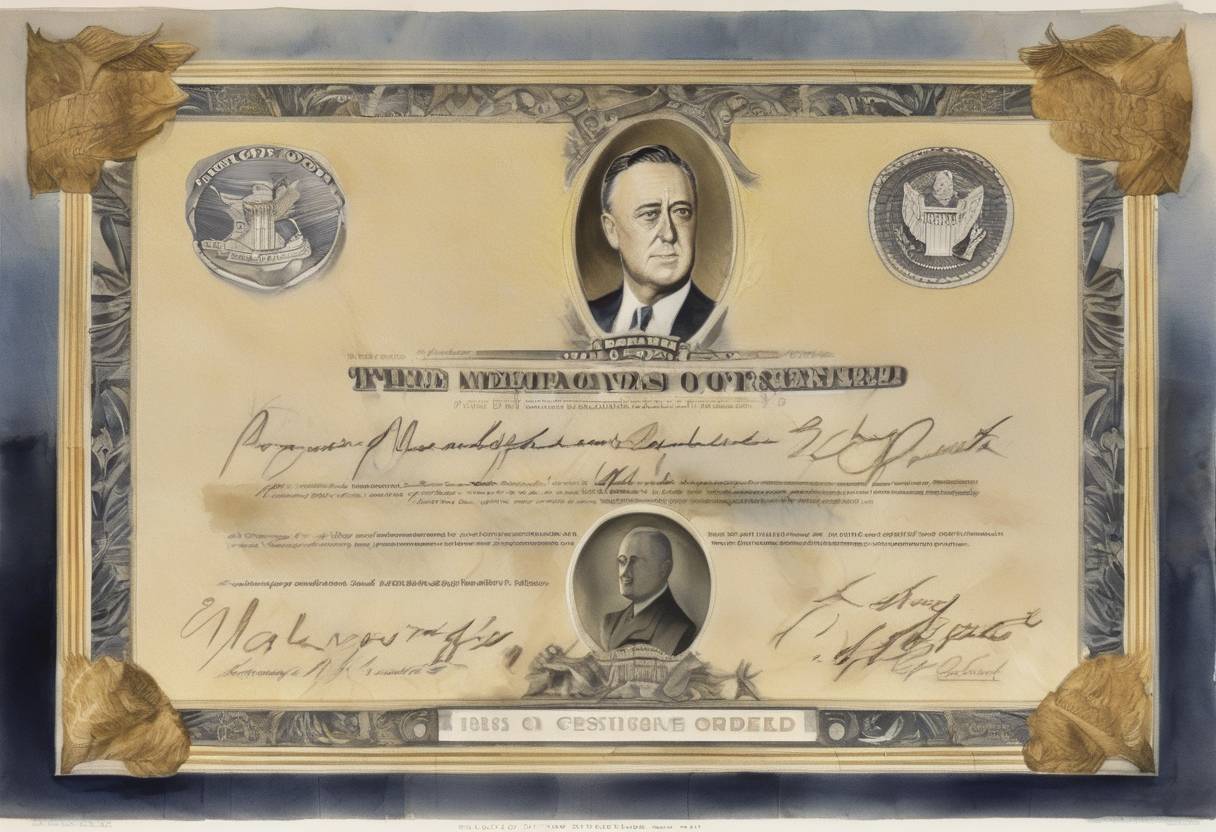
On April 5, 1933, U.S. President Franklin D. Roosevelt signed Executive Order 6102, a significant and controversial measure during the Great Depression. This order required American citizens to surrender their gold coins, gold bullion, and gold certificates to the Federal Reserve in exchange for paper currency. The move was part of a broader strategy to combat the economic crisis and stabilize the banking system.
The Great Depression, which began with the stock market crash of 1929, had plunged the United States into severe economic turmoil. By 1933, banks were failing at an alarming rate, unemployment was soaring, and deflation was exacerbating the economic woes. The U.S. was on the gold standard, meaning that the value of the dollar was directly tied to a specific quantity of gold. This system limited the government’s ability to increase the money supply and stimulate the economy.
The primary objective of Executive Order 6102 was to remove constraints on the Federal Reserve’s ability to increase the money supply, thus combating deflation and stimulating economic growth. By centralizing gold reserves, the government aimed to restore confidence in the banking system and stabilize the economy.
In January 1934, the Gold Reserve Act was passed, which revalued gold to $35 per ounce, effectively devaluing the dollar. This allowed the government to increase the money supply further, contributing to economic recovery efforts.
Executive Order 6102 marked a pivotal shift in U.S. monetary policy, moving away from the gold standard and towards greater federal control over the economy. It set a precedent for future government interventions during economic crises and highlighted the tensions between individual property rights and national economic interests.
The order remains a topic of debate among economists and historians, illustrating the complexities of balancing economic stability with personal freedoms. It underscores the drastic measures sometimes deemed necessary to address profound economic challenges.
Overall, Executive Order 6102 was a critical component of Roosevelt’s New Deal policies, reflecting the administration’s commitment to bold and innovative solutions in the face of unprecedented economic adversity.
Source: en.wikipedia.org