The Bataan Death March: April 9, 1942
1942 · Bataan, Philippines
The Bataan Death March began, as Japanese forces forced American and Filipino prisoners of war to march approximately 65 miles under brutal conditions.
January 2, 1942
The Manila was captured by Japanese forces during World War II.
Manila, Philippines | Imperial Japanese Army
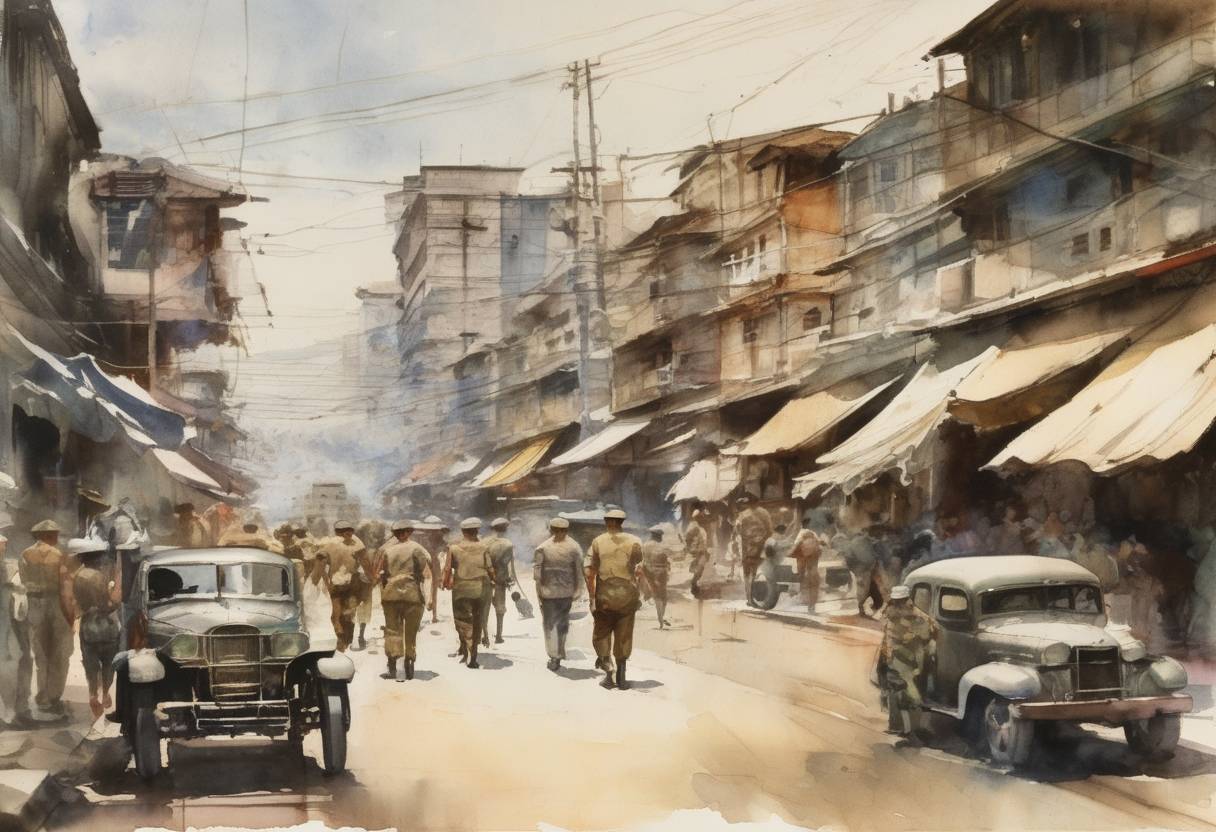
On January 2, 1942, during the early stages of World War II in the Pacific, Japanese forces captured Manila, the capital city of the Philippines. This event marked a significant moment in the Japanese campaign to expand their control over Southeast Asia and the Pacific.
Japanese Expansion: Following the attack on Pearl Harbor on December 7, 1941, Japan swiftly moved to expand its territory across the Pacific. The Philippines, then a U.S. Commonwealth, was a strategic target due to its location and resources.
Defense of the Philippines: The defense of the Philippines was led by General Douglas MacArthur, commanding a mix of American and Filipino troops. Despite their efforts, the Japanese forces, under the command of General Masaharu Homma, launched a well-coordinated assault on the archipelago.
Initial Attacks: The Japanese began their invasion of the Philippines on December 8, 1941, with air raids and landings on Luzon, the largest island. The defenders were quickly overwhelmed by the superior numbers and equipment of the Japanese forces.
Evacuation and Declaration: As Japanese forces advanced, General MacArthur declared Manila an open city on December 26, 1941, to prevent its destruction. This meant that military forces would withdraw, and the city would not be defended, in hopes of sparing civilians and infrastructure.
Japanese Entry: On January 2, 1942, Japanese troops entered Manila without facing resistance. The capture of the city was a significant psychological blow to the Allied forces and marked the beginning of Japanese occupation in the Philippines.
Bataan and Corregidor: Following the fall of Manila, Allied forces retreated to the Bataan Peninsula and the island fortress of Corregidor, where they continued to resist until their eventual surrender in April and May 1942, respectively.
Japanese Occupation: The occupation of Manila and the Philippines lasted until 1945. During this period, the Japanese imposed harsh rule, leading to significant suffering and loss of life among the Filipino population.
Strategic Impact: The capture of Manila allowed Japan to consolidate its control over the Philippines, securing a critical base for further operations in Southeast Asia. It also disrupted Allied supply lines and communications in the region.
Legacy: The fall of Manila and the subsequent occupation had lasting impacts on the Philippines, influencing its post-war recovery and relationship with the United States.
The capture of Manila was a pivotal moment in the Pacific theater of World War II, demonstrating the rapid expansion of Japanese forces and setting the stage for the prolonged and brutal conflict that would follow in the region.
Source: en.wikipedia.org