The Battle of the Alamo Begins
1836 · San Antonio, Republic of Texas
The Battle of the Alamo begins in San Antonio, Texas, as Mexican troops under General Antonio López de Santa Anna launch an assault on the Alamo Mission.
March 6, 1836
The Battle of the Alamo ends after a 13-day siege by Mexican troops led by General Santa Anna, resulting in the fall of the Alamo mission in San Antonio, Texas.
San Antonio, Republic of Texas | Mexican Army
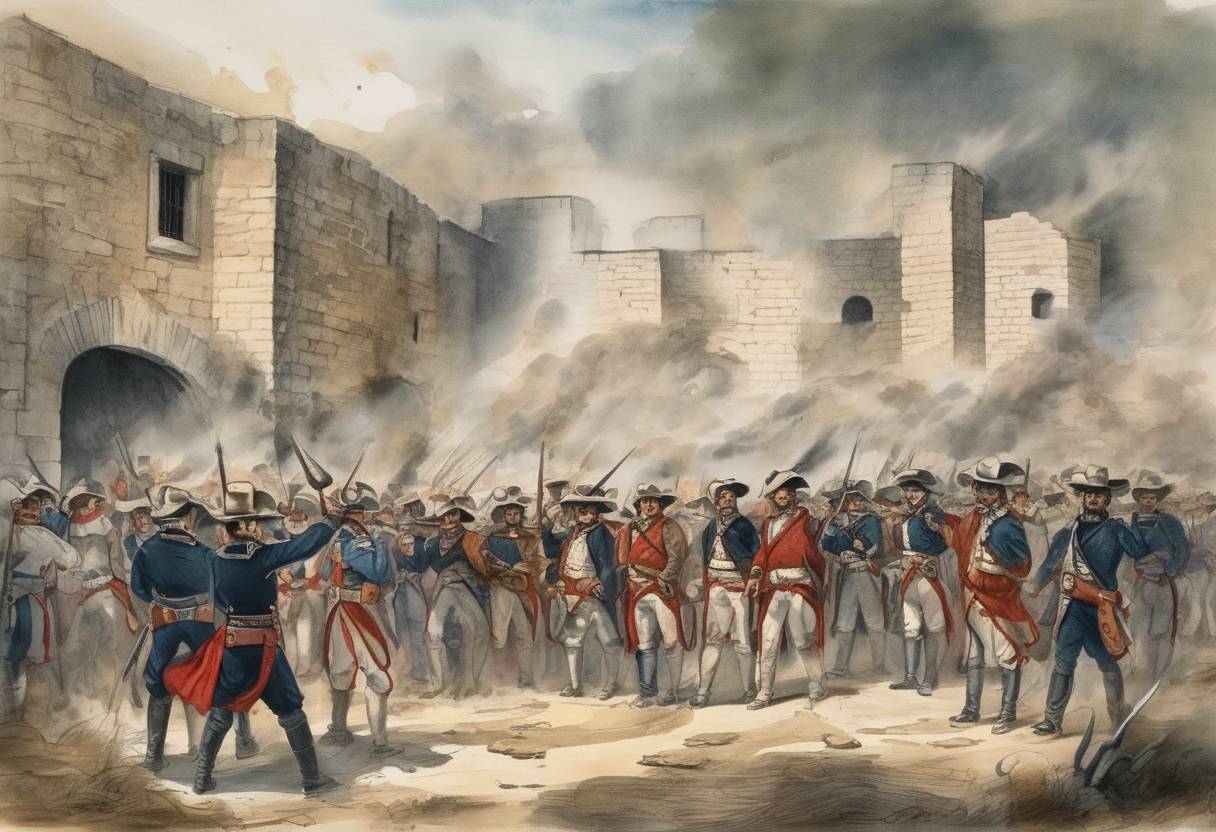
The Battle of the Alamo is one of the most famous events in the history of Texas and the United States. It concluded on March 6, 1836, after a 13-day siege by Mexican forces led by General Antonio López de Santa Anna. This pivotal event took place at the Alamo Mission in San Antonio, Texas, and played a crucial role in the Texas Revolution.
Texas Revolution: The battle was part of the larger Texas Revolution, a rebellion of colonists from the United States and Tejanos (Mexican Texans) against the Mexican government. The conflict was fueled by cultural and political differences, as well as Mexico’s attempts to centralize control over its territories.
The Alamo: Originally a Spanish mission, the Alamo was converted into a military fortification. By 1836, it was occupied by Texan insurgents, including notable figures such as James Bowie, William B. Travis, and the legendary frontiersman Davy Crockett.
Santa Anna’s Campaign: In early 1836, Santa Anna led a large Mexican army into Texas to quell the rebellion. His forces reached San Antonio de Béxar, where the Alamo was located, in late February.
Siege Begins: The siege commenced on February 23, 1836, when Santa Anna’s troops surrounded the Alamo. The defenders, numbering between 180 and 250, were vastly outnumbered by Santa Anna’s force of approximately 1,800 to 6,000 soldiers.
Defensive Stand: Despite the odds, the defenders held out for 13 days. They hoped for reinforcements from other Texan forces, but none arrived in time.
Final Assault: In the early hours of March 6, Santa Anna ordered a full-scale assault. The Mexican troops attacked from multiple directions, breaching the walls and overwhelming the defenders.
Casualties: The battle was fierce and brutal. All of the Texan defenders were killed, including Travis, Bowie, and Crockett. Mexican casualties were significant as well, with estimates ranging from 600 to 1,600.
Impact on Texas Revolution: The fall of the Alamo became a rallying cry for Texan forces, encapsulated in the phrase “Remember the Alamo!” It galvanized support for the Texan cause and inspired many to join the fight against Mexico.
Battle of San Jacinto: The sacrifice at the Alamo was avenged on April 21, 1836, when Texan forces led by General Sam Houston defeated Santa Anna at the Battle of San Jacinto, securing Texas independence.
Legacy: The Alamo remains a symbol of courage and resistance. It is a historic site and museum, attracting visitors from around the world who come to honor the memory of those who fought and died there.
The Battle of the Alamo is remembered not only for its dramatic and tragic outcome but also for its enduring legacy in the struggle for Texas independence and its place in American folklore.
Source: en.wikipedia.org