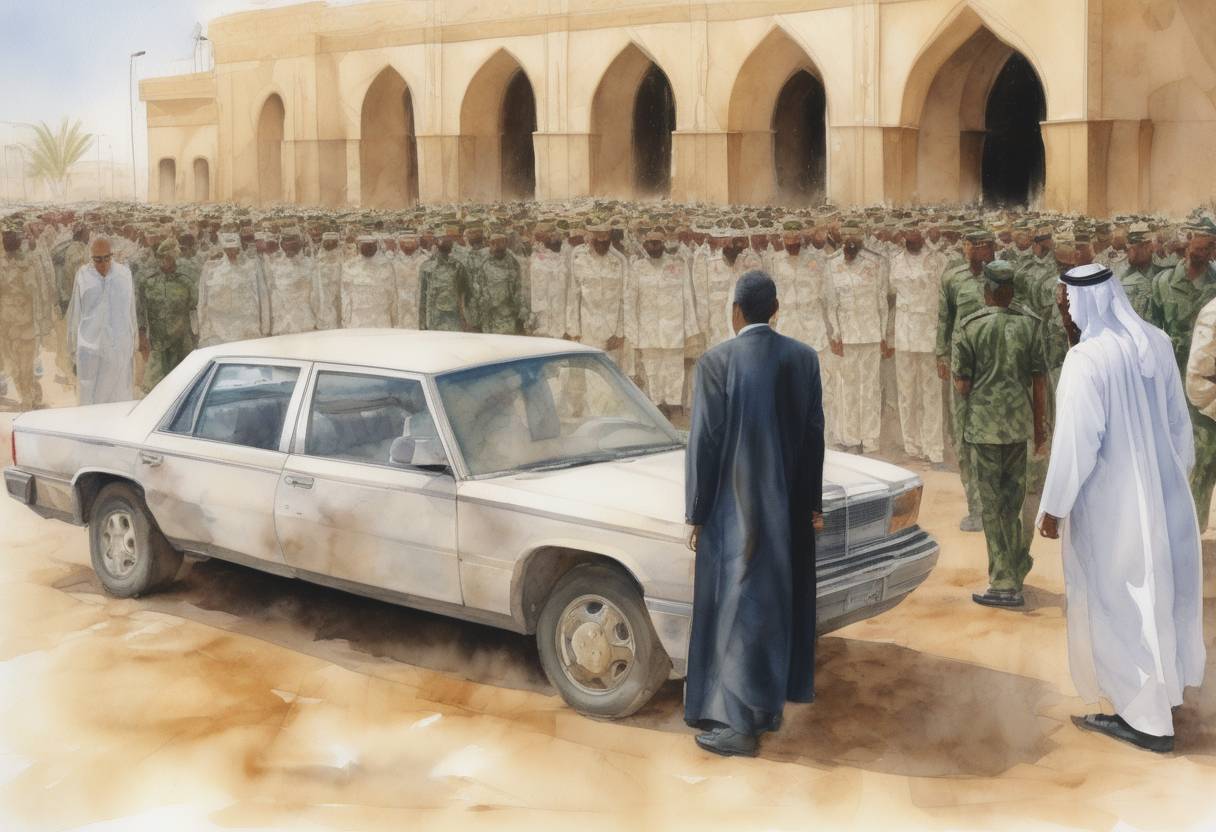
Coup d’État in Mauritania - August 3, 2005
On August 3, 2005, Mauritania experienced a significant political upheaval when a coup d’état led to the overthrow of President Maaouya Ould Sid’Ahmed Taya. This event marked a pivotal moment in the country’s political landscape.
Background
Maaouya Ould Sid’Ahmed Taya had been in power since 1984, having himself come to power through a coup. Over his two-decade rule, Taya’s government faced criticism for its authoritarian practices, including restrictions on political freedoms and human rights abuses. His regime was also marked by its alignment with Western powers, particularly the United States, and its support for Israel, which was controversial in the predominantly Muslim nation.
The Coup
The coup took place while President Taya was attending the funeral of King Fahd of Saudi Arabia. Taking advantage of his absence, a group of military officers, led by Colonel Ely Ould Mohamed Vall, seized control of key government and military installations in the capital, Nouakchott. The coup was executed swiftly and without bloodshed, a factor that contributed to its immediate success.
Key Players
- Colonel Ely Ould Mohamed Vall: A former ally of Taya and head of the national police, Vall became the leader of the coup. He was a central figure in the transitional military council that took over the governance of Mauritania.
Following the coup, the military junta, known as the Military Council for Justice and Democracy, announced the suspension of the constitution and the dissolution of parliament. They promised to hold democratic elections within two years, a pledge that was met with cautious optimism both domestically and internationally.
The coup was largely welcomed by the Mauritanian public, who had grown weary of Taya’s long-standing rule. The international community, while generally opposed to coups, reacted with restraint, given the promises of a return to democratic governance.
Broader Historical Significance
The 2005 coup in Mauritania is significant for several reasons:
Transition to Democracy: The coup set the stage for a transition to democratic governance. True to their word, the military junta organized elections in 2007, which were deemed free and fair, leading to the election of Sidi Ould Cheikh Abdallahi as president.
Regional Implications: The coup highlighted the fragility of political systems in the Sahel region, where military interventions have been a recurring theme.
Shift in Foreign Policy: The new leadership sought to recalibrate Mauritania’s foreign relations, particularly its ties with Israel, which were severed in 2009 under the subsequent civilian government.
In conclusion, the 2005 coup in Mauritania was a turning point that ended two decades of authoritarian rule and initiated a process towards democratization, albeit with challenges and setbacks in the years that followed.