The Virginia Declaration of Rights: June 12, 1776
1776 · Williamsburg, United States
The Virginia Declaration of Rights was adopted by the Virginia Convention, serving as a model for the United States Bill of Rights.
June 29, 1776
The First Virginia Convention adopted the Virginia Declaration of Rights, which influenced the United States Declaration of Independence and the Bill of Rights.
Williamsburg, United States | Virginia Convention
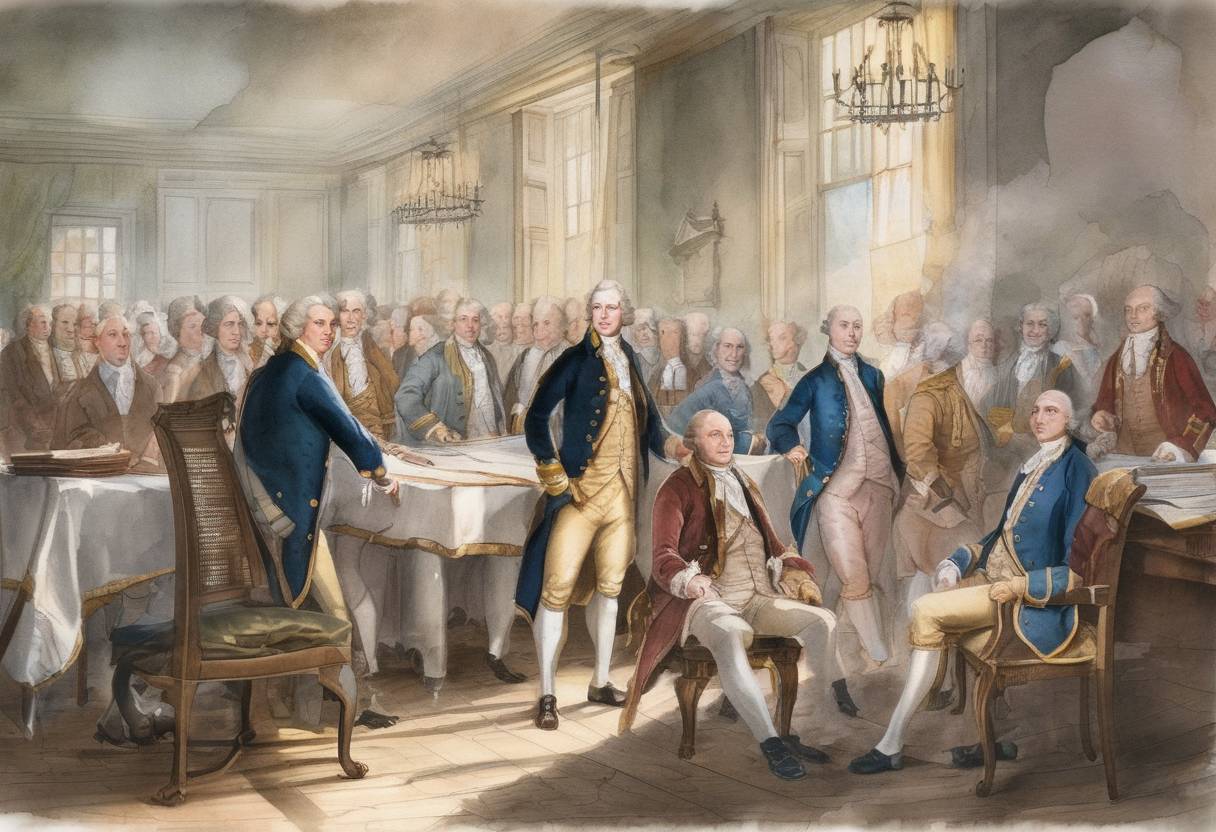
On June 29, 1776, the First Virginia Convention adopted the Virginia Declaration of Rights, a seminal document in American history that significantly influenced the United States Declaration of Independence and the Bill of Rights. Drafted primarily by George Mason, the Declaration articulated the inherent rights of men and the principles of government, laying the groundwork for American constitutional democracy.
The Virginia Declaration of Rights emerged during a period of escalating tensions between the American colonies and the British Crown. By 1776, the colonies were increasingly united in their desire for independence, driven by grievances over taxation without representation and other perceived injustices. The Virginia Convention, a revolutionary assembly, convened to address these issues and to establish a framework for governance independent of British rule.
The Declaration consists of 16 sections, each outlining fundamental rights and principles. Some of the most notable include:
Natural Rights: It asserts that all men are by nature equally free and independent and have certain inherent rights, including the enjoyment of life and liberty, with the means of acquiring and possessing property, and pursuing and obtaining happiness and safety.
Government by Consent: It emphasizes that all power is vested in, and consequently derived from, the people; that magistrates are their trustees and servants, and at all times amenable to them.
Separation of Powers: The document advocates for the separation of governmental powers into distinct branches to prevent abuse of power.
Freedom of the Press: It declares that the freedom of the press is one of the great bulwarks of liberty and can never be restrained but by despotic governments.
Rights of the Accused: It includes protections for individuals accused of crimes, such as the right to a fair trial and protection against self-incrimination.
The Virginia Declaration of Rights had a profound impact on the development of American political thought. Thomas Jefferson drew upon its principles when drafting the Declaration of Independence, particularly its emphasis on natural rights and government by consent. Furthermore, James Madison used it as a model when crafting the Bill of Rights, ensuring that the first ten amendments to the U.S. Constitution enshrined similar protections for individual liberties.
The adoption of the Virginia Declaration of Rights marked a pivotal moment in the American Revolution, reflecting the colonies’ commitment to establishing a government based on democratic principles and individual freedoms. Its influence extends beyond the United States, serving as an inspiration for other nations seeking to articulate and protect human rights.
In summary, the Virginia Declaration of Rights, adopted on June 29, 1776, was a foundational document that not only shaped the course of American history but also contributed to the global discourse on human rights and governance.
Source: en.wikipedia.org