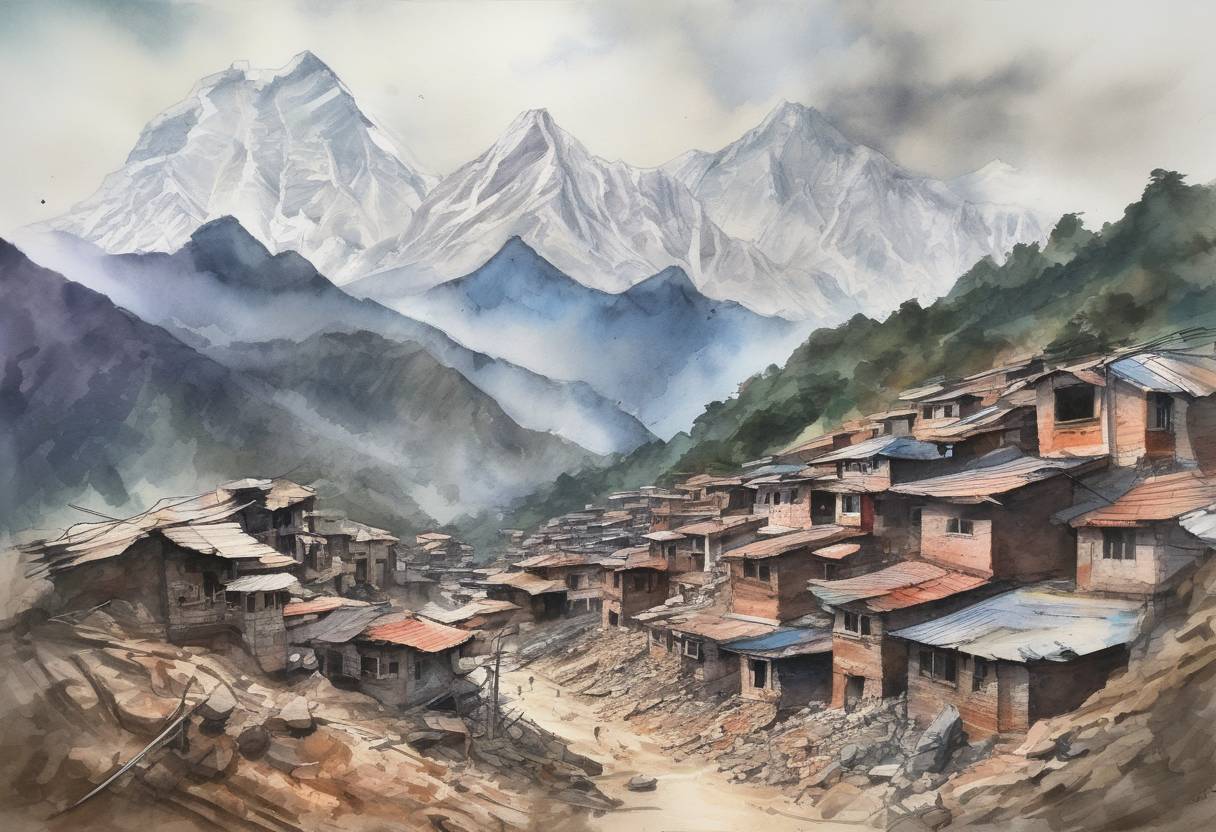
The 2015 Nepal Earthquake: A Devastating Natural Disaster
On April 25, 2015, a catastrophic earthquake struck Nepal, causing widespread destruction and significant loss of life. With a magnitude of 7.8, it was one of the deadliest earthquakes in the country’s history.
Context and Background
Nepal is situated in a seismically active region due to the collision of the Indian and Eurasian tectonic plates. This geological activity makes the region prone to earthquakes. The 2015 earthquake, also known as the Gorkha earthquake, was the most severe to hit Nepal since the 1934 Nepal–Bihar earthquake.
Key Events
Epicenter and Magnitude: The earthquake’s epicenter was located near the village of Barpak in the Gorkha District, approximately 77 kilometers northwest of the capital, Kathmandu. It had a depth of about 15 kilometers.
Immediate Impact: The earthquake caused massive destruction across central Nepal, including Kathmandu. Historic buildings, such as the Dharahara Tower and several UNESCO World Heritage sites in the Kathmandu Valley, were severely damaged or destroyed.
Casualties and Damage: The earthquake resulted in nearly 9,000 fatalities and injured over 22,000 people. Hundreds of thousands of people were left homeless as entire villages were flattened, particularly in the rural and mountainous regions.
Aftershocks: The initial quake was followed by numerous aftershocks, the most significant being a 7.3 magnitude tremor on May 12, 2015, which caused additional casualties and damage.
Aftermath and Response
Humanitarian Efforts: The disaster prompted a massive international humanitarian response. Countries and organizations worldwide provided aid, including medical assistance, food, water, and temporary shelter.
Reconstruction Challenges: The scale of destruction posed significant challenges for reconstruction and recovery. Efforts were complicated by Nepal’s rugged terrain, logistical difficulties, and the need for substantial financial resources.
Long-term Impact: The earthquake had lasting effects on Nepal’s economy, infrastructure, and social fabric. It highlighted the need for improved disaster preparedness and resilient infrastructure to mitigate the impact of future seismic events.
Broader Historical Significance
The 2015 Nepal earthquake underscored the vulnerability of regions situated along tectonic plate boundaries and the importance of international cooperation in disaster response. It also served as a reminder of the resilience of the Nepalese people and the critical role of community and global solidarity in recovery efforts.