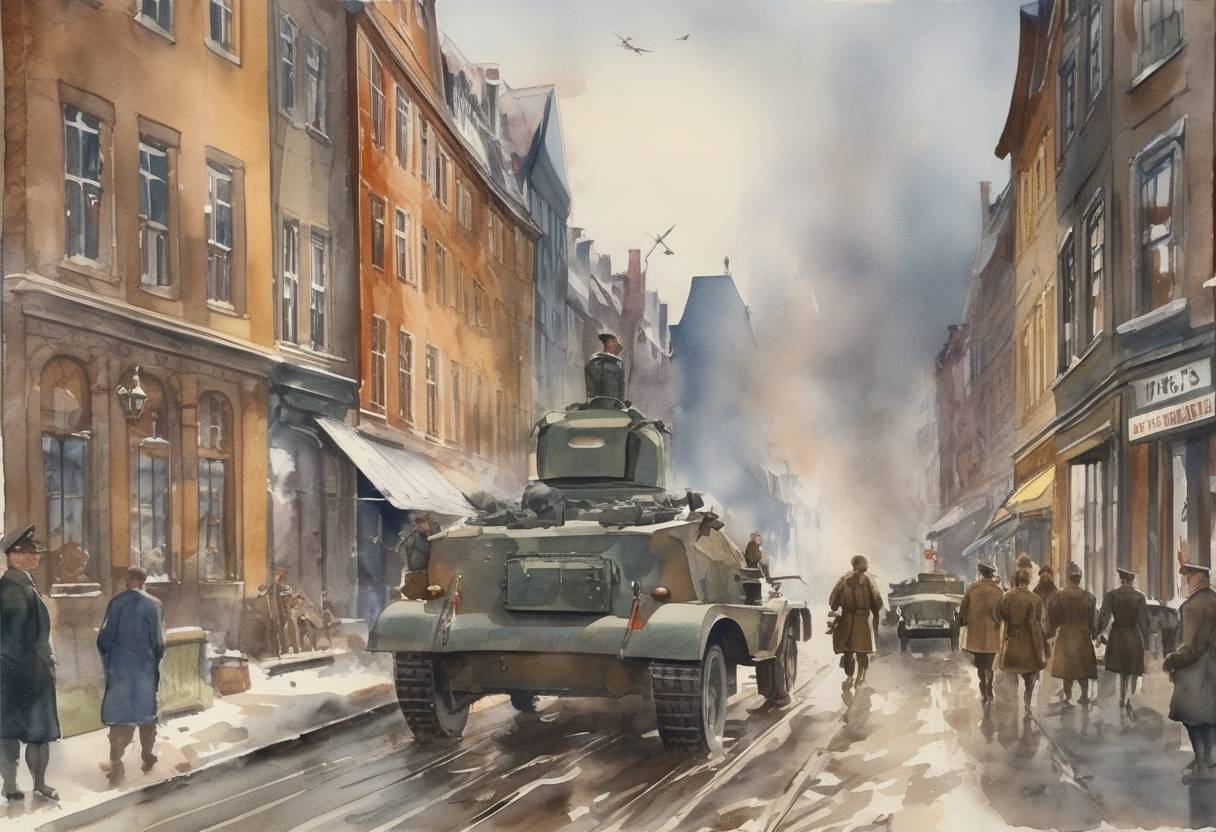
Germany Invades Denmark and Norway: Operation Weserübung
On April 9, 1940, Nazi Germany launched Operation Weserübung, a military campaign that marked the invasion of Denmark and Norway during World War II. This operation was a pivotal moment in the early stages of the war, as it demonstrated Germany’s strategic ambitions in Northern Europe and its ability to execute rapid military operations.
Context and Prelude
- Strategic Importance: Control over Norway was crucial for Germany to secure iron ore shipments from Sweden, which were vital for its war industry. The Norwegian coast also offered strategic naval bases for operations in the North Atlantic.
- Neutrality of Scandinavia: Both Denmark and Norway had declared neutrality at the outbreak of World War II. However, their geographical positions made them strategically significant to both the Allies and the Axis powers.
- British Concerns: The Allies, particularly Britain, were concerned about German access to Norwegian ports and the potential for a German blockade of the North Sea. Plans were considered to preemptively occupy Norway, but these were not executed in time.
The Invasion
- Denmark: The invasion of Denmark was swift and largely unopposed. German forces crossed the border and quickly overwhelmed Danish defenses. Within hours, Denmark capitulated, recognizing the futility of resistance against the superior German military.
- Norway: The invasion of Norway was more complex and met with significant resistance. German forces landed at several key ports, including Oslo, Bergen, Trondheim, and Narvik. The operation involved a combination of naval, air, and ground forces.
Key Events
- Naval Engagements: The German navy faced challenges from the British Royal Navy, which sought to disrupt the landings. Notable naval battles included the First and Second Battles of Narvik.
- Resistance and Occupation: Norwegian forces, aided by British, French, and Polish troops, mounted a defense, particularly in the northern regions. However, by June 1940, Norway was fully occupied by German forces.
Consequences and Aftermath
- Strategic Gains for Germany: The successful occupation of Norway provided Germany with strategic naval and air bases, enhancing its ability to control the North Atlantic.
- Impact on the Allies: The invasion highlighted the need for better coordination and preparation among the Allies. It also led to political repercussions in Britain, contributing to the resignation of Prime Minister Neville Chamberlain.
- Long-term Occupation: Norway remained under German occupation until the end of the war in 1945, enduring significant hardship and resistance efforts.
Historical Significance
Operation Weserübung demonstrated the effectiveness of Germany’s Blitzkrieg tactics and underscored the strategic importance of Scandinavia in the broader context of World War II. It also set the stage for further German aggression in Europe and highlighted the challenges faced by the Allies in countering Nazi expansion.
This operation remains a significant example of early World War II military strategy and its implications for the subsequent course of the conflict.