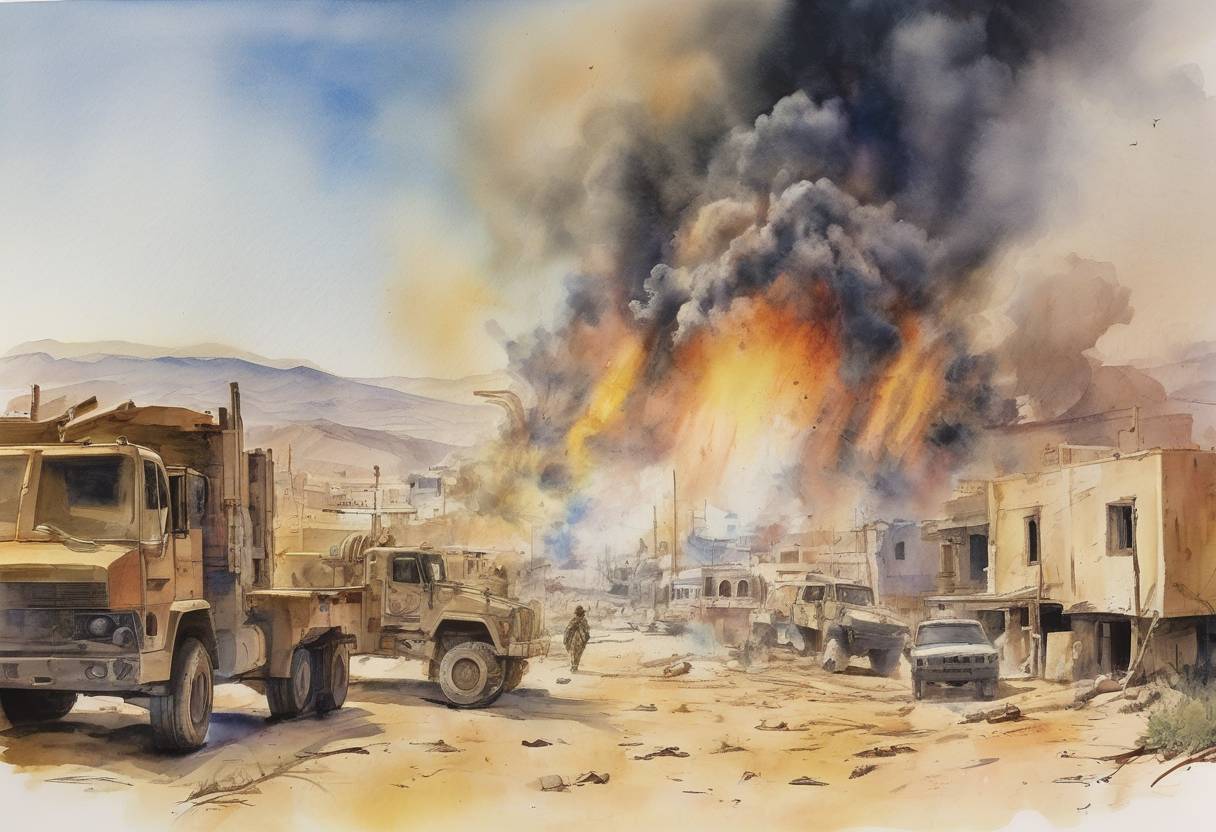
Operation El Dorado Canyon: April 14, 1986
On April 14, 1986, the United States launched Operation El Dorado Canyon, a series of airstrikes against Libya. This military action was a direct response to the Berlin discotheque bombing that occurred on April 5, 1986, which resulted in the deaths of two American servicemen and injured numerous others. The attack was attributed to Libyan state-sponsored terrorism, prompting the U.S. to take decisive action.
Background
Berlin Discotheque Bombing: On April 5, 1986, a bomb exploded at the La Belle discotheque in West Berlin, a popular venue among U.S. military personnel. The attack killed two American servicemen and a Turkish woman, and injured over 200 people. Intelligence reports indicated that Libya was behind the attack, with evidence suggesting direct involvement by Libyan agents.
Libyan Sponsorship of Terrorism: During the 1980s, Libya, under the leadership of Muammar Gaddafi, was widely accused of supporting terrorist activities worldwide. The U.S. had already imposed economic sanctions on Libya and sought to curb its influence in international terrorism.
The Operation
Objective: The primary goal of Operation El Dorado Canyon was to diminish Libya’s ability to support and conduct terrorist activities by targeting key military and strategic sites.
Execution: The operation involved the coordinated efforts of the U.S. Air Force, Navy, and Marine Corps. Aircraft launched from bases in the United Kingdom and from carriers in the Mediterranean Sea. The targets included:
- Tripoli: The Bab al-Azizia military barracks, Gaddafi’s residence, and the Tripoli airport.
- Benghazi: The Benina military airfield and the Jamahiriyah barracks.
Challenges: The operation faced logistical challenges, including the need to fly around France and Spain, as both countries denied overflight rights, extending the mission’s duration and complexity.
Aftermath and Consequences
Immediate Impact: The airstrikes resulted in significant damage to Libyan military infrastructure. Reports indicated civilian casualties, including the death of Gaddafi’s adopted daughter, though these claims were disputed.
International Reaction: The operation received mixed reactions globally. While some Western nations supported the U.S. stance against terrorism, others criticized the attack as a violation of international law and an act of aggression.
Libyan Response: In the aftermath, Libya intensified its anti-American rhetoric and continued to support various militant groups, although its capacity to conduct large-scale operations was diminished.
Long-term Effects: The operation marked a significant moment in U.S. foreign policy, demonstrating a willingness to use military force in response to state-sponsored terrorism. It also set a precedent for future U.S. actions against perceived threats.
Operation El Dorado Canyon remains a pivotal event in the history of U.S.-Libyan relations and the broader context of international counter-terrorism efforts during the late 20th century.