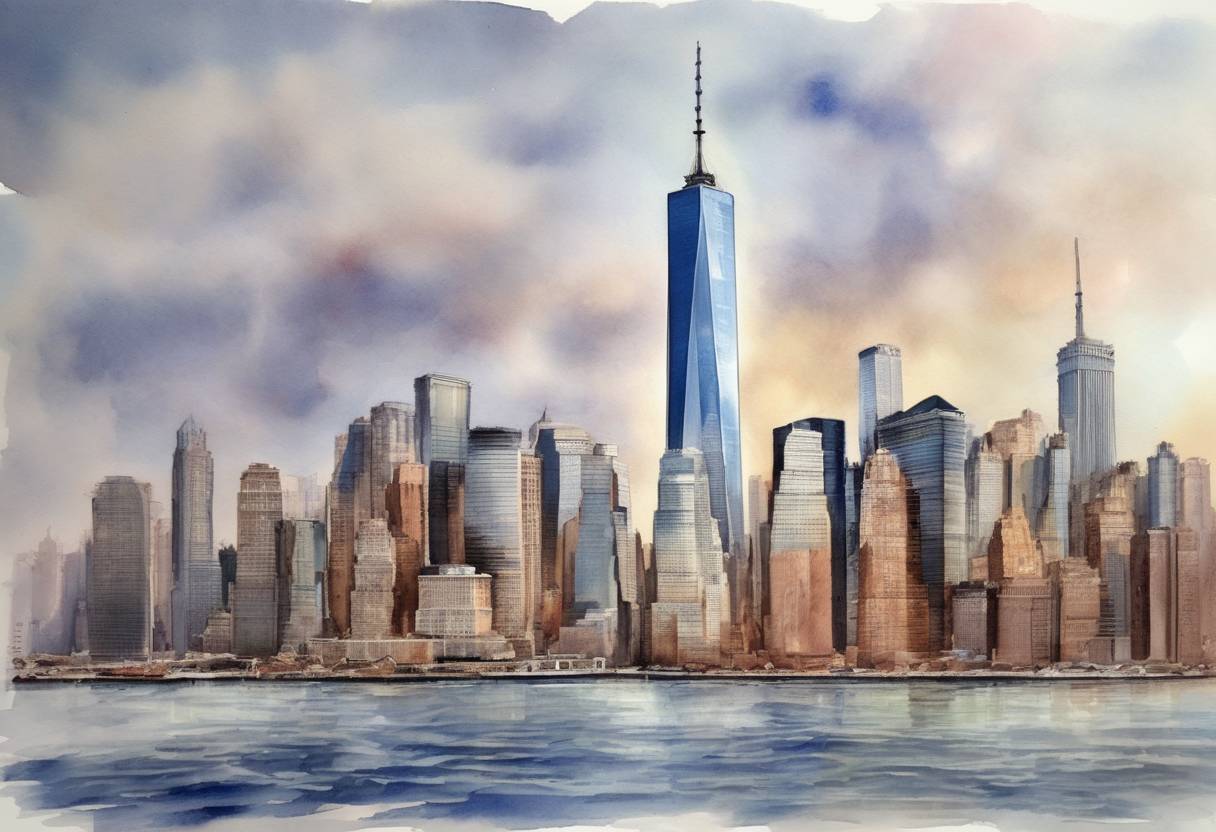
One World Trade Center: Tallest Building in the Western Hemisphere
On May 10, 2013, One World Trade Center, also known as the Freedom Tower, achieved a significant milestone when the final piece of its spire was installed. This event marked the building’s total height reaching 1,776 feet, making it the tallest building in the Western Hemisphere at the time.
Background
- Location: One World Trade Center is located in Lower Manhattan, New York City, on the site of the original World Trade Center complex that was destroyed during the September 11, 2001, terrorist attacks.
- Design and Construction: The building was designed by architect David Childs of Skidmore, Owings & Merrill. Construction began in April 2006, with the aim of creating a symbol of resilience and renewal for New York City and the United States.
Key Features
- Height: The building’s height of 1,776 feet is symbolic, representing the year of American independence.
- Spire: The spire itself is 408 feet tall and serves as a broadcast antenna. Its installation was a complex engineering feat, requiring precision and coordination.
- Sustainability: One World Trade Center incorporates numerous sustainable design features, including energy-efficient systems and materials.
Significance
- Symbolic Importance: The completion of the spire and the building’s height serve as a tribute to the resilience and determination of the American people following the 9⁄11 attacks.
- Architectural Achievement: As the tallest building in the Western Hemisphere, One World Trade Center stands as a testament to modern architectural and engineering capabilities.
Aftermath
- Opening: The building officially opened on November 3, 2014, and serves as the headquarters for various businesses and organizations.
- Cultural Impact: One World Trade Center has become an iconic part of the New York City skyline and a symbol of hope and renewal.
In summary, the installation of the final piece of the spire on May 10, 2013, was a pivotal moment in the construction of One World Trade Center, cementing its status as a landmark of architectural and symbolic significance.