Space Shuttle Atlantis Launches on STS-38: November 15, 1990
1990 · Cape Canaveral, United States
The Space Shuttle Atlantis launches on STS-38, a classified mission for the U.S. Department of Defense.
February 3, 1995
Astronaut Eileen Collins became the first woman to pilot the Space Shuttle during the Discovery's mission STS-63.
Cape Canaveral, United States | NASA
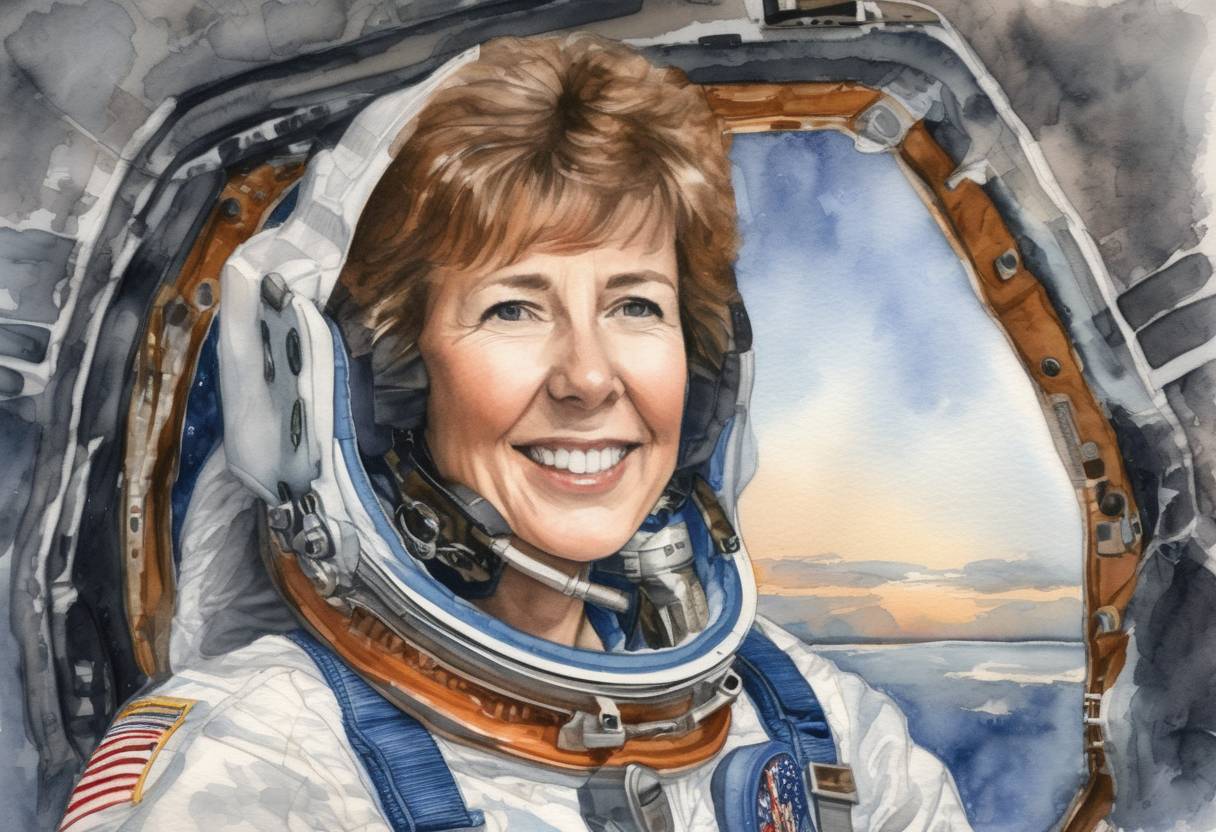
On February 3, 1995, Eileen Collins made history by becoming the first woman to pilot a Space Shuttle. This milestone occurred during the Space Shuttle Discovery’s mission STS-63, a significant event in the history of space exploration and gender equality in the field of aerospace.
Eileen Collins, born on November 19, 1956, in Elmira, New York, had a distinguished career in the United States Air Force before joining NASA. She was selected as an astronaut in 1990, bringing with her extensive experience as a pilot and flight instructor. Collins’ selection as the first female pilot of a Space Shuttle was a testament to her skills and the progress of women in the aerospace sector.
Eileen Collins’ role as the pilot of STS-63 was a groundbreaking achievement for women in space exploration. Her success paved the way for future female astronauts and highlighted the increasing opportunities for women in STEM fields. The mission itself was a critical step in the Shuttle-Mir program, which fostered international cooperation in space exploration.
Following the success of STS-63, Eileen Collins continued to break barriers. In 1999, she became the first woman to command a Space Shuttle mission during STS-93. Her contributions to space exploration have been widely recognized, and she remains an inspiring figure for aspiring astronauts and aviators worldwide.
In summary, the STS-63 mission was not only a technical success but also a symbolic victory for gender equality in space exploration, with Eileen Collins at the helm as a pioneering figure.
Source: www.nasa.gov