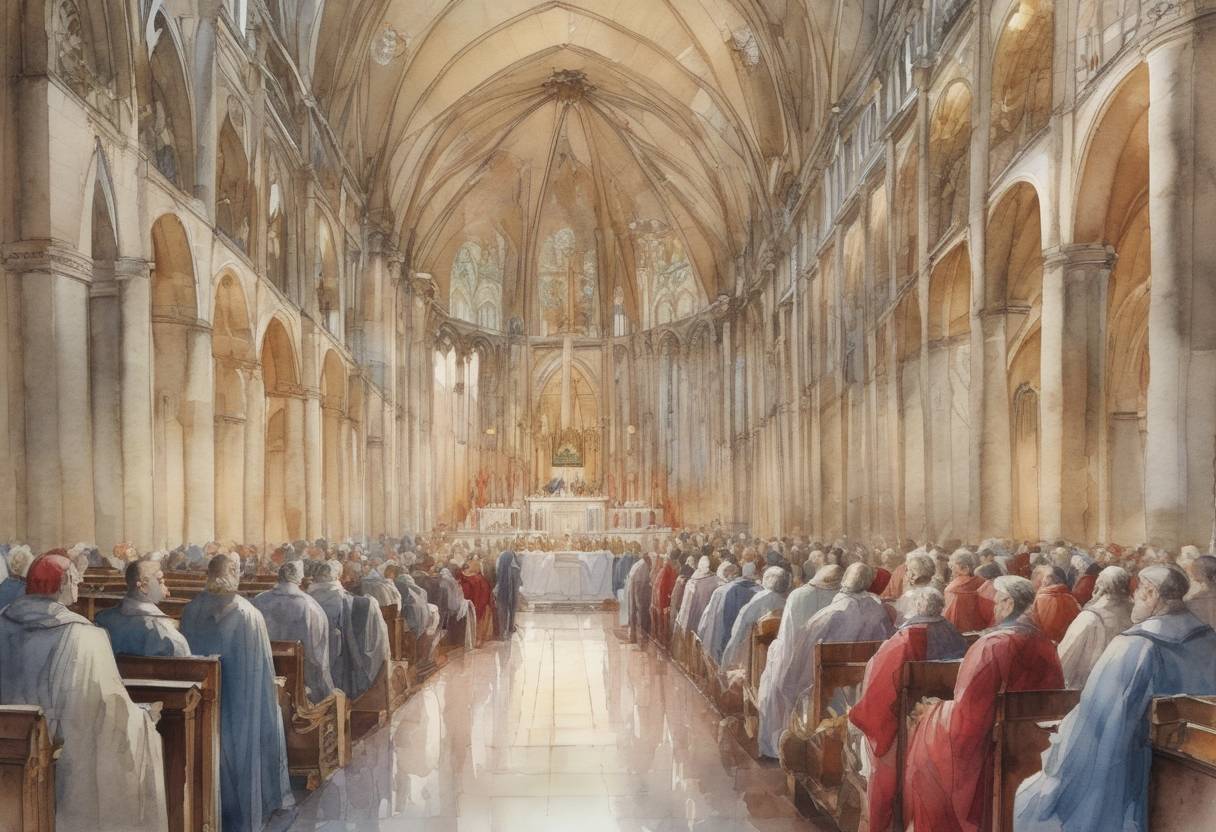
The Synod of Paris (April 20, 850)
The Synod of Paris, convened on April 20, 850, was a significant ecclesiastical council held to address pressing issues within the Frankish church. This synod took place during the reign of Charles the Bald, a grandson of Charlemagne, who was one of the rulers of the Carolingian Empire. The synod was part of a broader series of church councils that sought to reform and regulate ecclesiastical practices in the Frankish territories.
Historical Context
The mid-9th century was a period of considerable political and religious upheaval in the Carolingian Empire. The empire, once unified under Charlemagne, had been divided among his grandsons following the Treaty of Verdun in 843. This division led to internal conflicts and weakened central authority, which in turn affected the church’s ability to maintain discipline and order.
The Frankish church faced several challenges, including:
- Clerical Discipline: There were widespread concerns about the moral and ethical conduct of the clergy. Issues such as simony (the buying and selling of church offices) and clerical marriage were prevalent.
- Secular Influence: The church was increasingly subject to secular influence, with local lords often exerting control over ecclesiastical appointments and church lands.
- Doctrinal Disputes: The period was marked by theological debates, including those concerning predestination and the nature of the Eucharist.
Key Issues Addressed
The Synod of Paris aimed to address these challenges by implementing reforms and clarifying church doctrine. Some of the key issues discussed included:
- Clerical Conduct: The synod sought to enforce stricter standards of behavior among the clergy, emphasizing celibacy and condemning simony.
- Church Autonomy: Efforts were made to reduce secular interference in church matters, reinforcing the autonomy of ecclesiastical authorities.
- Doctrinal Clarity: The synod worked to resolve ongoing theological disputes, aiming to unify the church’s teachings and practices.
Outcomes and Significance
The Synod of Paris was part of a broader movement within the Carolingian Empire to reform the church and strengthen its role in society. While the immediate impact of the synod’s decisions may have been limited by the political fragmentation of the time, it set a precedent for future councils and reforms.
The synod’s emphasis on clerical discipline and autonomy laid the groundwork for later medieval church reforms, including those of the Cluniac and Gregorian movements. These efforts would eventually lead to significant changes in the structure and governance of the Western Church.
In conclusion, the Synod of Paris was a crucial step in addressing the challenges facing the Frankish church in the 9th century. It reflected the ongoing struggle to maintain ecclesiastical integrity and independence in a period of political instability and set the stage for future reforms that would shape the medieval church.