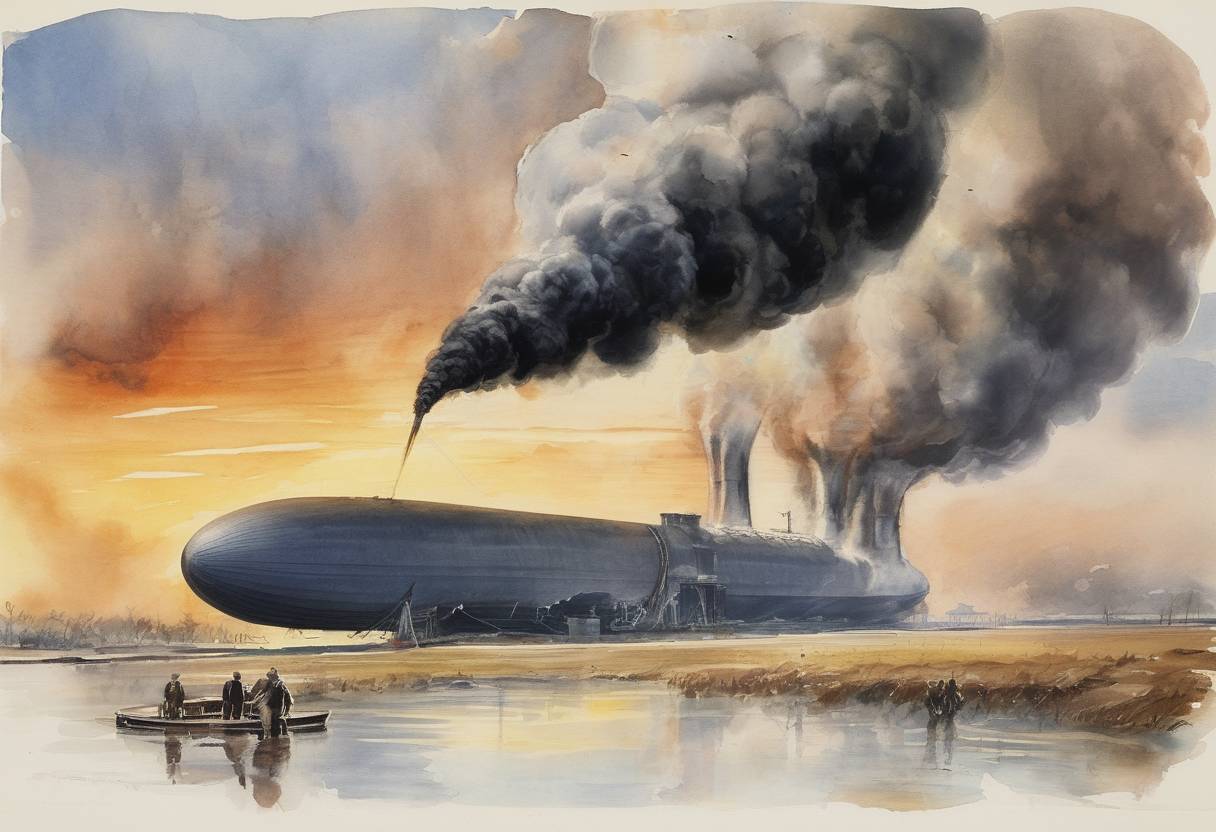
The Hindenburg Disaster: May 6, 1937
The Hindenburg disaster is one of the most infamous airship accidents in history, marking a significant turning point in the era of airship travel. On May 6, 1937, the German passenger airship LZ 129 Hindenburg caught fire and was destroyed during its attempt to dock with its mooring mast at Naval Air Station Lakehurst in Manchester Township, New Jersey, United States.
Background
- The Hindenburg: The LZ 129 Hindenburg was a German commercial passenger-carrying rigid airship, the largest of its kind ever built. It was operated by the German Zeppelin Company and was designed to provide luxurious transatlantic flights.
- Construction and Design: The airship was 804 feet long and filled with hydrogen gas, which was highly flammable. It was originally intended to use helium, a safer alternative, but due to export restrictions by the United States, Germany used hydrogen instead.
- Service: The Hindenburg made its maiden flight in March 1936 and completed numerous successful transatlantic crossings, becoming a symbol of German engineering prowess.
The Disaster
- Date and Location: The disaster occurred on May 6, 1937, at Naval Air Station Lakehurst in New Jersey.
- Final Flight: The Hindenburg was completing its first North American transatlantic flight of the year, having departed from Frankfurt, Germany.
- Incident: As the airship attempted to dock, it suddenly caught fire and was rapidly engulfed in flames. The disaster unfolded in less than a minute.
- Casualties: Of the 97 people on board (36 passengers and 61 crew), 36 died (13 passengers, 22 crew members, and one worker on the ground).
Aftermath and Impact
- Investigation: The exact cause of the fire has never been definitively determined. Theories include static electricity, a hydrogen leak, or sabotage, but no conclusive evidence has been found.
- Media Coverage: The disaster was extensively covered by the media, with dramatic photographs and radio broadcasts capturing the event. The famous radio report by Herbert Morrison, with his emotional exclamation “Oh, the humanity!”, became iconic.
- End of the Airship Era: The Hindenburg disaster marked the end of the airship era for passenger travel. Public confidence in the safety of airships was irreparably damaged, and the focus shifted to airplanes for long-distance travel.
Historical Significance
The Hindenburg disaster remains a pivotal moment in aviation history. It highlighted the dangers of hydrogen-filled airships and accelerated the decline of airship travel in favor of more reliable and safer aircraft. The event also underscored the importance of safety regulations and technological advancements in the field of aviation.