The Treaty of Versailles: June 28, 1919
1919 · Versailles, France
The Treaty of Versailles was signed, officially ending World War I and imposing heavy reparations and territorial losses on Germany.
January 18, 1919
The Paris Peace Conference opened to negotiate peace treaties ending World War I, leading to the Treaty of Versailles.
Paris, France | Allied Powers
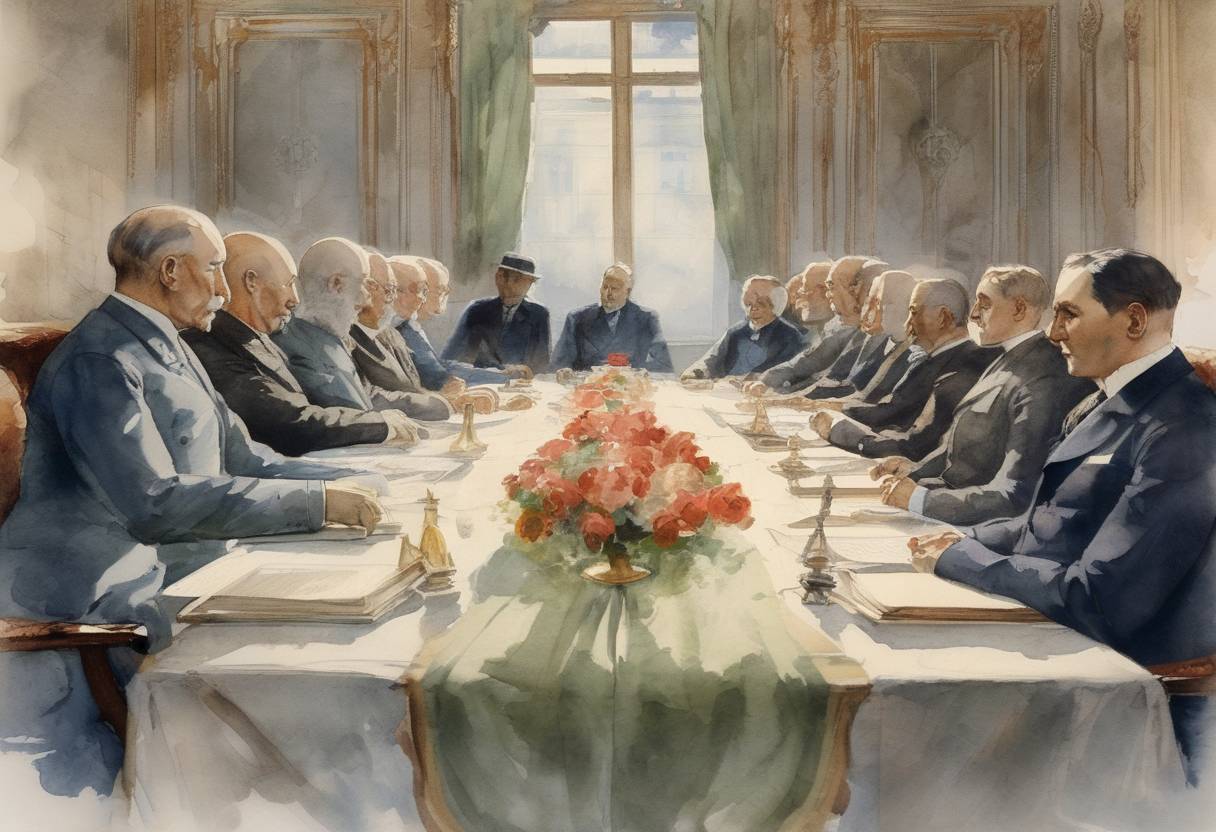
The Paris Peace Conference, which began on January 18, 1919, was a pivotal event in world history, marking the formal process to negotiate peace treaties that would conclude World War I. This conference was held in Paris, France, and involved diplomats from over 30 countries, although the major decisions were primarily made by the “Big Four” leaders: Woodrow Wilson of the United States, David Lloyd George of the United Kingdom, Georges Clemenceau of France, and Vittorio Orlando of Italy.
World War I, which lasted from 1914 to 1918, was one of the deadliest conflicts in history, resulting in significant political, economic, and social upheaval. The war ended with the signing of the Armistice on November 11, 1918, but a formal peace treaty was necessary to address the complex issues that had led to the war and to establish a new world order.
The Paris Peace Conference aimed to achieve several objectives:
Establishing Peace Treaties: The primary goal was to draft treaties that would formally end the state of war and lay the groundwork for lasting peace.
Redrawing National Boundaries: The conference sought to redraw the map of Europe and other regions, taking into account the principle of self-determination and the collapse of empires such as Austro-Hungarian, Ottoman, German, and Russian.
Addressing War Reparations and Guilt: Determining the reparations that Germany and its allies would be required to pay and assigning responsibility for the war were contentious issues.
Formation of the League of Nations: A significant outcome was the establishment of the League of Nations, an international organization aimed at preventing future conflicts.
The most famous treaty resulting from the conference was the Treaty of Versailles, signed on June 28, 1919. Key provisions of the treaty included:
The decisions made at the Paris Peace Conference had far-reaching consequences:
The Paris Peace Conference and the Treaty of Versailles remain subjects of extensive historical analysis and debate, illustrating the complexities of peacemaking and the challenges of creating a stable international order.
Source: en.wikipedia.org