Boris Yeltsin and the Declaration of Russian Sovereignty
1991 · Moscow, Russia
Boris Yeltsin declares Russia's independence from the Soviet Union.
July 10, 1991
Boris Yeltsin was sworn in as the first elected President of Russia.
Moscow, Russia | Russian Federation
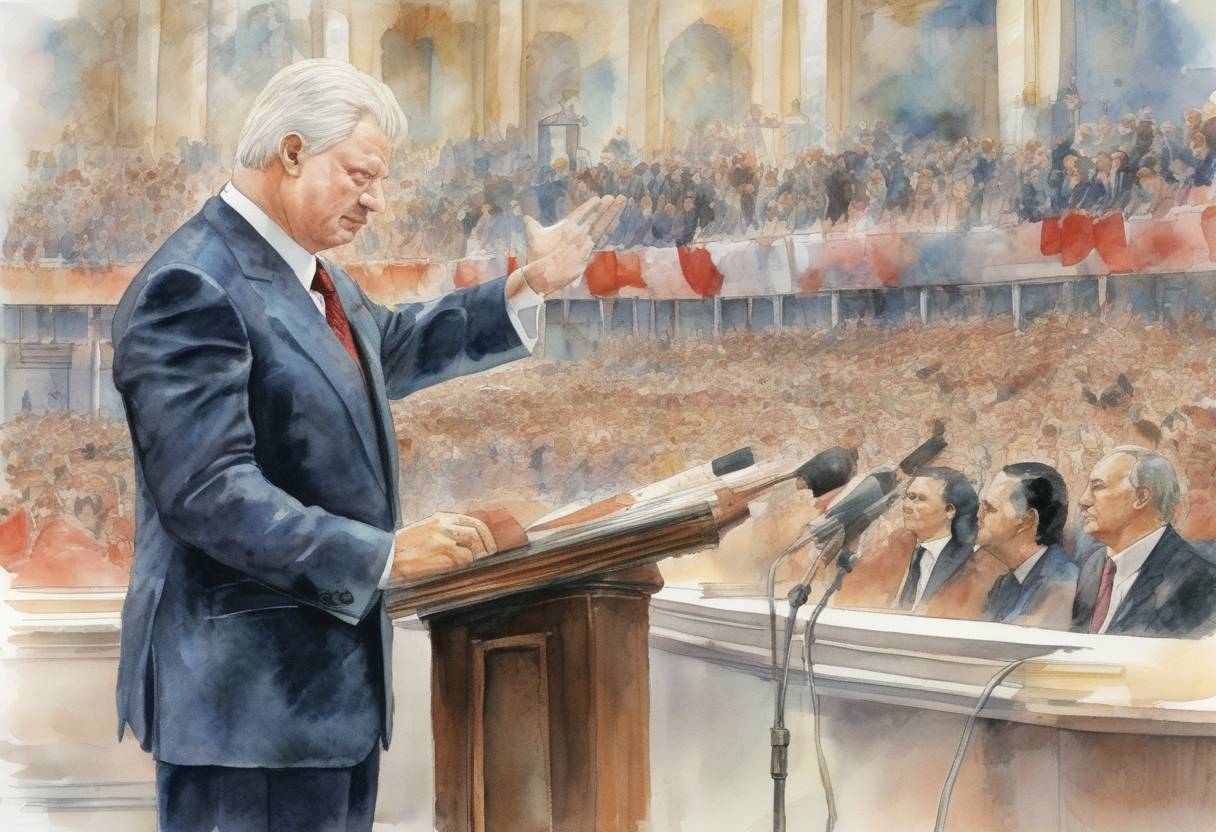
On July 10, 1991, Boris Yeltsin was officially sworn in as the first elected President of the Russian Soviet Federative Socialist Republic (RSFSR), marking a pivotal moment in Russian history. This event signified a major shift in the political landscape of the Soviet Union, as it was the first time a leader of Russia was chosen through a democratic election process.
Perestroika and Glasnost: The late 1980s were a period of significant reform in the Soviet Union under the leadership of Mikhail Gorbachev. His policies of perestroika (restructuring) and glasnost (openness) aimed to revitalize the Soviet economy and make the government more transparent, inadvertently setting the stage for political change.
Rising Nationalism and Reform Movements: Throughout the Soviet Union, there was a growing tide of nationalism and calls for reform. In Russia, Boris Yeltsin emerged as a prominent figure advocating for greater autonomy from the Soviet central government.
1990 Elections and Political Ascent: In 1990, Yeltsin was elected as the Chairman of the Supreme Soviet of the RSFSR, a position that increased his influence and visibility. He became a vocal critic of Gorbachev’s policies, positioning himself as a reformist leader.
Historic Election: On June 12, 1991, Russia held its first presidential election. Boris Yeltsin ran as an independent candidate, advocating for economic reform, political freedom, and greater independence from Soviet control.
Victory: Yeltsin won a decisive victory, securing 57% of the vote in a field of six candidates. His election was a clear indication of the public’s desire for change and reform.
Ceremony: The inauguration took place on July 10, 1991, in Moscow. It was a historic event, symbolizing the transition from Soviet rule to a more democratic governance structure within Russia.
Significance: Yeltsin’s presidency marked the beginning of the end for the Soviet Union. His leadership played a crucial role in the subsequent dissolution of the Soviet Union later that year, in December 1991.
Dissolution of the Soviet Union: Yeltsin’s presidency was a catalyst for the eventual dissolution of the Soviet Union. By December 1991, the Soviet Union had officially disbanded, and Russia emerged as an independent nation.
Economic and Political Reforms: Yeltsin implemented significant economic reforms, transitioning Russia from a planned economy to a market economy. These reforms were challenging and led to economic hardship for many Russians during the 1990s.
Legacy: Yeltsin’s tenure is often viewed with mixed opinions. While he is credited with helping to dismantle the Soviet Union and introducing democratic reforms, his presidency also faced criticism for economic turmoil and political instability.
In summary, Boris Yeltsin’s inauguration as the first elected President of Russia on July 10, 1991, was a landmark event that played a crucial role in reshaping the political and economic landscape of Russia and the former Soviet Union.
Source: en.wikipedia.org