The Sack of Rome by the Visigoths on August 27, 410
410 · Rome, Italy
The Visigoths, led by King Alaric I, complete their sack of Rome, marking a significant event in the decline of the Western Roman Empire.
August 14, 0410
The Visigoths, led by King Alaric I, begin their third siege of Rome, which eventually leads to the sack of the city later in August.
Rome, Western Roman Empire | Visigoths
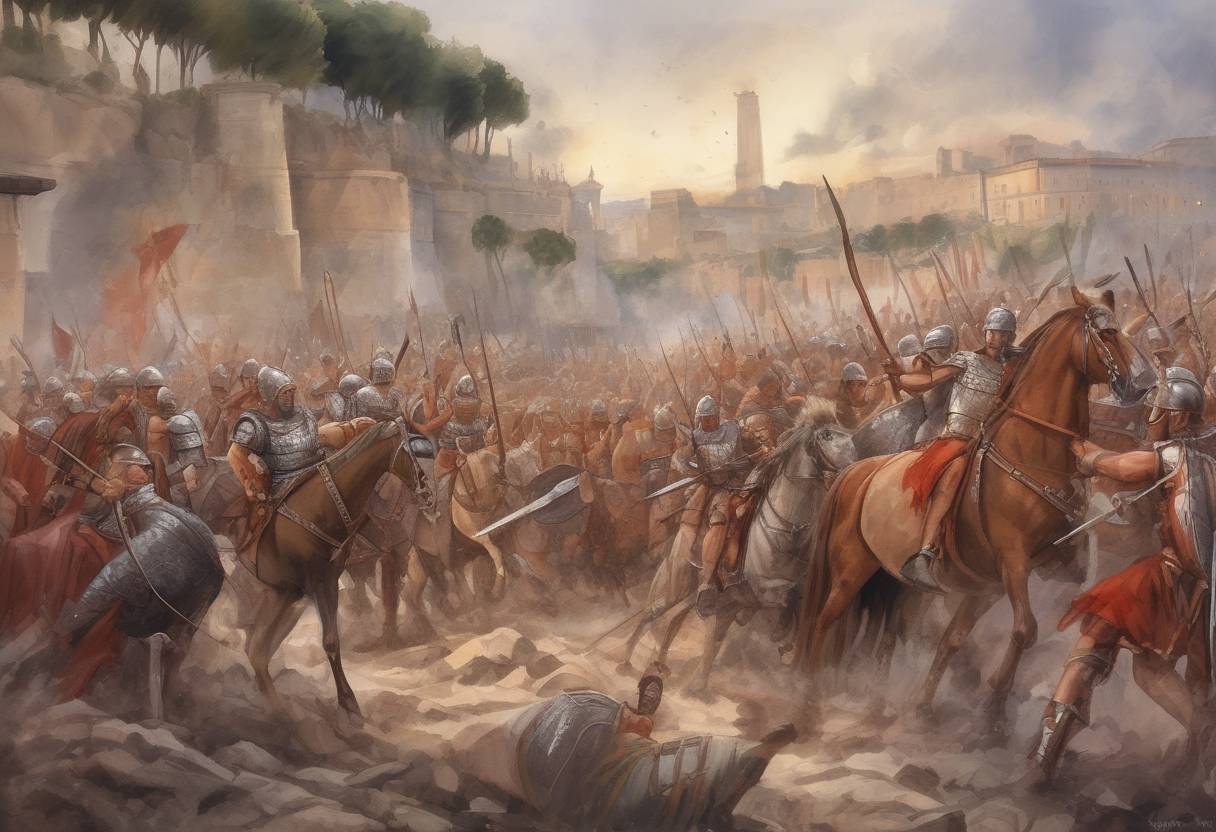
On August 14, 410, the Visigoths, under the leadership of King Alaric I, commenced their third and final siege of Rome. This event marked a pivotal moment in the decline of the Western Roman Empire, culminating in the sack of Rome later that month.
The Visigoths, originally a Germanic tribe, had been in conflict with the Roman Empire for several decades. Their relationship with Rome was complex, characterized by periods of both alliance and hostility. By the late 4th century, the Visigoths had settled within the empire’s borders as foederati (federated allies), but tensions rose due to unmet promises and mistreatment by Roman officials.
Battle of Adrianople (378): The Visigoths, under Fritigern, defeated the Roman army, a significant blow to Roman military prestige.
Settlement and Discontent: The Visigoths were settled in the Balkans but faced exploitation and poor treatment, leading to unrest.
Alaric’s Rise: Alaric I became the leader of the Visigoths around 395. His ambitions and grievances against Rome fueled his campaigns.
Previous Sieges: Alaric had laid siege to Rome twice before, in 408 and 409, as part of his strategy to extract concessions from the Roman government.
By August 410, Alaric had grown frustrated with the Roman Senate’s inability to meet his demands, which included land and a position of power within the empire. The third siege was marked by a blockade that cut off supplies to the city, exacerbating the famine and desperation among its inhabitants.
On August 24, 410, the Visigoths breached the city walls, leading to the sack of Rome. This was the first time in nearly 800 years that Rome had fallen to a foreign enemy. The sack lasted for three days, during which the Visigoths looted the city but spared many of its churches, including St. Peter’s Basilica, due to Alaric’s Christian faith.
Psychological Impact: The sack of Rome sent shockwaves throughout the Roman world, symbolizing the vulnerability and decline of the once-mighty empire.
Political Consequences: The event weakened the authority of the Western Roman Empire, accelerating its fragmentation and eventual fall in 476.
Cultural Legacy: The sack of Rome was a turning point that highlighted the shifting power dynamics in Europe, paving the way for the rise of medieval kingdoms.
In summary, the third siege and subsequent sack of Rome by the Visigoths under Alaric I was a landmark event in late antiquity, underscoring the decline of Roman power and the emergence of barbarian kingdoms that would shape the medieval landscape.
Source: en.wikipedia.org