Legalization of Gambling in Nevada - March 19, 1931
1931 · Carson City, United States
The state of Nevada legalized gambling, paving the way for the growth of Las Vegas as a major gambling center.
May 15, 1905
Las Vegas was officially founded as a city when 110 acres of land were auctioned off, marking the beginning of its development.
Las Vegas, United States | None
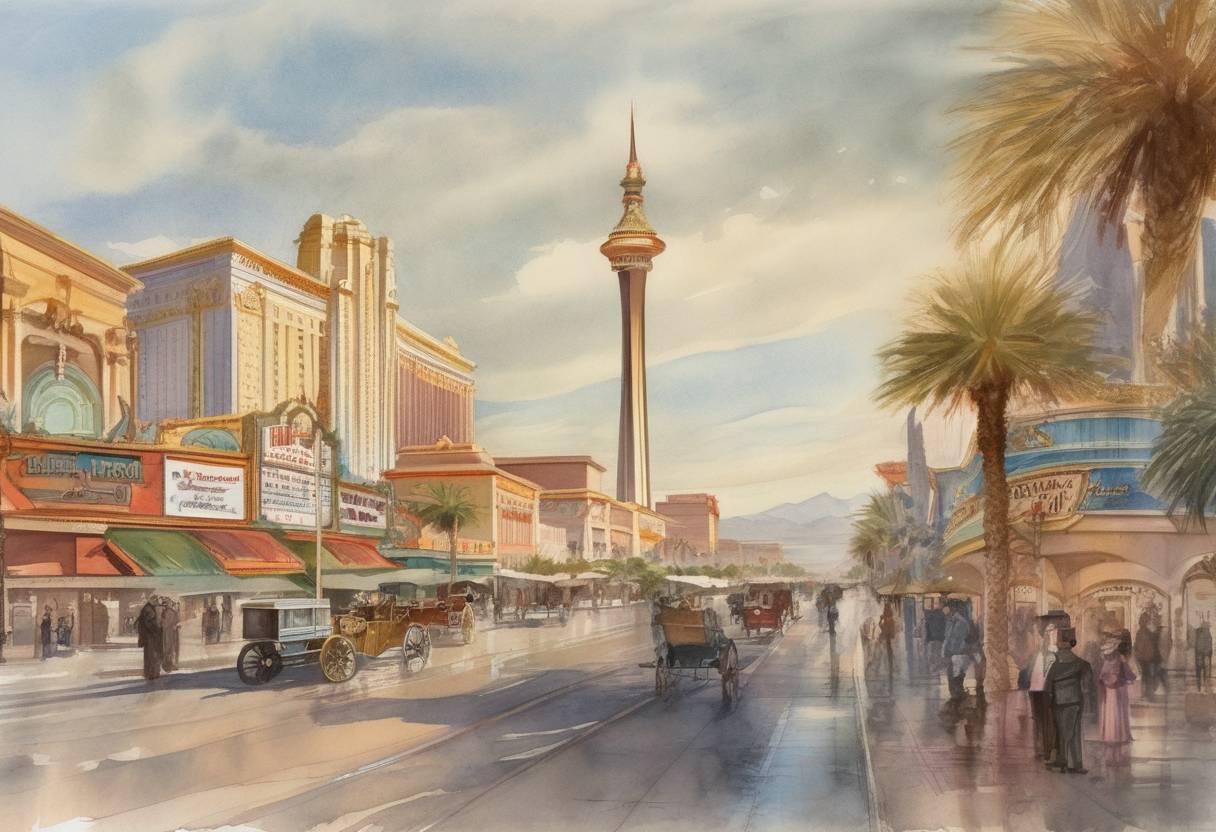
On May 15, 1905, a pivotal event in the history of the American West took place: the official founding of Las Vegas as a city. This moment was marked by the auctioning of 110 acres of land, which laid the groundwork for the development of what would become one of the most iconic cities in the world.
In the early 20th century, Las Vegas was a modest settlement in the Mojave Desert, primarily serving as a stopover for travelers and a small community of ranchers and farmers. The area’s development was significantly influenced by the construction of the San Pedro, Los Angeles & Salt Lake Railroad, which connected Salt Lake City to Los Angeles. This railroad, completed in 1905, was crucial in transforming Las Vegas from a remote outpost into a burgeoning town.
The auction on May 15, 1905, was organized by the railroad company, which recognized the strategic importance of Las Vegas as a railroad stop. The company divided 110 acres of land into plots and auctioned them off to eager buyers. This land was located in what is now the downtown area of Las Vegas.
The auction attracted a diverse group of people, including entrepreneurs, speculators, and settlers, all drawn by the promise of opportunity in this new frontier. The sale of these plots marked the official establishment of Las Vegas as a city, setting the stage for its rapid growth and development.
Following the auction, Las Vegas began to grow steadily. The availability of water from the nearby artesian wells made it an attractive location for settlement. The city quickly became a hub for commerce and trade, benefiting from its strategic position along the railroad.
In the decades that followed, Las Vegas continued to evolve, particularly with the legalization of gambling in Nevada in 1931 and the construction of the Hoover Dam, which brought an influx of workers and resources to the area. These developments laid the foundation for Las Vegas to become a major tourist destination, renowned for its entertainment, hospitality, and vibrant nightlife.
The founding of Las Vegas on May 15, 1905, was a significant milestone in the history of the American West. It marked the beginning of a transformation from a small desert settlement into a global city known for its unique blend of entertainment, culture, and innovation. Today, Las Vegas stands as a testament to the vision and ambition of those early settlers who saw potential in the desert landscape.
In summary, the auction of 110 acres of land on this date was not just a real estate transaction; it was the birth of a city that would grow to have a profound impact on American culture and the global entertainment industry.
Source: en.wikipedia.org