Capture of Fort Wagner - September 6, 1863
1863 · Charleston, United States
During the American Civil War, Union forces capture Fort Wagner in South Carolina after Confederate evacuation, marking a strategic victory for the Union.
August 27, 1861
Union forces attacked Cape Hatteras, North Carolina, in the first combined operation of the United States Army and Navy in the American Civil War.
Cape Hatteras, United States | Union Army
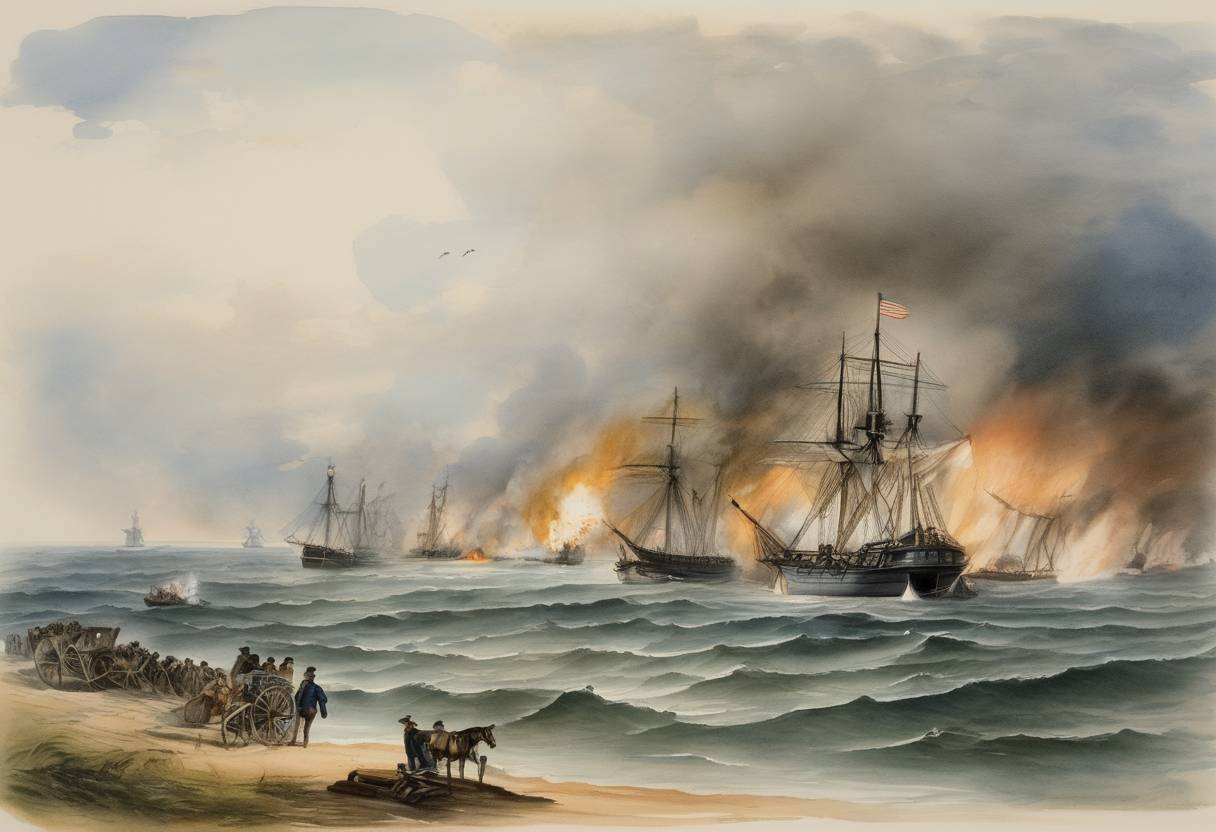
The Battle of Hatteras Inlet Batteries marked a significant event in the early months of the American Civil War, as it was the first combined military operation by the United States Army and Navy. This operation took place on the coast of North Carolina at Hatteras Inlet on August 27, 1861.
At the outset of the Civil War, the Union recognized the strategic importance of maintaining a blockade on Confederate ports to weaken the Confederate economy and cut off supply lines. The Outer Banks of North Carolina, with its series of inlets, presented ideal locations for Confederate privateers to evade the Union blockade and attack Northern shipping.
Cape Hatteras, a critical site in this context, was fortified by the Confederates with two key installations: Fort Hatteras and Fort Clark. The Union sought to seize control of these positions to tighten their naval blockade and reduce Confederate privateering activities.
On August 26, 1861, Union forces, led by Flag Officer Silas H. Stringham and Major General Benjamin F. Butler, approached Hatteras Inlet. The operation involved a fleet of seven ships and around 900 soldiers. This marked the first coordinated amphibious assault by the Army and Navy, showcasing a new level of naval innovation and cooperation.
Naval Component: Flag Officer Stringham commanded a flotilla that included the USS Minnesota, Cumberland, Wabash, Pawnee, and several smaller vessels. The ships utilized an innovative naval bombardment strategy, remaining in motion while attacking to make targeting difficult for Confederate gunners.
Land Component: The infantry forces, under the command of General Butler, included men from the 9th and 20th New York Volunteer Infantry Regiments. Their objective was to land and secure the Confederate forts once the naval forces had sufficiently weakened the defenses.
The bombardment commenced on August 27, 1861, with the Union’s naval forces unleashing a relentless assault on Fort Clark, which compelled the Confederates to withdraw to the more heavily fortified Fort Hatteras. The Union forces then focused their efforts on Fort Hatteras.
Despite attempts by the Confederate defenders, led by Colonel William F. Martin, to resist, the continuous bombardment and the threat of an impending ground assault led to their capitulation. Realizing the futility of further resistance, Martin surrendered both forts on August 29.
The Union victory at the Battle of Hatteras Inlet Batteries had significant implications:
Strategic Advantage: Capturing the inlet allowed the Union to control a critical entry point along the North Carolina coast, enhancing the effectiveness of their blockade.
Boost in Morale: This victory provided a morale boost to the Union and demonstrated the potential of coordinated Army-Navy operations.
Shift in Warfare: The success of the operation influenced future military strategies, promoting joint operations and the development of more complex amphibious assaults during the Civil War.
The fall of Cape Hatteras showcased the evolving nature of warfare and laid the groundwork for future Union successes along the Confederate coastline.
Source: en.wikipedia.org