Albania Declares Itself a Republic on January 20, 1925
1925 · Tirana, Albania
Albania declares itself a republic.
September 1, 1928
Ahmet Zogu declares Albania a kingdom and becomes King Zog.
Tirana, Albania | Kingdom of Albania
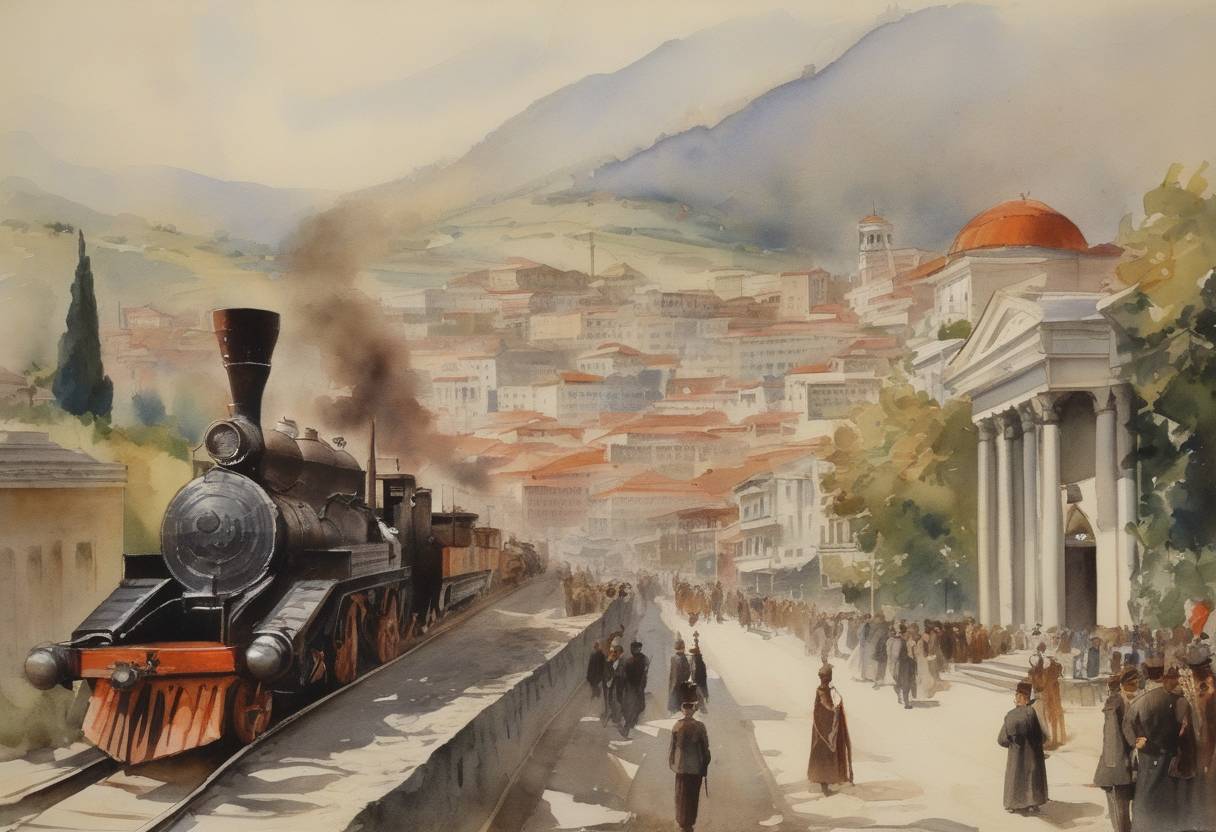
On September 1, 1928, Ahmet Zogu declared Albania a kingdom, marking a significant transformation in the country’s political landscape. This event led to Zogu assuming the throne as King Zog I, the first and only King of the Albanians.
The declaration of a monarchy was a culmination of Ahmet Zogu’s ascent in Albanian politics. Initially serving as the Prime Minister and then the President, Zogu played a pivotal role in stabilizing Albania during the turbulent years following World War I. His political journey began with his leadership in the Albanian National Assembly and later through his service as the Interior Minister. Zogu’s prominence rose from his efforts to modernize the country and centralize authority, often through authoritarian methods.
Albania had declared itself a republic in 1925, with Zogu as its President. However, Zogu’s ambition for greater power, combined with his desire to instill a more stable and enduring form of governance, motivated him to transition Albania into a monarchy. This move was constitutionally supported by the Albanian Constituent Assembly, which proclaimed Zogu as King. The establishment of a monarchy was seen by Zogu as a way to gain legitimacy and international recognition.
Upon declaring himself King Zog I, he took on this new royal title with a vision of modernizing Albania and consolidating power. The new Albanian monarchy was characterized by a ceremonial coronation and the adoption of certain European royal traditions, though Zog I retained his Muslim faith, reflecting Albania’s unique cultural landscape.
The establishment of the Albanian Kingdom under King Zog I ushered in a period of relative stability, albeit under an increasingly autocratic regime. Domestically, King Zog implemented reforms in economic and infrastructure development while maintaining strict control over dissent and political opposition.
On the international stage, Zog’s reign was marked by efforts to foster alliances and secure Albania’s sovereignty against potential Italian expansionism. Despite his internal initiatives, the king’s position was constantly threatened by regional dynamics and internal dissent.
King Zog’s reign would eventually end in 1939 when Italian forces invaded Albania, and he was forced into exile. Despite his efforts, the declaration of a monarchy and subsequent developments highlighted the complexities faced by Albania in navigating national sovereignty in the interwar European political context. His tenure serves as a significant chapter in Albania’s quest for political stability and self-determination.
Source: en.wikipedia.org