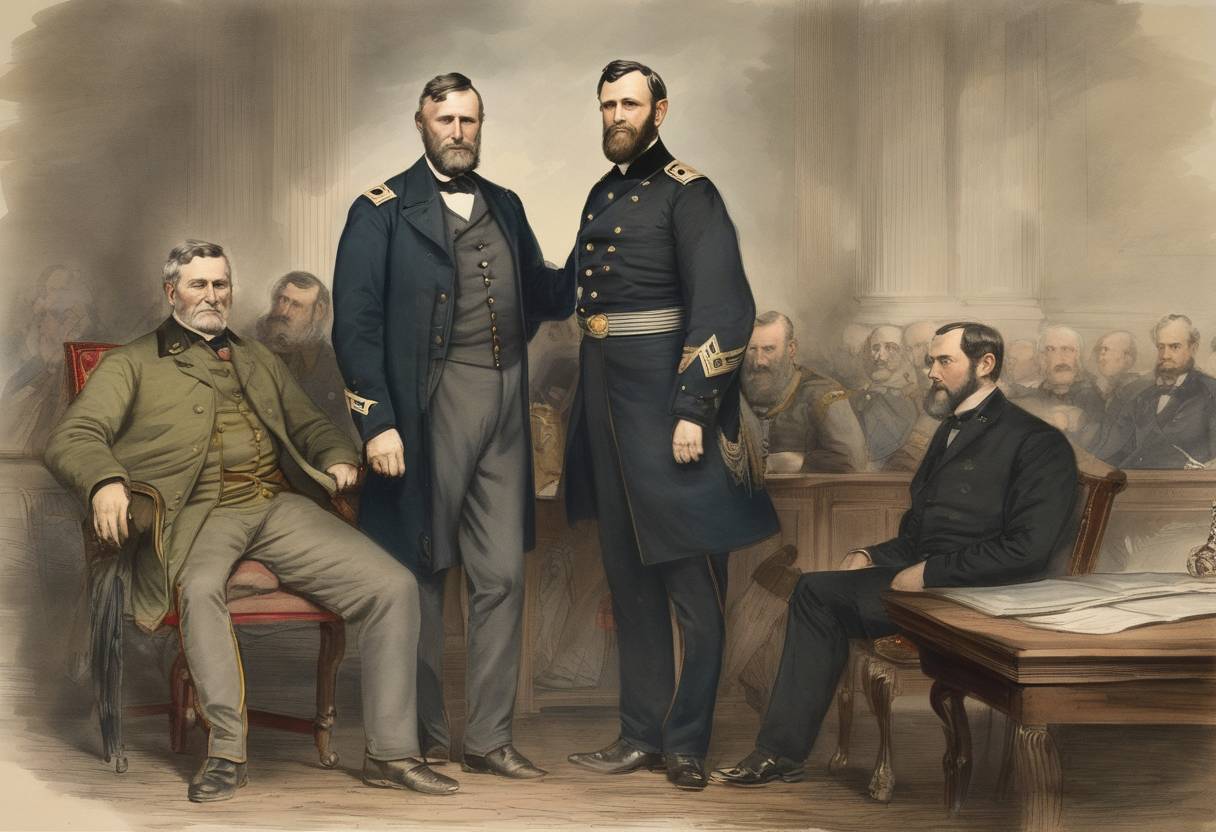
Establishment of the Rank of General of the Army for Ulysses S. Grant
On July 25, 1866, the United States Congress established the rank of “General of the Army of the United States” and conferred this title upon Ulysses S. Grant, marking a significant development in U.S. military history. This event occurred shortly after the end of the Civil War, as the country was transitioning into the Reconstruction era.
Context and Background
- Ulysses S. Grant’s Role in the Civil War: Grant played a pivotal role in leading the Union Army to victory during the American Civil War. His strategic insight and leadership were instrumental in the defeat of the Confederate forces.
- Recognizing Military Leadership: The creation of the rank was meant to recognize Grant’s distinguished service and success as a military leader. It was the highest possible rank in the U.S. Army at the time, equivalent to the European rank of field marshal.
Details of the Appointment
- Congressional Action: The bill to create the rank of General of the Army was approved by Congress and then signed into law by President Andrew Johnson.
- First Holder: Ulysses S. Grant became the first officer in U.S. history to be appointed as General of the Army, reflecting his stature and importance in post-war America.
Implications and Aftermath
- Military and Political Career: This recognition paved the way for Grant’s prominent future in American public life, including his subsequent election as the 18th President of the United States in 1868.
- Legacy of the Rank: The rank of General of the Army was later conferred upon only one other individual during the 19th century, William Tecumseh Sherman. It was revived in the 20th century during World War II for distinguished military leaders.
Broader Historical Significance
- Symbol of Unity and Strength: Establishing this rank underscored the importance of strong military leadership in preserving the Union and highlighted the pathway from military achievement to national leadership.
- Reconstruction Era Leadership: Grant’s rise to this rank symbolized a continuity of authority and provided stability during the turbulent Reconstruction period, reflecting the nation’s need for steadfast leadership following a deeply divisive war.
This action by Congress not only honored an individual but also represented a significant moment as the United States looked to heal and rebuild following the Civil War.