1541 · Tula, present-day United States
Spanish conquistador Hernando de Soto entered Tula, an important Native American polity in present-day Arkansas.
October 18, 1540
Spanish explorer Hernando de Soto's expedition into the interior of North America reaches present-day Alabama, resulting in the Battle of Mabila.
Mabila, present-day Alabama, United States | Hernando de Soto's expedition
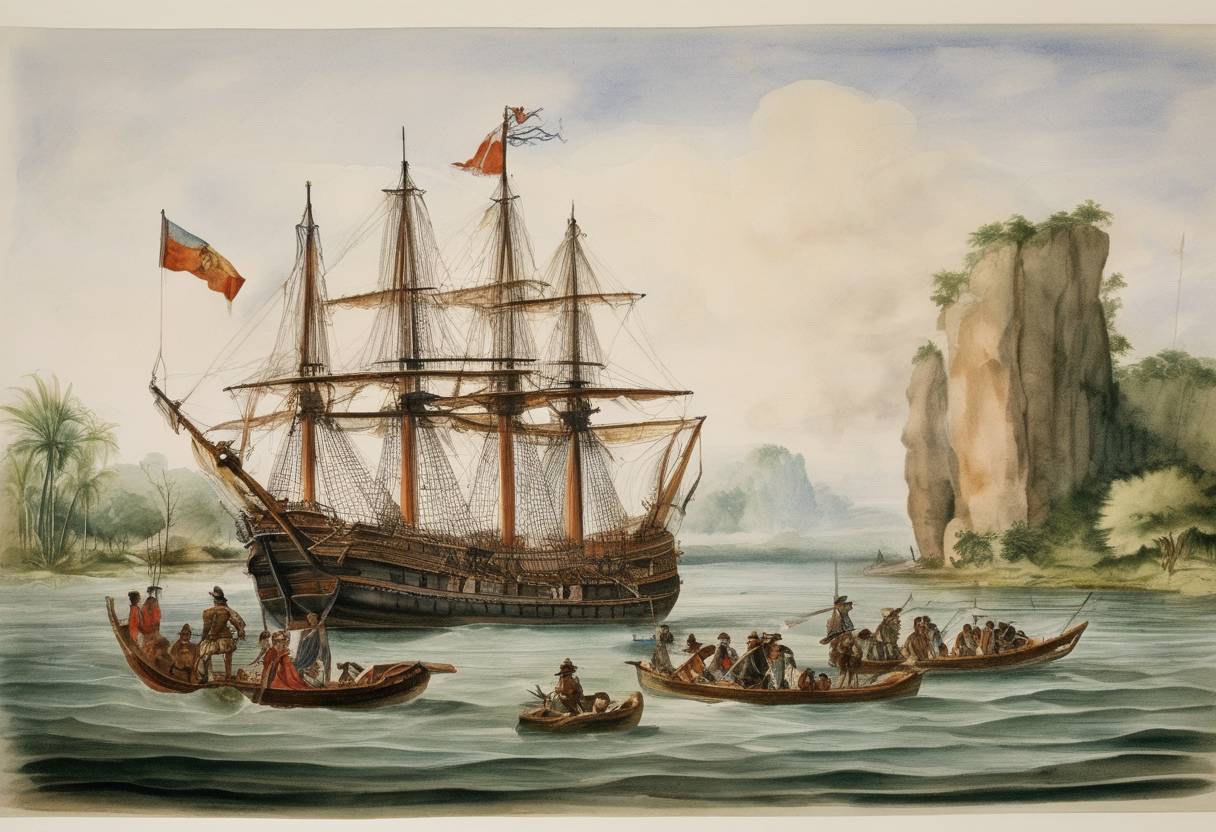
On October 18, 1540, Spanish explorer Hernando de Soto’s expedition into the interior of North America culminated in a pivotal confrontation known as the Battle of Mabila. This event took place in what is now Maubila, near present-day Montgomery, Alabama, during De Soto’s quest for wealth and conquest in the New World.
Hernando de Soto embarked on his extensive expedition through the southeastern United States in 1539, motivated by tales of riches akin to those found by prior Spanish explorers in Mexico and Peru. This expedition was one of the earliest European explorations of the interior of what would become the United States.
In the fall of 1540, De Soto’s expedition had made contact with various Native American tribes as they traversed from Florida through the present-day southeastern states. By October, the group encountered the paramount chief Tuskaloosa.
Tuskaloosa, the chief of the Mississippian town of Mabila, initially greeted De Soto and his men with politeness but harbored resentment toward the Spanish. Mabila was a fortified town meant to serve as a trap for the Spanish. Tuskaloosa and the inhabitants planned to attack and overwhelm the unwelcome guests.
On October 18, the Spanish forces were drawn into the town through deceitful diplomacy. Once inside, tensions quickly escalated. Tuskaloosa refused De Soto’s demand for additional provisions and warriors, inciting a hostile response from both sides.
Inside the fortified walls of Mabila, the battle erupted violently. The Native American warriors launched a ferocious assault on the Spanish troops. The well-organized resistance by Tuskaloosa’s forces was met with the superior weaponry and armor of the Spaniards.
Despite being numerically outnumbered, De Soto’s men, equipped with steel swords, crossbows, and firearms, fought fiercely. The battle resulted in heavy casualties, with accounts reporting hundreds of Native American warriors killed, while the Spanish also suffered significant losses.
The Battle of Mabila marked a turning point in De Soto’s expedition. It was a pyrrhic victory for the Spaniards; they won the battle but at the cost of losing crucial men, supplies, and morale. This engagement decimated the resources of both the Native Americans and the Spanish, severely impacting future interactions and the subsequent trajectory of De Soto’s expedition.
The battle contributed to the eventual decline of Hernando de Soto’s ambitions in North America. De Soto continued his journey but never found the riches he sought, eventually succumbing to fever on May 21, 1542.
The Battle of Mabila is a significant event in early American history. It symbolizes the complex and often violent encounters between European explorers and Indigenous peoples during the period of European colonization. This confrontation highlighted the resistance and resilience of Native American societies against European encroachment. The battle also underscored the limitations faced by European explorers due to the vast and challenging North American interior and the resistance of its inhabitants.
Source: en.wikipedia.org