Thomas Edison Patents the Motion Picture Camera
1891 · West Orange, United States
Thomas Edison patents the motion picture camera, a significant development in the history of film and entertainment.
October 17, 1888
Thomas Edison filed a patent for the Optical Phonograph (the first patented movies).
West Orange, United States | Thomas Edison Inc.
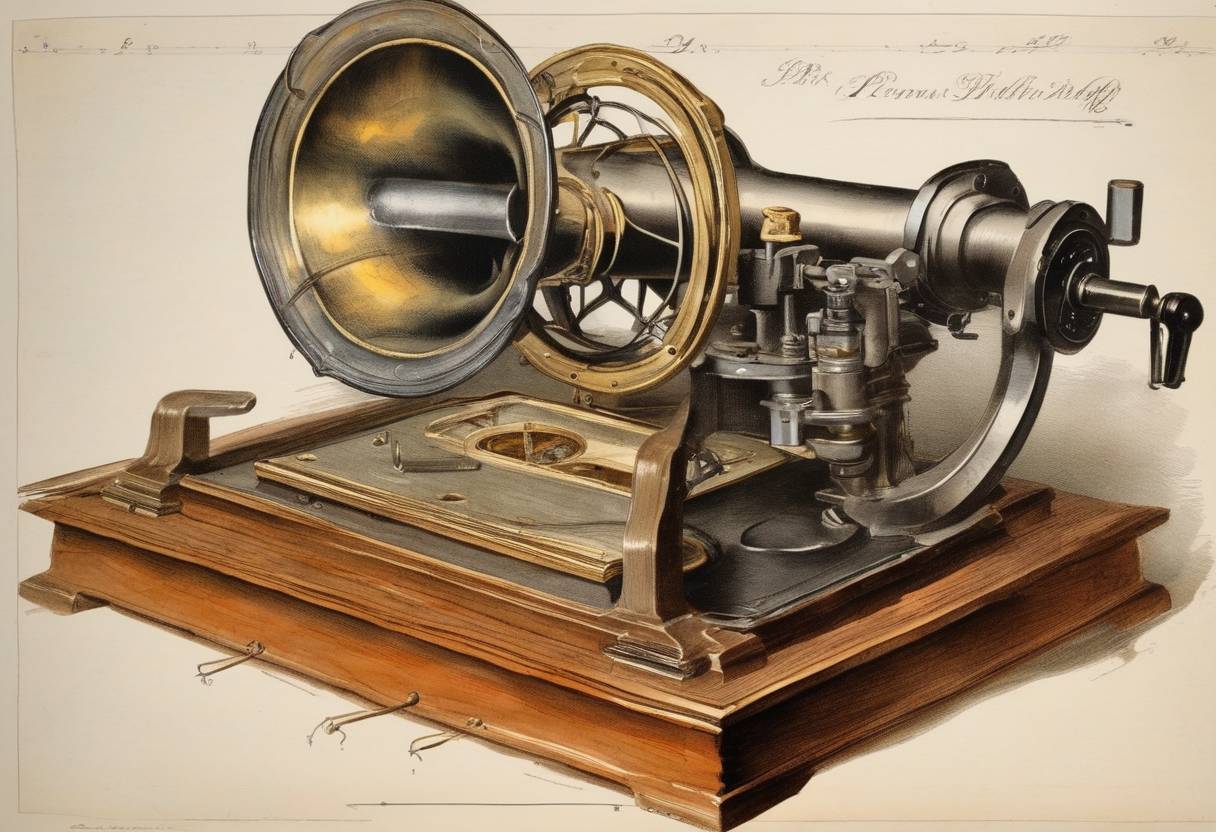
On October 17, 1888, Thomas Edison, an influential American inventor and businessman, filed a groundbreaking patent for an optical phonograph. This innovation marked a significant step towards the development of motion pictures and laid the foundation for the moving image industry that would flourish in the 20th century.
Historical Innovations: Prior to this patent, Thomas Edison was already renowned for his inventions, such as the phonograph and the electric light bulb. His work largely revolved around sound recording and electrical innovations, contributing significantly to technological advancements in the late 19th century.
Desire for Visual Accompaniment: Edison’s invention of the phonograph, which could capture and reproduce sound, prompted him to explore the possibility of synchronizing sound with moving images, creating a more comprehensive sensory experience.
Patent Details: The optical phonograph was envisioned as a device that combined visual images with sound. The concept involved a system where photographs would be placed along with a phonograph, allowing short segments of moving images to be viewed with accompanying audio.
Technological Implications: Though the first prototypes of what came to be the kinetoscope, a motion picture device, did not emerge until later, this patent demonstrated Edison’s forward-thinking approach to recording and displaying synchronized audio and visual content.
Catalyst for Motion Pictures: While Edison did not directly invent the motion picture camera himself, his efforts and funding in the development of related devices were instrumental. His work fostered advancements by inventors like W.K.L. Dickson, which eventually led to the creation of the film industry.
Broader Impact: This marked the beginning of the integration of sound and image into a single medium, eventually revolutionizing entertainment, culture, and information dissemination worldwide.
Thomas Edison’s filing of a patent for the optical phonograph on October 17, 1888, represents a pivotal moment in the history of audiovisual technology. It reflects Edison’s broader vision of an interconnected future where music, images, and later, dialogues could enhance storytelling and information sharing. This innovative step played a crucial role in the eventual establishment of cinema, influencing countless facets of societal interaction with media in the years to come.
Source: www.britannica.com