Mary Tudor's Marriage to Louis XII of France
1514 · Abbeville, France
Mary Tudor, sister of Henry VIII, married Louis XII of France, strengthening the political alliance between England and France.
December 31, 1501
The first marriage by proxy of Katherine of Aragon and Prince Arthur of England took place. This was an essential step in securing the political alliance between England and Spain.
Ludlow, England | British Monarchy
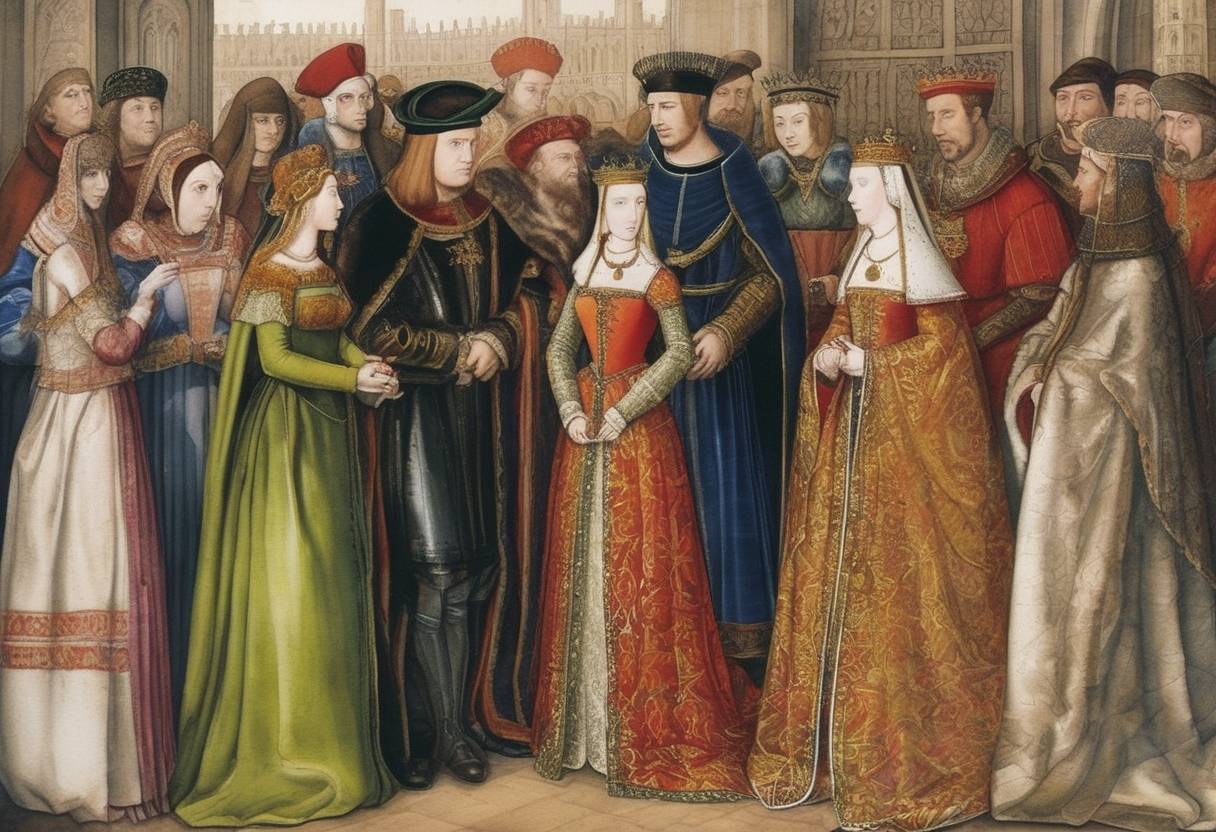
On December 31, 1501, the first marriage by proxy between Princess Katherine of Aragon and Prince Arthur of England occurred. This significant event was part of an essential diplomatic alliance between England and Spain, aiming to strengthen the political landscape of Western Europe.
The betrothal of Katherine of Aragon and Prince Arthur was orchestrated by their respective parents, King Henry VII of England and the joint monarchs of Spain, Ferdinand II of Aragon and Isabella I of Castile. The marriage was intended to solidify a crucial alliance against France, which was a common adversary both kingdoms sought to counterbalance.
Katherine, born in 1485 in Alcalá de Henares near Madrid, was a daughter of the Catholic Monarchs of Spain, known for their determination to unify the Iberian Peninsula under a single powerful rule. Arthur, born in 1486, was the eldest son of King Henry VII, the first Tudor monarch who aimed to stabilize his reign through advantageous marriages for his children.
The proxy marriage, a customary practice where one or both parties are not physically present, was an initial formal step preceding the actual marriage. The ceremony authorized representatives to stand in for the absent groom. The proxy for Arthur was Don Pedro de Ayala, a trusted diplomat and ambassador at the Court of Henry VII.
This type of marriage was entrenched in royal diplomacy, permitting nuptials when geographical or political constraints prevented personal attendance. The proxy marriage’s formalities, conducted with necessary ecclesiastical blessings, made the union legally binding according to the prevailing laws of Christendom.
The marriage by proxy set the stage for Katherine’s journey to England, where she would eventually marry Arthur in person in November of the same year at St. Paul’s Cathedral in London. Tragically, their marriage was short-lived due to Arthur’s untimely death in April 1502.
The union between Katherine and Arthur, though brief, had lasting effects on the Tudor dynasty. After Arthur’s death, Katherine would later marry Arthur’s younger brother, Henry VIII, a marriage that initiated significant historical currents affecting England’s religious and political trajectory, including the English Reformation.
The proxy marriage of Katherine and Arthur exemplifies the pivotal role dynastic alliances played in the political machinations of European monarchies. It highlights the intricate connections between international diplomacy and personal unions during the Renaissance period. This event, among others, influenced the course of both English and Spanish histories profoundly.
Source: en.wikipedia.org