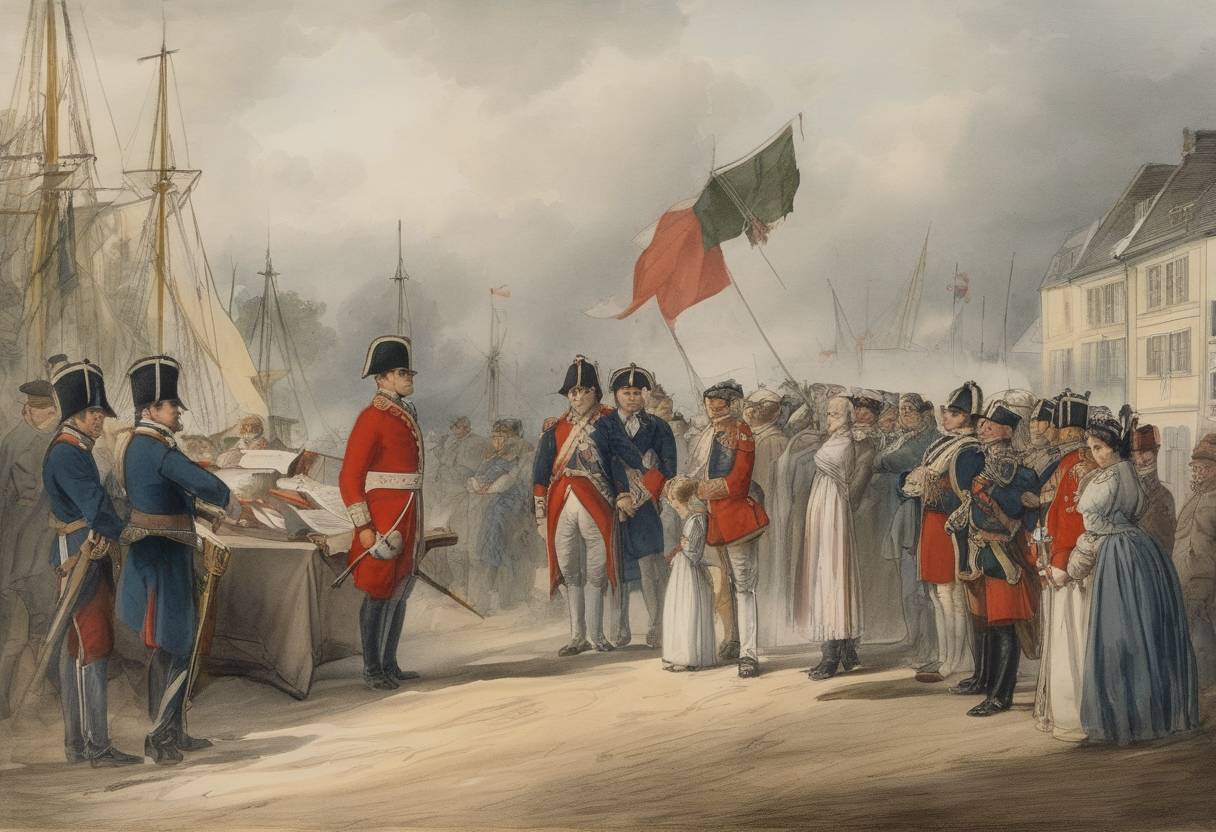
The Treaty of Fredrikshamn: A Pivotal Moment in Scandinavian History
On September 21, 1809, the Treaty of Fredrikshamn was signed, marking the conclusion of the Finnish War and a significant reorganization of territorial control in Northern Europe. This treaty resulted in the formal cession of Finland from Sweden to the Russian Empire, fundamentally altering the region’s geopolitical landscape.
Context and Lead-Up to the Treaty
The Finnish War, part of the larger Napoleonic Wars, began in February 1808 when Russia, allied with Napoleon’s France, invaded Finland, then an integral part of the Kingdom of Sweden. This onset was prompted by Russia’s desire to form a buffer zone against potential conflicts with Sweden, pressured by Napoleon to join the Continental System against Great Britain.
Amid this turmoil, Russian forces rapidly advanced into Finnish territory, with significant engagements taking place throughout 1808 and into early 1809. The Swedes, despite vigorous attempts to defend their holdings, found themselves outmatched by the numerically superior Russian army.
Key Provisions of the Treaty
The Treaty of Fredrikshamn was negotiated in the Finnish town of Fredrikshamn, today’s Hamina. The main terms of the treaty included:
- Cession of Territory: Sweden ceded all of Finland, as well as the Åland Islands, to Russia. This territory east of the Torne River became the newly established Grand Duchy of Finland, an autonomous entity within the Russian Empire.
- Boundary Demarcations: The new frontier was established along the Torne River and the Muonio River, shifting the Swedish border considerably westward and reshaping the northern European map.
- Swedish Sovereignty: While Sweden lost the Finnish territories, it retained sovereignty over its remaining kingdoms, and the treaty helped stabilize its borders against further Russian aggression.
Aftermath and Significance
The signing of the Treaty of Fredrikshamn had significant ramifications:
- Finnish Autonomy: Within Russia, Finland retained a degree of autonomy, developing its own administrative systems and legal codes, which would play a crucial role in fostering a distinct national identity over the subsequent century.
- Impact on Sweden: Sweden’s loss of Finland represented a severe blow, prompting internal political reforms and contributing to the end of King Gustav IV Adolph’s rule, ushering in the rise of the Bernadotte dynasty.
- Russian Strategy: For Russia, gaining control over Finland provided a strategic advantage in the Baltic region, extending its influence and security buffer.
The Treaty of Fredrikshamn remains a defining event in the history of Finland and Sweden, marking the end of Swedish dominance in the Finnish territories and the beginning of Russia’s influence, which would last over a century until Finland’s eventual independence in 1917.