The Last United States Soldiers Leave South Vietnam
1974 · Saigon, South Vietnam
The last United States soldiers leave South Vietnam, ending direct U.S. military involvement in the Vietnam War.
October 2, 1971
South Vietnamese forces abandon Tien Phuoc in Vietnam during the Vietnam War.
Tien Phuoc, South Vietnam | Army of the Republic of Vietnam
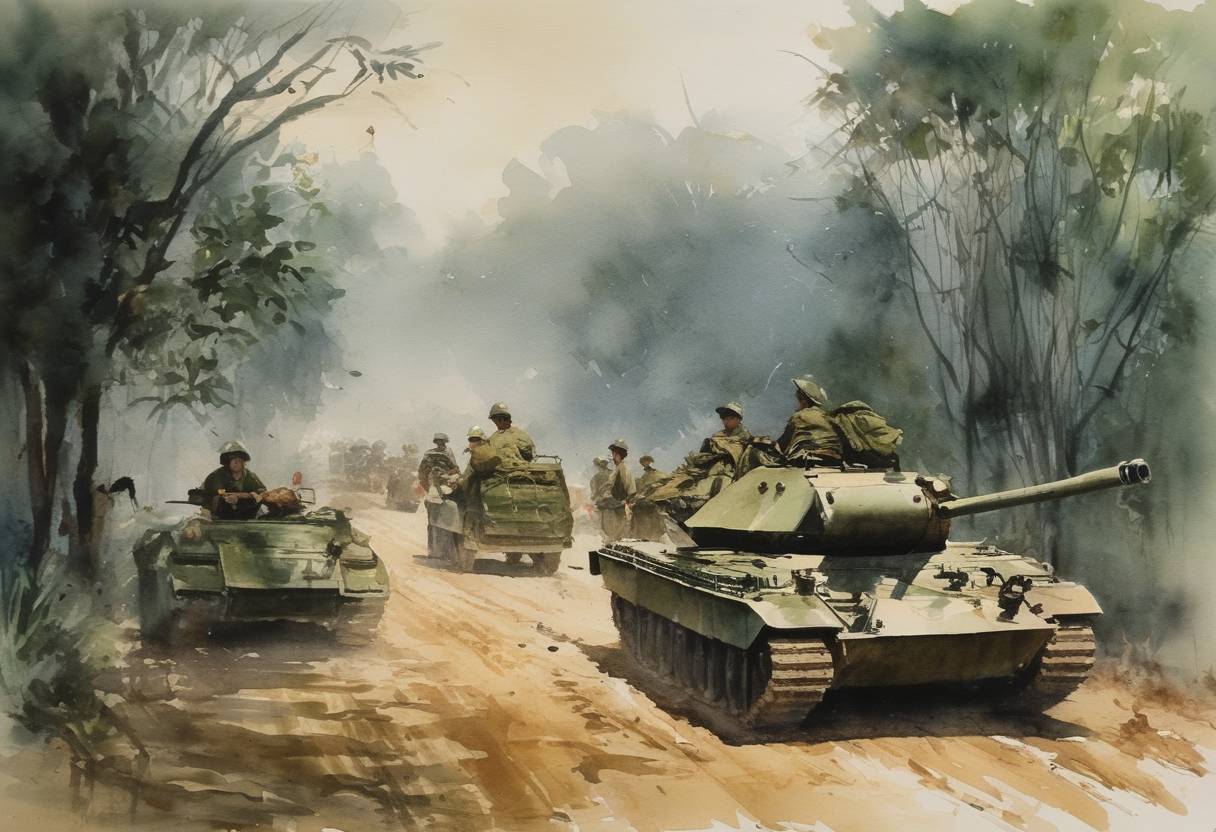
On October 2, 1971, during the Vietnam War, South Vietnamese forces made the tactical decision to abandon the district town of Tien Phuoc, located in Quang Tin Province, central Vietnam. This event was a part of a broader campaign by the North Vietnamese Army (NVA) to exert control over strategic regions of South Vietnam, exerting pressure on South Vietnamese military capabilities and logistical routes.
Tien Phuoc held strategic significance due to its location near the Ho Chi Minh Trail, a critical supply line used by the NVA extending from North Vietnam through Laos and Cambodia into South Vietnam. The control of this area was vital for both sides due to its proximity to key infiltration routes and the potential to control movements of troops and supplies.
Prior to October 2, 1971, the region had witnessed numerous confrontations as South Vietnamese forces, backed by U.S. military support, engaged in efforts to suppress NVA incursions and protect their positions. Despite these efforts, the persistent and strategically coordinated attacks by the NVA strained the resources and defensive capabilities of the South Vietnamese military.
The decision to withdraw from Tien Phuoc was primarily tactical, influenced by incessant pressure from NVA forces which had intensified their offensive operations in the area. The withdrawal was seen as a necessary step to preserve South Vietnamese military resources and personnel in the face of overwhelming opposition forces that had already started to gain substantial control over the region.
The abandonment of Tien Phuoc was emblematic of the challenges faced by South Vietnamese forces as they struggled to maintain territorial integrity against a determined adversary with growing momentum. It also highlighted the shifting nature of territorial control during the Vietnam War, where positions and towns changed hands frequently due to the conflict’s dynamic military strategies.
In the broader sense, the event underscored the increasing difficulties South Vietnam faced as U.S. troops gradually withdrew from Vietnam under the policy of “Vietnamization,” which aimed to transfer combat responsibilities to South Vietnamese forces. The relinquishment of Tien Phuoc reflected the challenges of sustaining such efforts without substantive foreign support, foreshadowing further territorial concessions in the years to come.
The abandonment of Tien Phuoc highlighted the changing tide of the Vietnam War during this period, as the NVA increasingly demonstrated their capability to challenge and overrun key locations held by South Vietnamese and allied forces. It serves as a crucial example of the strategic battles that defined the conflict and the immense pressures faced by the South Vietnamese military amidst diminishing external support.
Source: en.wikipedia.org