1862 · Acton, United States
The Dakota War of 1862 begins as Dakota Sioux warriors attack settlements in Minnesota, leading to a six-week conflict with significant casualties on both sides.
April 6, 1832
The Black Hawk War begins as Chief Black Hawk enters Illinois with around 1,000 followers to reclaim lost land.
Illinois, United States | Sauk Nation
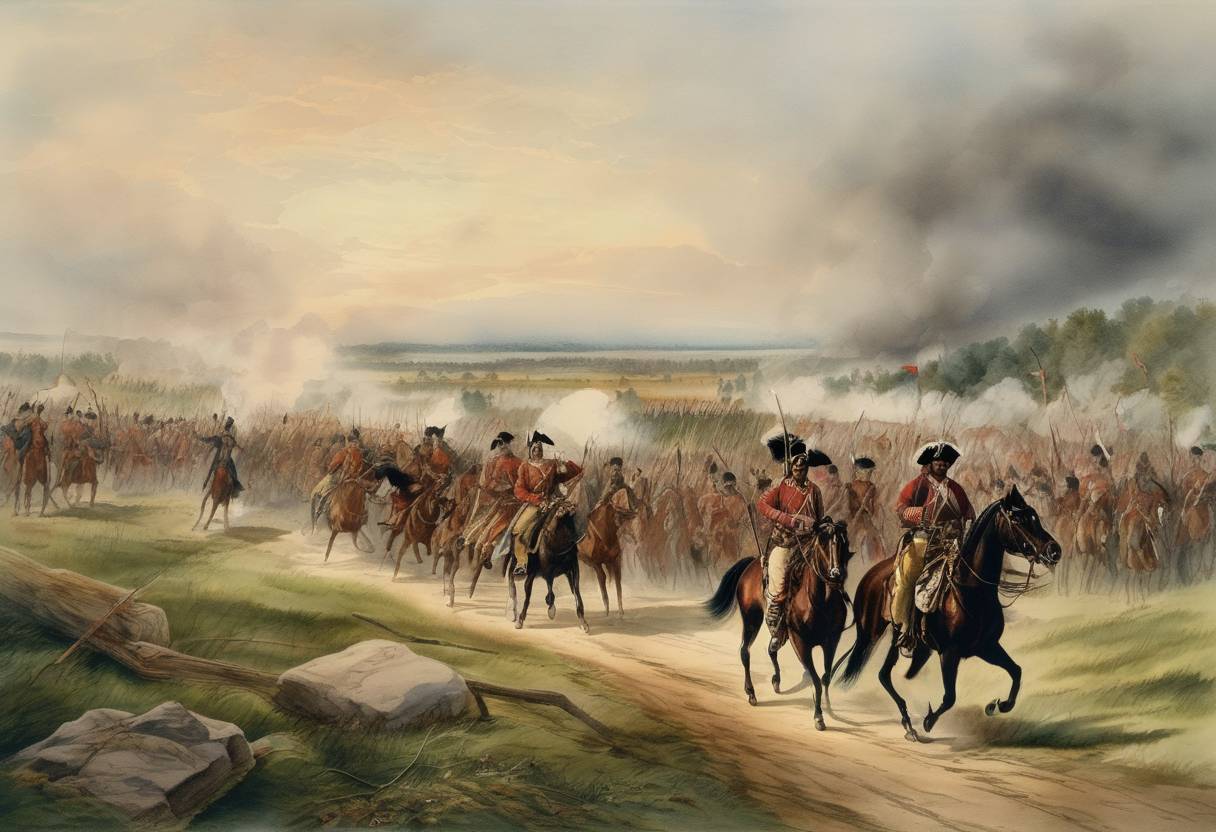
On April 6, 1832, the Black Hawk War officially commenced when Chief Black Hawk, leading a group of approximately 1,000 men, women, and children, crossed the Mississippi River into the state of Illinois. This marked the beginning of a conflict that would last throughout the summer of 1832 and involve various skirmishes between the United States militia, allied Native American tribes, and Black Hawk’s band.
The roots of the Black Hawk War lie in the tensions surrounding land treaties between Native American tribes and the United States government. In 1804, a controversial treaty was signed that ceded vast territories east of the Mississippi River, including lands in Illinois and Wisconsin, to the United States. However, this agreement was disputed by many of the Native American signatories, including Black Hawk, leader of a band of the Sauk tribe.
Black Hawk and his followers, known as the “British Band,” refused to recognize the cession of their ancestral homeland. Their dissatisfaction was fueled by settlers encroaching on their lands, further exacerbating tensions. In 1831, Black Hawk initially attempted to resettle in Illinois but was persuaded to return west of the Mississippi River after a brief stand-off with U.S. forces.
By April 1832, increasing frustration and desire to reclaim their lands compelled Black Hawk to lead his followers back into Illinois. Black Hawk’s group included families seeking to plant crops in their traditional territories. As they entered Illinois, Black Hawk hoped to forge alliances with other tribes and the British in Canada, recalling past alliances during the War of 1812.
The crossing was immediately perceived as a threat by nearby settlements and was reported to Illinois militia units, which quickly mobilized. The presence of Black Hawk and his followers in Illinois instigated panic among settlers and led to calls for military intervention.
The federal government, recognizing the potential for violent conflict, dispatched regular troops and militia to the region. The ensuing months saw a series of engagements, culminating in significant yet tragic battles such as Stillman’s Run and the Bad Axe Massacre, which resulted in heavy casualties for Black Hawk’s band.
Black Hawk’s effort was ultimately doomed due to superior U.S. military resources and the lack of substantial support from other tribes. By August 1832, the war concluded with the defeat of Black Hawk and his capture. The conflict resulted in the forced removal of most Native Americans from the area, allowing for increased settlement by European Americans.
The Black Hawk War is pivotal in understanding the consequences of U.S. expansionist policies and Native American resistance. It underscores the broader context of Native American displacement during the 19th century and the complexities surrounding treaty obligations and indigenous sovereignty. The conflict also marked the final armed ethnic conflict east of the Mississippi and served as a notable episode in the history of Native American and United States relations.
Source: www.nps.gov