The Battle of the Somme: Conclusion on November 18, 1916
1916 · Somme, France
World War I: The Battle of the Somme ended, resulting in over one million casualties from both the Allied and Central Powers.
November 13, 1916
In World War I, the Battle of the Ancre, a British offensive, begins on the Western Front, marking the last major attack of the Battle of the Somme.
Ancre, France | British Army
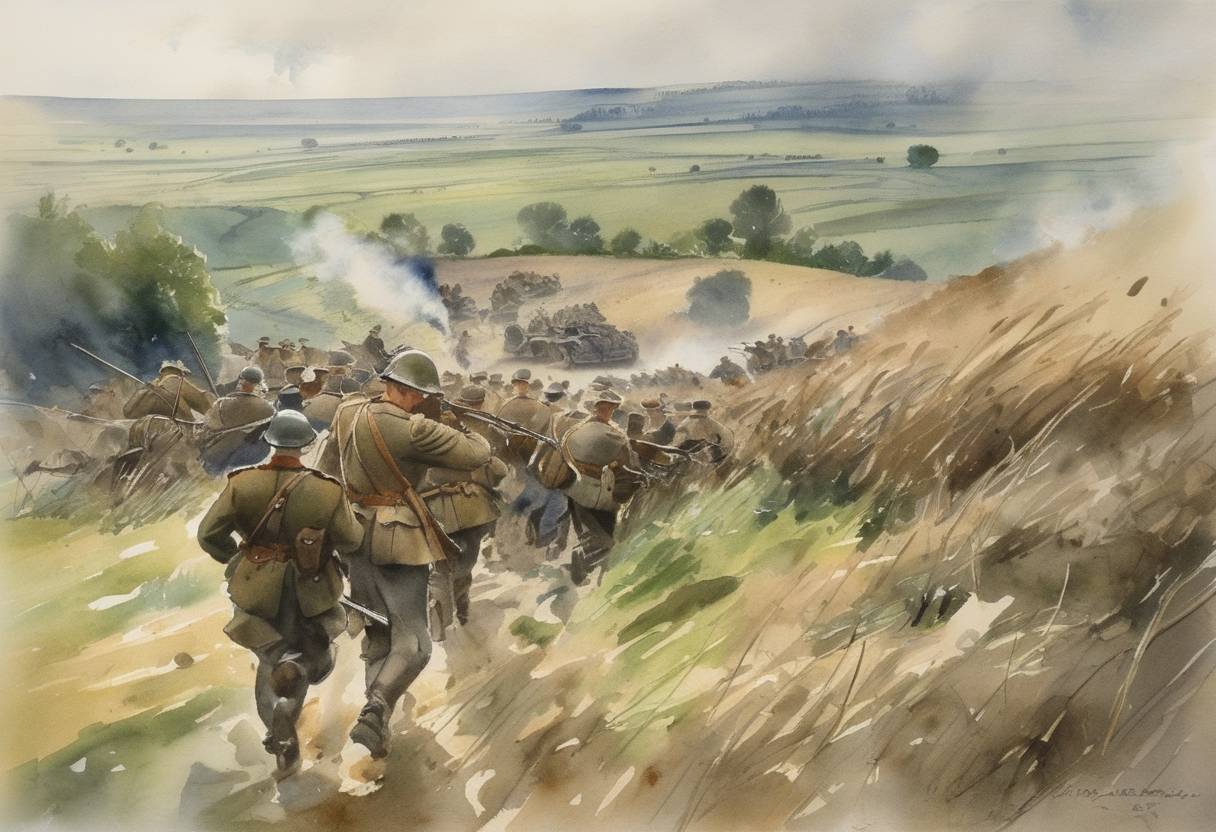
The Battle of the Ancre was a pivotal event during World War I as it marked the final major offensive undertaken by the British in the Battle of the Somme. This operation commenced on November 13, 1916, on the Western Front and was characterized by coordinated assaults, strategic deception, and a focus on seizing key German positions to attain a tactical advantage before the onset of winter.
The Battle of the Somme, which began on July 1, 1916, was one of the largest battles of World War I. By November, both sides had suffered significant casualties, and the British sought to consolidate their gains while inflicting maximum damage on the German defenses.
The Battle of the Ancre was designed to break through the German-held village of Beaumont Hamel and surrounding areas. This sector had resisted several British attempts earlier in the Somme campaign, and its capture was deemed crucial to weakening the German line.
Strategic Objectives: The British Fourth Army, under the command of General Sir Henry Rawlinson, intended to capture the villages of Beaumont Hamel, Beaucourt-sur-l’Ancre, and other adjacent positions. These areas were heavily fortified, and breaking through them would drastically improve Allied positions for future operations.
Military Deception and Preparations: Prior to the attack, a considerable effort was made to deceive German forces regarding the timing and location of the offensive. Artillery bombardments were strategically timed to obscure the true focus of the assault.
The Attack: At 5:45 AM, British troops launched a surprise attack on a foggy morning, which served to partially obscure the advancing soldiers from German machine-gun posts. The initial phase of the battle involved intense trench warfare, with the British utilizing a creeping barrage—a coordinated artillery strategy—to shield advancing troops and disrupt German defenses.
Advances and Setbacks: The assault witnessed significant initial gains with the capture of German front-line trenches. However, progress varied along different sections of the front, with some areas encountering stiff German resistance.
Tactical Success: By the end of the Battle of the Ancre, which continued until November 18, the British forces had captured Beaumont Hamel and other strategically important positions. This success helped to offset some of the heavy losses incurred earlier in the Battle of the Somme, although it was costly in terms of human life.
End of the Somme Offensive: The Battle of the Ancre effectively concluded the Allied offensive on the Somme. It demonstrated improved British coordination and tactics, but also underscored the grueling nature of trench warfare.
Impact on Future Operations: The territorial gains helped to set the stage for future Allied offensives and contributed to strategic shifts in the battle plans for 1917, including the subsequent Battle of Arras.
As the last major operation of the Somme campaign, the Battle of the Ancre marked a crucial turning point in the Allied approach to warfare on the Western Front. It highlighted both the potential and the limitations of early 20th-century military strategies in the face of entrenched positions and modern warfare technology.
Source: www.iwm.org.uk