The Battle of Hatteras Inlet Batteries: August 27, 1861
1861 · Cape Hatteras, United States
Union forces attacked Cape Hatteras, North Carolina, in the first combined operation of the United States Army and Navy in the American Civil War.
August 11, 1860
The Second Opium War: The Anglo-French troop commandeered the Taku Forts along the Peiho River, a significant military engagement against Qing dynasty China.
Tianjin, China | British and French allied military forces
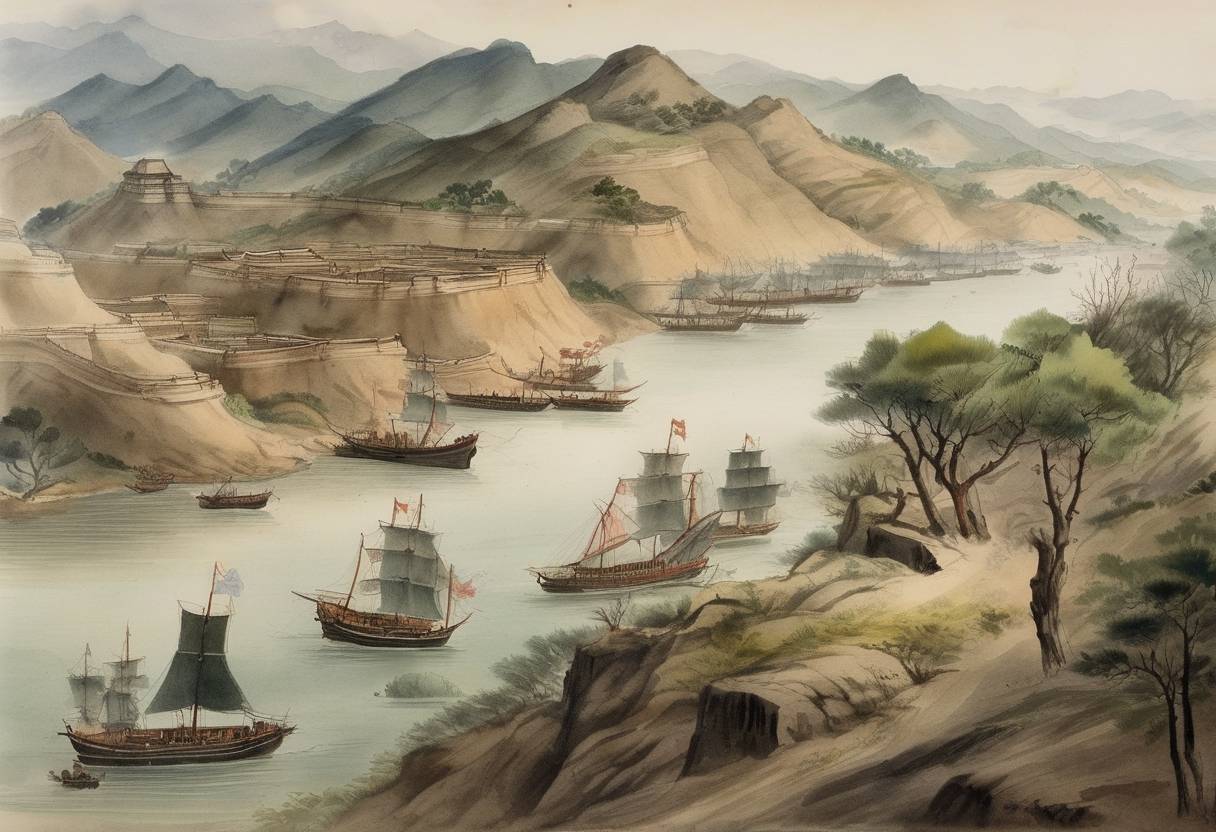
The Second Opium War (1856-1860), also known as the Arrow War, was a conflict between the British Empire and the French Empire against the Qing dynasty of China. The war was provoked by issues over trade imbalances, diplomatic relations, and the legality of opium trading. The capture of the Taku Forts represented a crucial moment within this conflict, serving as a pivotal military engagement.
The Strategic Importance of the Taku Forts: Situated along the Peiho (Hai) River near Tianjin, the Taku Forts were vital to the defense of Beijing and the northern gateway for maritime access to the capital of China. Control over these forts was essential for any advance towards Beijing by foreign forces.
Anglo-French Military Coordination: By 1860, both British and French military leaders had decided that capturing these forts was imperative for advancing their military objectives. An alliance between these European powers ensured a coordinated assault.
The Assault: On August 11, 1860, the Anglo-French forces launched a successful assault on the Taku Forts. Utilizing both naval and land-based attacks, they managed to breach the defensive structures despite the strong resistance from Qing defenders. The use of sophisticated artillery and marines allowed them to overcome the formidable fortifications that had repelled forces in previous engagements.
Fall of the Forts: The capture of these forts opened the route to Beijing, marking a significant shift in power and allowing allied forces to negotiate from a stronger position.
Impact on the Qing Dynasty: This defeat further exposed the Qing dynasty’s military vulnerabilities and weaknesses. The loss emphasized the technological and logistical superiority of Western military forces during this period.
Continuation of Western Influence in China: The capture of the Taku Forts was part of a broader narrative of Western imperial expansion in China, greatly influencing subsequent treaties and concessions that favored British and French interests.
Further Conflict and Resolution: The fall of the forts paved the way for the eventual Treaty of Tientsin, further intensifying the opening of Chinese ports to foreign merchants and exacerbating internal challenges within China.
This military engagement highlighted not only the immediate tactical acumen of the Anglo-French alliance but also the broader implications of Western interventionism in 19th-century China.
Source: en.wikipedia.org