Deep Impact Mission: Collision with Comet Tempel 1
2005 · Pasadena, United States
NASA's Deep Impact spacecraft successfully collided with the comet Tempel 1, providing valuable data about the composition of comets.
January 10, 1997
Comet Shoemaker-Levy 9 collided with Jupiter's atmosphere, providing the first direct observation of an extraterrestrial collision of Solar System objects.
None, None | NASA
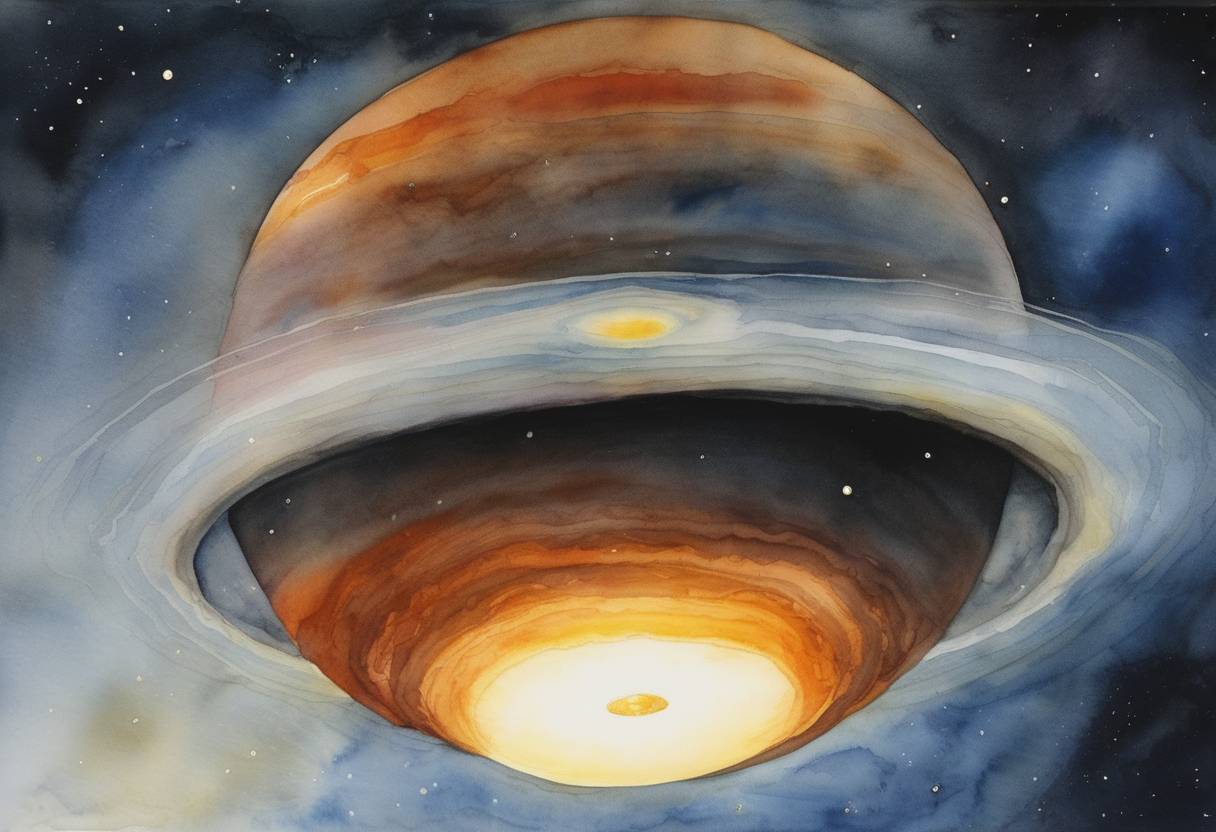
The collision of Comet Shoemaker-Levy 9 with Jupiter did not occur on January 10, 1997. It actually took place over several days between July 16 and July 22, 1994. Here is the detailed account of the event:
Overview
Comet Shoemaker-Levy 9 was discovered by astronomers Carolyn and Eugene Shoemaker, along with David Levy, on March 24, 1993. The comet gained significant attention due to its unique situation and ultimate collision with Jupiter, providing the first direct observation of the collision of two extraterrestrial bodies.
Discovery and Characteristics
Upon its discovery, Comet Shoemaker-Levy 9 was found to be orbiting Jupiter rather than the Sun, having been captured by the planet’s gravitational field. Before the collision, the comet was observed as a series of fragments, a result of its previous close encounter with Jupiter which had torn it apart due to tidal forces.
Collision Event
The fragments of Shoemaker-Levy 9 collided with Jupiter over several days from July 16–22, 1994. The impacts were visible from Earth, even though they occurred on the far side of Jupiter. The collision created massive fireballs, large dark scars in Jupiter’s atmosphere, and released energy equivalent to millions of megatons of TNT.
Significance
This event marked the first direct observation of a collision between two celestial bodies in our solar system. The impacts gave scientists invaluable data about both the comet’s composition and the dynamics of Jupiter’s atmosphere. The event also heightened interest in potential cosmic threats to Earth, underscoring the importance of monitoring near-Earth objects.
Aftermath
The impacts left prominent scars on Jupiter that were visible for months and gradually dissipated over time. The scientific community gained new insights into the behavior of comets, planetary ring systems, and the possibilities of similar events occurring within Earth’s vicinity.
Comet Shoemaker-Levy 9 reinforced the realization of the dynamic and sometimes hazardous nature of our solar system’s environment, spurring further developments in space observation and planetary defense strategies.
Source: solarsystem.nasa.gov