Establishment of Ville-Marie on May 17, 1642
1642 · Montreal, Canada
Paul de Chomedey, Sieur de Maisonneuve, establishes Ville-Marie, which later becomes Montreal.
July 23, 1632
Three hundred colonists bound for New France depart from Dieppe, in what is now France, heading for Canada. This expedition was part of an ongoing effort by France to establish a solid footing in the New World.
Dieppe, France | French Colonial Authorities
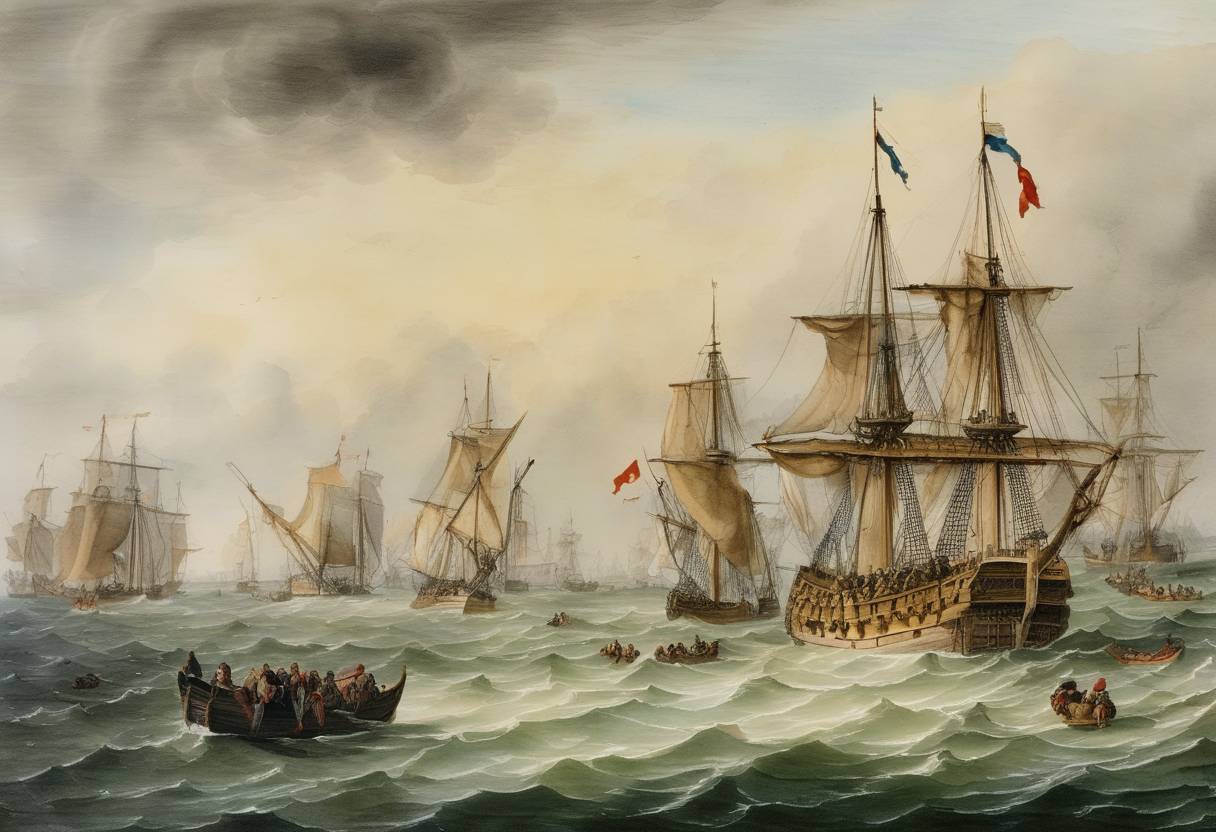
On July 23, 1632, a significant expedition took place as 300 colonists set sail from the port city of Dieppe in present-day France, bound for New France, an area that comprised parts of modern-day Canada. This venture was driven by France’s broader imperial ambitions to establish a firm presence and expand its colonization efforts in North America.
Following an era of initial exploration and early settlements in the 16th century, France, much like other European powers, sought to intensify its colonization efforts in the New World during the early 17th century. The Treaty of Saint-Germain-en-Laye in 1632 had just restored Quebec to French control after it was captured by English forces in 1629. King Louis XIII and Cardinal Richelieu aimed to revive and strengthen France’s claims and settlements in this strategically significant region.
Dieppe, a prominent French port, became a critical launch point for expeditions to the Americas. With a history of maritime trade and exploration, it played a vital role in facilitating France’s overseas expansion.
This exodus of 300 colonists was part of a concentrated effort to stabilize and grow the population and economic output of New France. These settlers included a mix of craftsmen, farmers, and soldiers, all essential for establishing sustainable communities.
The voyage across the Atlantic was arduous and fraught with the dangers typical of 17th-century sea travel. Yet, it was crucial for fulfilling France’s colonial aspirations and creating a self-sufficient and thriving colonial society capable of supporting trade, especially in lucrative fur markets.
This event marked a renewed commitment by France to compete with other European powers, like England and Spain, in the race for colonial dominance in the Americas. It was instrumental in ensuring France’s cultural and political influence in the region, which continued to shape the development of Canada.
The departure on July 23, 1632, thus was not merely about the movement of people; it represented a strategic endeavor to cement France’s legacy in the New World, contributing significantly to the historical trajectory of North America and the development of Canadian identity.
Source: histpaleo.org