Pope Gregory I and the Gregorian Chant
600 · Rome, Italy
Pope Gregory I, also known as Gregory the Great, issues a decree that would later influence the Gregorian Chant, a form of plainchant used in the Roman Catholic Church.
January 31, 1377
On January 31, 1377, Pope Gregory XI issued the bull 'Salvator noster,' which sought to resolve the schism between the Western and Eastern Churches. This papal document aimed to address the theological disputes and jurisdictional conflicts that had arisen between the Roman Catholic Church and the Eastern Orthodox Church, a division that had persisted since the Great Schism of 1054.
Rome, Papal States | Roman Catholic Church
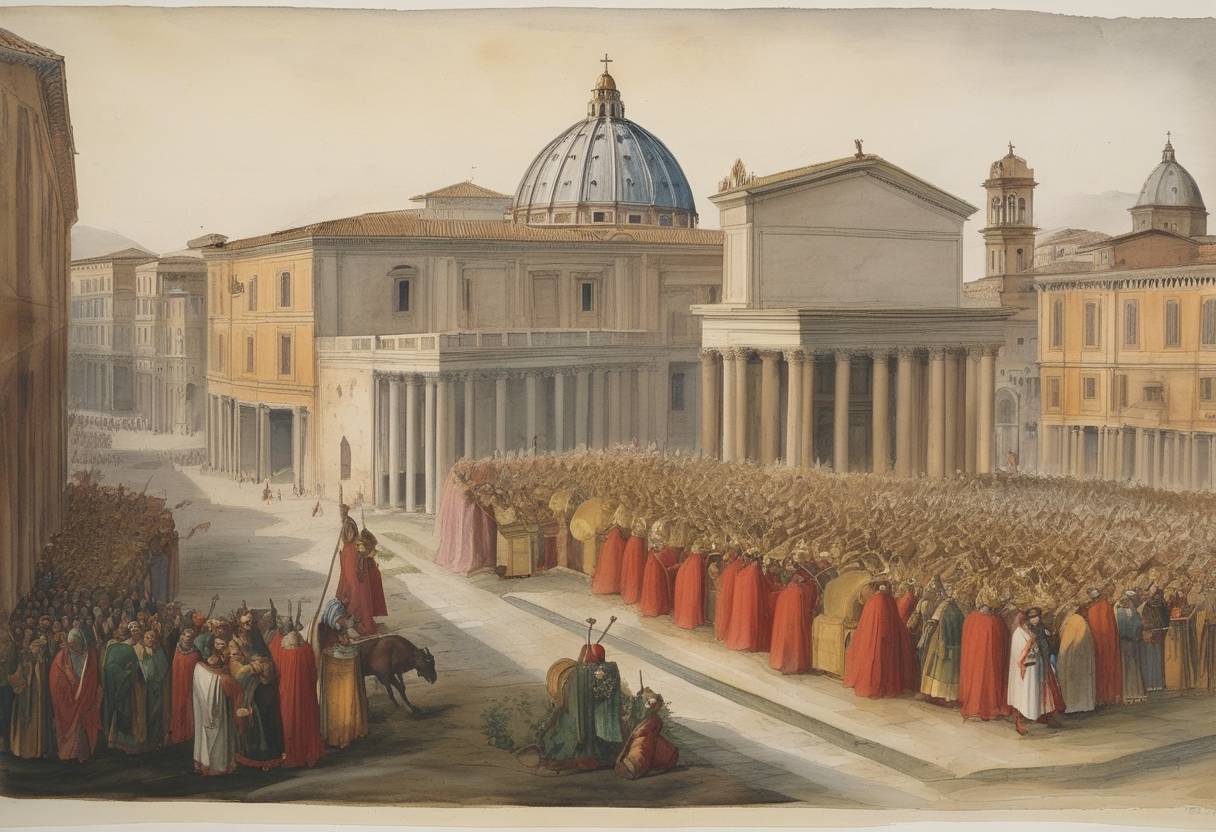
On January 31, 1377, Pope Gregory XI issued the papal bull Salvator noster in an effort to address the enduring division between the Western and Eastern Christian Churches, a schism that had persisted since 1054. This document was one of several attempts during the 14th century to mend the theological and jurisdictional rifts heightened by the Great Schism.
The Great Schism of 1054 marked a significant religious and cultural division between the Roman Catholic Church in the West and the Eastern Orthodox Church in the East. This split was primarily over theological differences, such as the nature of the Holy Spirit, issues of papal authority versus the conciliar governance of the Eastern Church, and ritual practices.
By the time Pope Gregory XI ascended to the papacy in 1370, the divide had become entrenched, with both sides excommunicating each other and developing diverging religious doctrines and practices. This longstanding separation was further complicated by various geopolitical and social influences that continued to challenge diplomatic relations between both Churches.
The specific contents of the Salvator noster focused on creating a framework for theological dialogue and reconciliation between the two branches of Christianity. The bull aimed to address the root theological disputes like the Filioque clause (a phrase added to the Nicene Creed in the Western Church) and other dogmatic differences that had been a point of contention.
Moreover, the document sought to establish a new rapport by addressing jurisdictional conflicts. It proposed solutions involving mutual concessions and recognizing the historical legitimacy of both traditions.
The issuance of Salvator noster highlighted the ongoing Catholic efforts to reconcile with the Eastern Orthodox Church, despite many centuries of adversarial relations. Gregory XI’s efforts also underscored the broader theme of medieval attempts at ecclesiastical unity, which would continue in various forms well into the future.
While the immediate impact of the bull was limited, with no conclusive reconciliation achieved during Gregory XI’s papacy, it showcased a continued commitment to diplomacy and engagement between the two Christian factions. This commitment would set precedents for subsequent ecclesiastical dialogues, maintaining the aspiration for unity despite persistent doctrinal divides.
Source: en.wikipedia.org