Julius Caesar Crosses the Rubicon River: January 10, 49 BCE
49 · Rubicon, Roman Republic
Julius Caesar crosses the Rubicon River, marking the start of the Roman Civil War.
April 21, 0043
The Lex Titia was enacted, formally creating the Second Triumvirate in Rome. This agreement was between Octavian, Mark Antony, and Marcus Aemilius Lepidus, giving them power equivalent to dictators to restore the Roman Republic.
Rome, Italy | Roman Republic
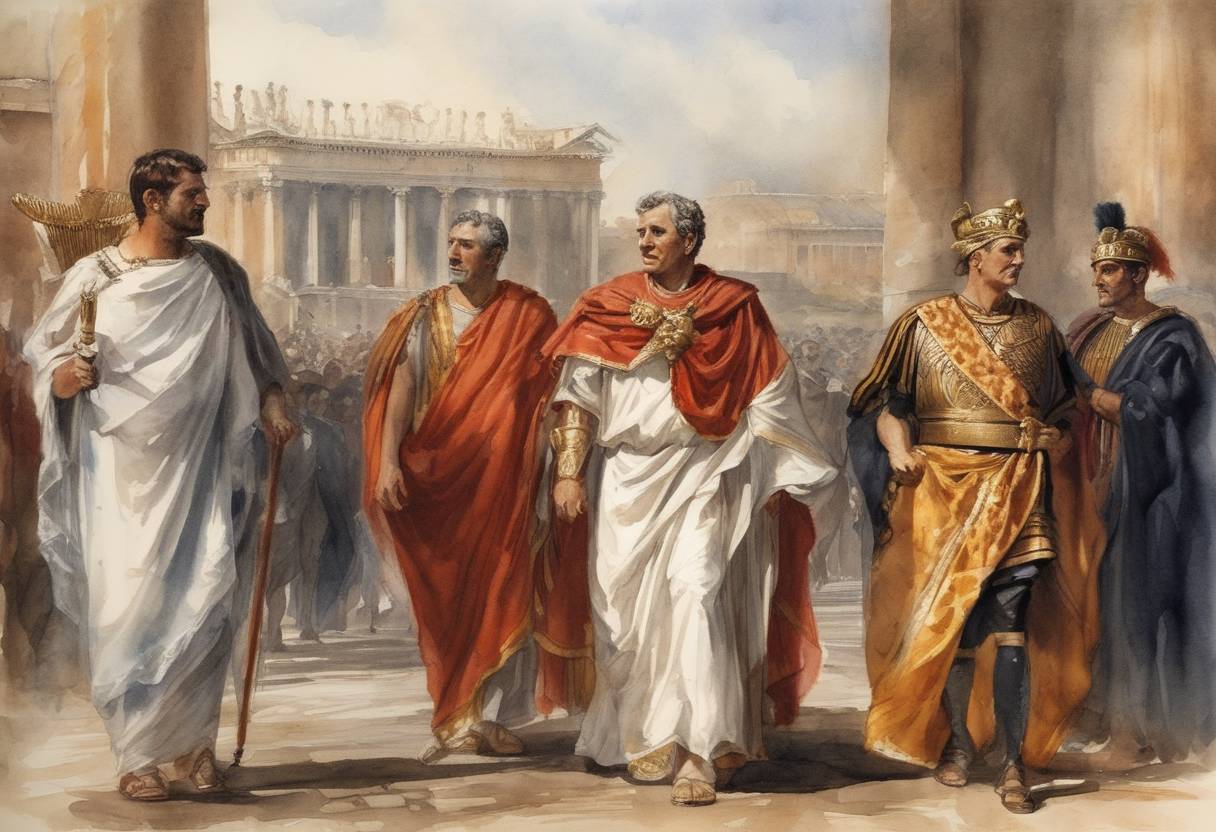
On November 27, 43 BCE, the Roman Republic witnessed a pivotal moment in its political history with the enactment of the Lex Titia. This law formally established the Second Triumvirate, a political alliance between Gaius Octavian (later known as Augustus), Mark Antony, and Marcus Aemilius Lepidus. This triumvirate was granted extraordinary powers typically akin to those of Roman dictators, tasked with restoring stability to the fractured Republic.
Following the assassination of Julius Caesar in 44 BCE, Rome plunged into a period of chaos marked by power struggles and civil wars. Caesar’s death left a power vacuum and severe factionalism, precipitating the need for strong leadership and reform to restore order. Octavian, as Caesar’s adopted heir, at first vied for dominance against the Senate and rival factions.
The Lex Titia was passed by the Roman Senate as a response to these tumultuous times. It conferred on Octavian, Antony, and Lepidus collective authority which they wielded over the Roman territories. Unlike earlier triumvirates or informal alliances, this accord was formalized by law, granting them the title “Triumviri Rei Publicae Constituendae Consulari Potestate,” or Triumvirs for the Restoration of the Republic, with consular power for a period of five years.
The Second Triumvirate’s power was nearly absolute, allowing them to bypass traditional Republican constraints. They were authorized to make laws, rule without the usual consular approval, and their decisions were immune from legal challenge. One of their first actions was to compile a proscription list that targeted their political enemies, leading to widespread executions and confiscations of property. Notably, this list claimed the life of the famed orator Cicero.
The establishment of the Second Triumvirate was a critical step in the demise of the Roman Republic and the rise of the Roman Empire. While initially intended to stabilize and restore the Republic, the Triumvirate’s actions and internal conflicts eventually paved the way for Octavian’s consolidation of power. By 31 BCE, after internal conflicts within the Triumvirate and Antony’s defeat at the Battle of Actium, Octavian emerged as Rome’s sole ruler. This transition marked the end of the Republic and the beginning of the Roman Empire.
The Lex Titia and the Second Triumvirate exemplify Rome’s political evolution from republic to autocracy, a transformation that would shape its history for centuries to follow.
Source: www.britannica.com