The Battle of Marengo: June 14, 1800
1800 · Marengo, Italy
The Battle of Marengo takes place, where Napoleon Bonaparte's French forces defeat the Austrians in Italy.
May 14, 1509
Battle of Agnadello: France defeats the Venetian Republic.
Agnadello, Italy | French Army
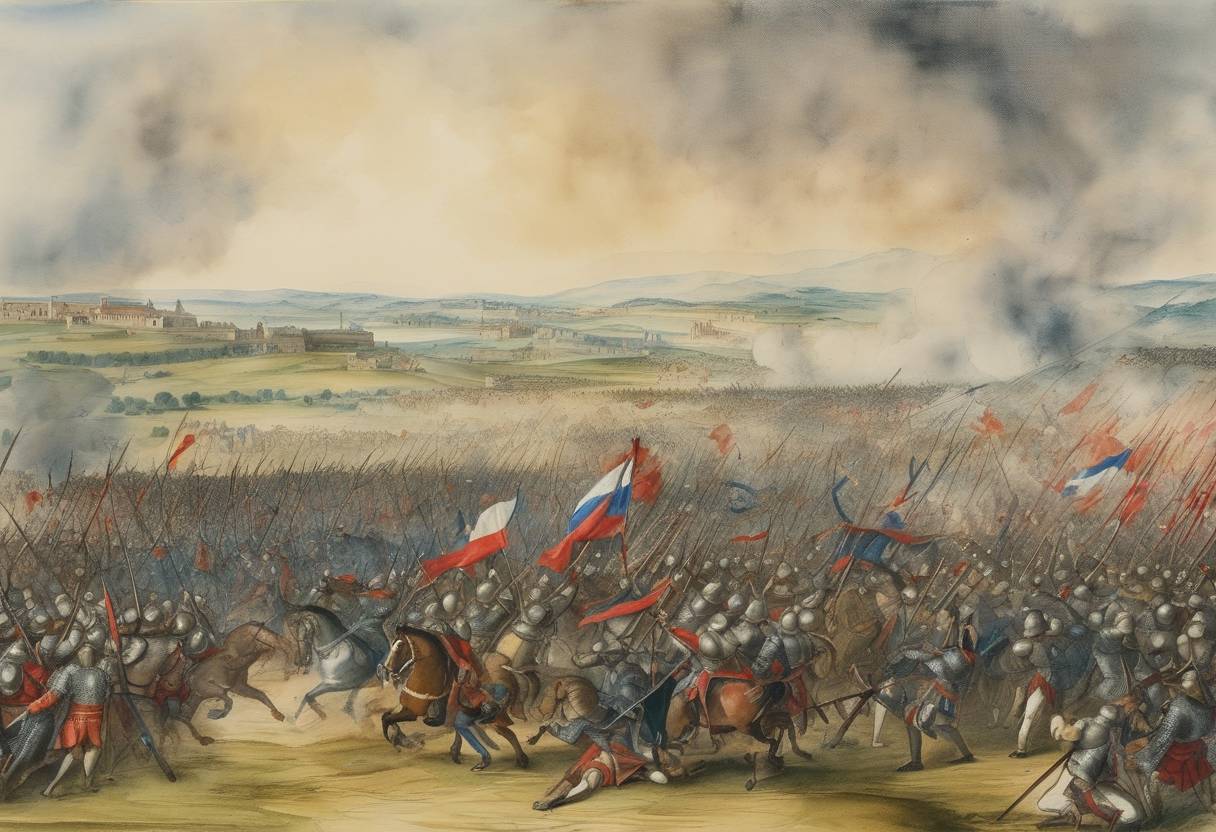
On May 14, 1509, the Battle of Agnadello was fought between the forces of the Kingdom of France and the Republic of Venice. This battle was a critical conflict of the War of the League of Cambrai, a coalition formed by Pope Julius II, which included France, the Holy Roman Empire, and Spain, aimed at curtailing Venice’s expansion and influence in Northern Italy.
The War of the League of Cambrai was part of a larger series of conflicts known as the Italian Wars, which involved various European powers struggling for control over Italy. Venice, a major maritime power, had expanded its territories onto the Italian mainland, which provoked enmity from neighboring states and the papacy. The League of Cambrai, formed in December 1508, sought to dismantle Venetian power.
The Venetians intended to avoid direct confrontation by engaging in a strategic withdrawal. However, the aggressive advance of the French forces led to a sudden and decisive encounter. French units employed superior artillery tactics and cavalry maneuvers, swiftly breaking the Venetian lines.
Alviano, responsible for much of the Venetian force, attempted to mount a defense but was captured, resulting in a rout of his troops. Pitigliano, with the remaining forces, managed a strategic retreat but was unable to regroup in time to change the battle’s outcome.
The Battle of Agnadello demonstrated the effectiveness of early modern artillery and solidified France’s military reputation in the Italian theater. The event underscored the volatility of Italian politics, where alliances frequently shifted, and external powers exploited local conflicts for broader strategic advantages. Furthermore, it highlighted the challenges that even dominant economic powers like Venice faced in maintaining their territorial integrity against coordinated military coalitions.
In the broader sweep of the Italian Wars, the battle reflected the complexities of Renaissance diplomacy and the military innovations that characterized the period.