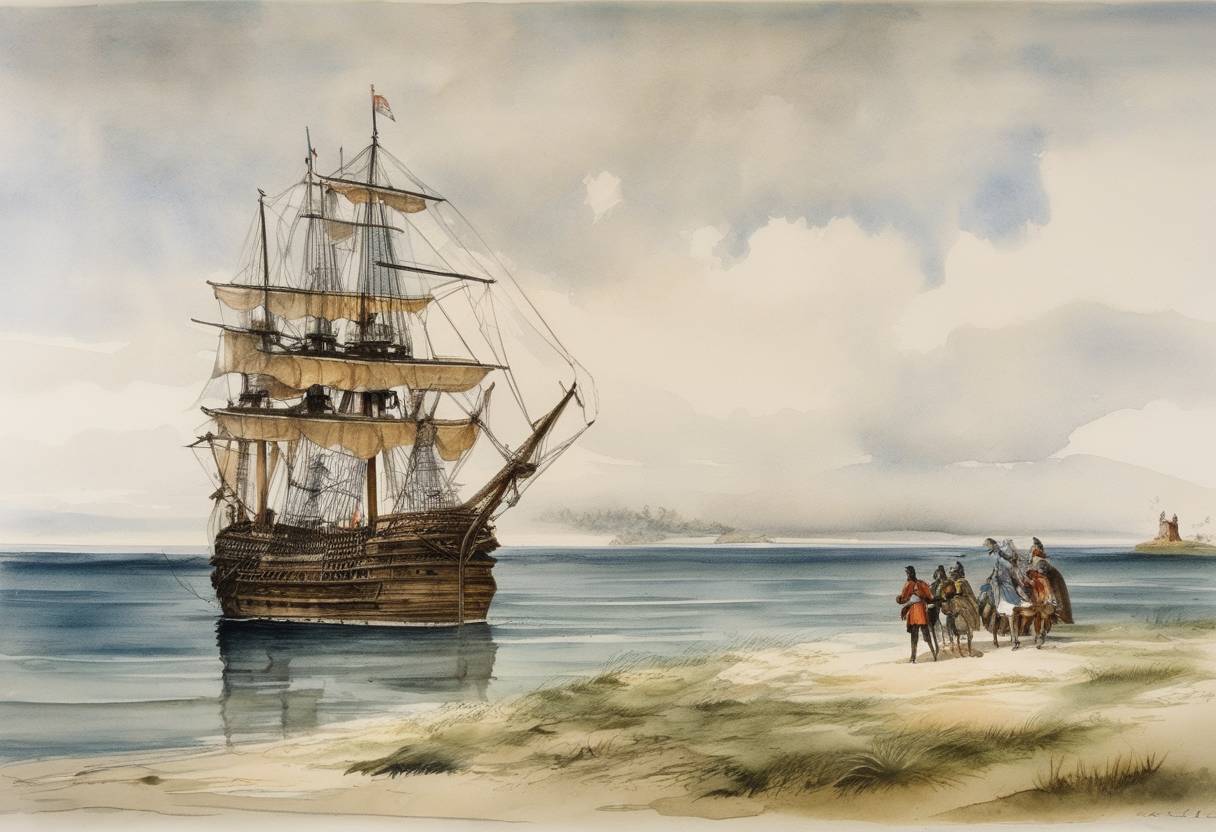
Juan Ponce de León’s Landing in Florida - April 8, 1513
On April 8, 1513, Spanish explorer Juan Ponce de León made a significant mark in the annals of exploration when he landed on the coast of what would later become known as Florida. This event marked the first recorded European sighting of the North American peninsula. Ponce de León, sailing under the Spanish flag, claimed the land in the name of Spain, laying the groundwork for centuries of Spanish influence in the region.
Context and Journey
Ponce de León was a veteran explorer and former governor of Puerto Rico, who embarked on this voyage driven by reports of new lands and potential resources. Motivated by tales of wealth and possibly myths such as the Fountain of Youth, he secured a royal contract in 1512 to explore and conquer the lands north of the Bahamas.
In late March 1513, Ponce de León set sail from Puerto Rico with a fleet consisting of three ships: the Santiago, the San Cristobal, and the Santa Maria de la Consolación. After navigating a course through the Bahamas, the expedition aimed to chart new territory and expand Spanish claims in the New World.
Landing and Claim
Upon reaching the peninsula, Ponce de León named it “La Florida” due to the lush, verdant landscape that greeted him and in honor of the Spanish Easter celebration, known as “Pascua Florida” (Festival of Flowers), which occurred around the time of his landing. The exact location of his landing is subject to historical debate, with various accounts suggesting locations from St. Augustine to Melbourne Beach.
Upon making landfall, Ponce de León laid a formal claim to the territory for Spain, following the European practice of territorial claim through discovery. The region set the stage for further explorations and future territorial disputes among European powers.
Historical Significance
Ponce de León’s 1513 expedition was pivotal in European exploration of North America. It was one of the first confirmed European excursions into the present-day United States. His exploration initiated a period of Spanish presence in the southeastern United States that lasted for more than two centuries. Additionally, the voyage prompted further exploration and colonization efforts by Spain, as well as subsequent expeditions by other European nations seeking to establish their presence in the New World.
Ponce de León’s arrival and claim underscored the dynamics of European exploration and colonization during the Age of Discovery, contributing to the transformative effects on indigenous populations and the geopolitical landscape of the Americas in the centuries that followed.