Treaty of Constantinople (1590)
1590 · Constantinople, Ottoman Empire
The Treaty of Constantinople was signed between the Ottoman Empire and the Habsburg Monarchy, ending the Long Turkish War.
March 7, 1573
The Peace of Constantinople was signed, ending the war between the Republic of Venice and the Ottoman Empire, after a long conflict including the Battle of Lepanto.
Constantinople, Ottoman Empire | Republic of Venice, Ottoman Empire
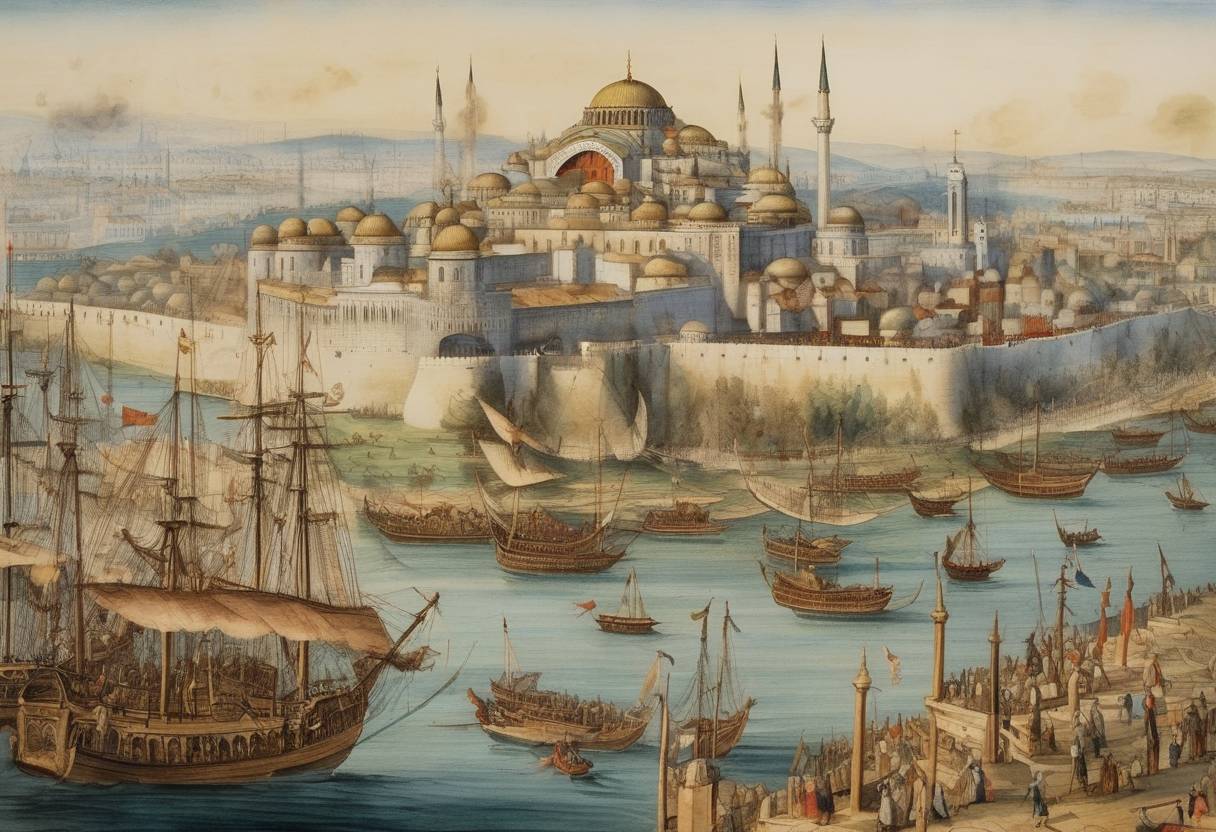
On March 7, 1573, the Peace of Constantinople was finalized, marking the end of hostilities between the Republic of Venice and the Ottoman Empire. This peace treaty concluded a protracted conflict primarily centered around the control of Mediterranean territories, including the strategic island of Cyprus.
The conflict between Venice and the Ottomans intensified in the 16th century as both powers vied for dominance over Eastern Mediterranean trade routes and territories. The Republic of Venice was a significant maritime and economic power, while the Ottoman Empire, under the leadership of Sultan Selim II and later Sultan Murad III, was expanding its reach across the region.
One of the pivotal moments preceding the Peace of Constantinople was the Battle of Lepanto, which took place on October 7, 1571. This battle was part of the larger conflict involving the Holy League—a coalition that included Spain, the Papal States, and Venice—against the Ottoman forces. The Holy League achieved a significant naval victory in Lepanto, crippling the Ottoman fleet. However, this victory did not translate into a decisive strategic advantage, as the Ottomans quickly rebuilt their navy.
The negotiations leading to the Peace of Constantinople addressed multiple territorial and economic issues. Under the terms of the treaty, Venice ceded Cyprus to the Ottoman Empire, ending its control that had lasted since 1489. In return, the Ottomans granted Venice favorable trade conditions, ensuring economic stability for Venetian merchants in the Eastern Mediterranean.
The Peace of Constantinople had several long-term implications:
The resolution of the conflict through the Peace of Constantinople demonstrated the complex diplomatic webs of the Renaissance era, where military conflict was often interwoven with complex negotiations to maintain economic interests. This peace set a precedent for future negotiations between European powers and the Ottoman Empire, reflecting the intertwined nature of trade, politics, and warfare in the region.
Source: en.wikipedia.org