Assassination of King Carlos I of Portugal and Prince Luís Filipe
1908 · Lisbon, Portugal
King Carlos I of Portugal and his heir, Prince Luis Filipe, are assassinated in Lisbon.
March 13, 1369
Pedro the Cruel, King of Castile, is assassinated by his half-brother Henry of Trastámara.
Montiel, Castile (modern-day Spain) | Kingdom of Castile
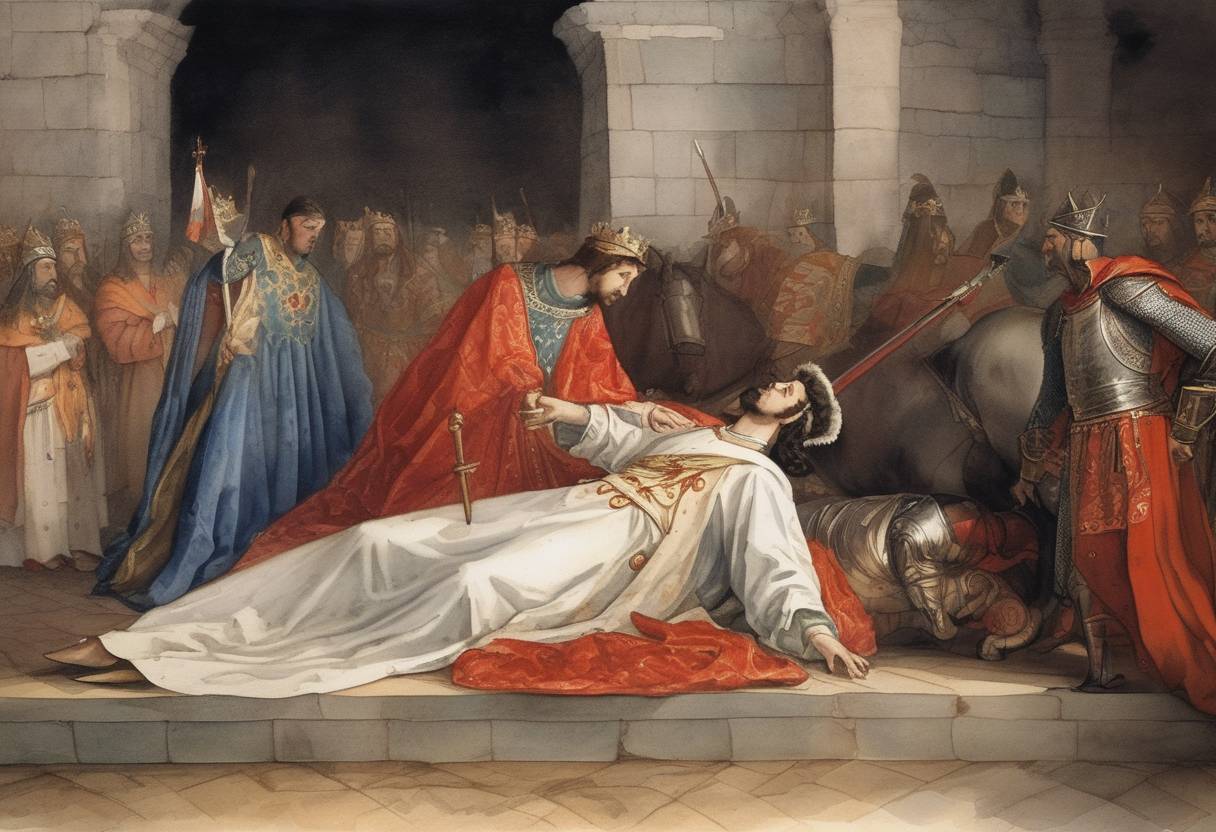
On March 13, 1369, Pedro I of Castile, commonly known as Pedro the Cruel, was assassinated by his half-brother Henry of Trastámara, marking a significant turning point in the history of the Kingdom of Castile.
Pedro I ascended to the throne in 1350, following the death of his father, Alfonso XI of Castile. His reign was characterized by internal strife, contentious noble relations, and a tangled web of alliances and enmities. He earned the sobriquet “the Cruel” due to his harsh retribution against the nobility and perceived tyranny, although some modern historians argue his actions were attempts to strengthen royal authority.
Henry of Trastámara, on the other hand, was born out of wedlock, the son of Alfonso XI and his mistress, Eleanor de Guzmán. He was a central figure in the opposition against Pedro, supported by segments of the Castilian nobility discontented with Pedro’s rule.
The animosity between Pedro and Henry became acute during the chaotic backdrop of the Castilian Civil War (1366–1369). Henry, supported by France and Aragon, managed to usurp the throne temporarily. However, Pedro’s alignment with England during the Hundred Years’ War and his strategic acumen allowed him to regain control intermittently, setting the stage for continuous hostilities.
The culmination of their rivalry occurred at the Battle of Montiel in March 1369. Pedro was defeated and sought refuge in the Castle of Montiel. It is here that Pedro fell victim to a trap orchestrated by Henry. With the assistance of Bertrand du Guesclin, a French commander allied to Henry, Pedro was captured and assassinated in a subsequent altercation.
The assassination of Pedro effectively ended the Trastámara War of Succession. Henry II ascended to the Castilian throne, founding the Trastámara dynasty, which significantly altered the political landscape of medieval Spain. His reign marked a shift in internal policies and strengthened alliances with France, influencing the broader currents of the Hundred Years’ War.
Pedro’s death resulted in the consolidation of monarchical power along different lines, as the Trastámaras sought to appease nobility while maintaining their hold on the throne. The reign of Henry II began a new chapter in Spanish history, characterized by a more conciliatory approach towards the nobility, contrasted with Pedro’s authoritarian rule.
Source: en.wikipedia.org