The Battle of St. George and the Brucean Wars: August 15, 1310
1310 · St. George, Scotland
The Battle of St. George resumes, part of the Brucean Wars, highlighting Robert the Bruce's efforts to reclaim Scottish lands.
March 23, 1306
Robert the Bruce was crowned King of Scots at Scone, marking a significant step towards Scottish independence from English rule. His reign became a central part of the Wars of Scottish Independence.
Scone, Scotland | Kingdom of Scotland
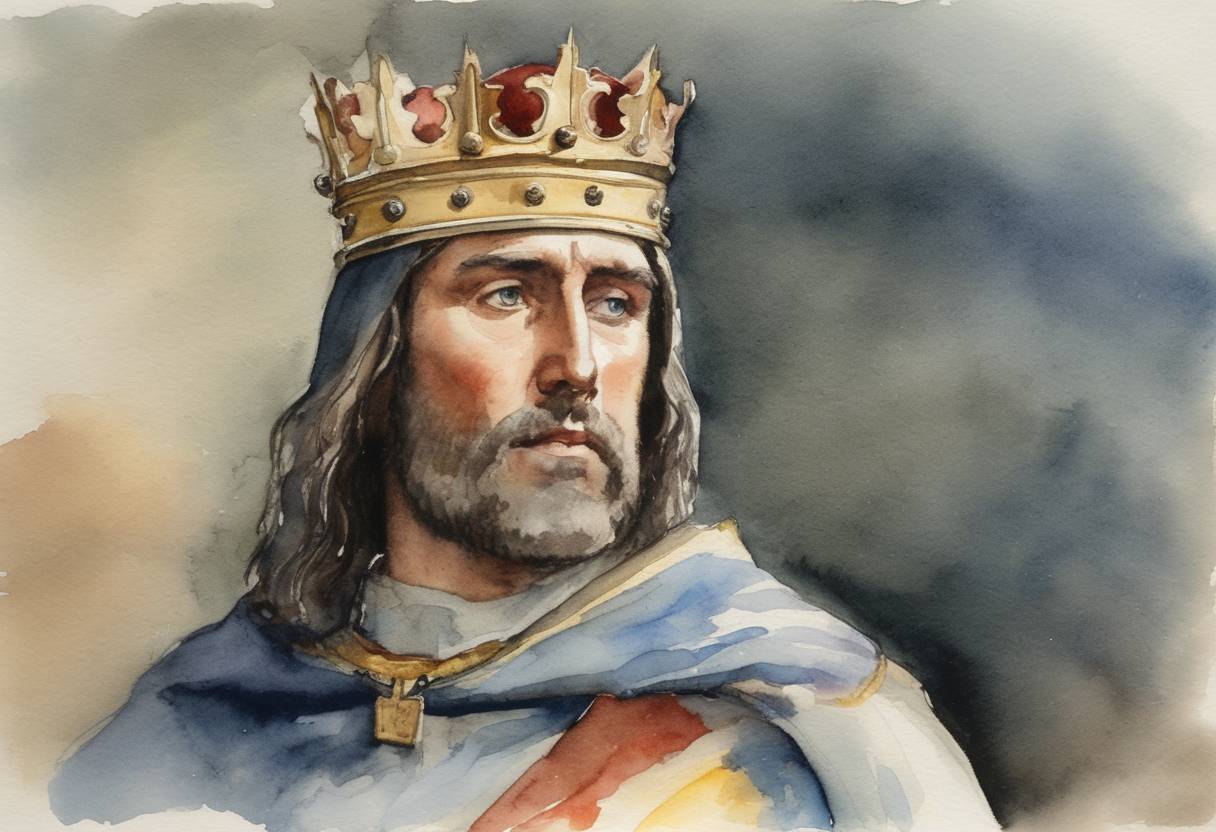
On March 25, 1306, Robert the Bruce was crowned King of Scots at Scone, an event that marked a pivotal moment in the quest for Scottish independence from English dominion. This ceremony was a crucial step in the Wars of Scottish Independence and set the stage for a turbulent period in Scotland’s history.
The road to Robert the Bruce’s coronation was fraught with political machinations and conflict. Scotland had been embroiled in a struggle for sovereignty since the death of Alexander III in 1286, which led to a succession crisis. The subsequent invitation of Edward I of England to arbitrate the Scottish succession culminated in the First War of Scottish Independence. Rivalry for the Scottish crown was chiefly between the Bruces and the Balliols.
Robert the Bruce’s ascent to the throne followed the murder of John Comyn, Lord of Badenoch, a rival claimant to the throne, in the Greyfriars Church in Dumfries. This pivotal act positioned Bruce against the English crown, as Comyn was favored by King Edward I.
The coronation took place at Scone Abbey, the traditional site for Scottish coronations, symbolizing legitimacy and continuity of the Scottish monarchy. Isabella MacDuff, Countess of Buchan, played a notable role by placing the crown on Robert’s head, defying her own family’s allegiance to the Comyns, demonstrating both Bruce’s wide support and the personal risk his allies were willing to take.
Robert’s early reign was characterized by setbacks. In the immediate aftermath of his coronation, he faced a military defeat at the Battle of Methven in June 1306 and was forced into hiding. English forces and their Scottish allies pursued him relentlessly, forcing Bruce and his supporters to conduct a campaign of guerrilla warfare.
Robert the Bruce’s reign effectively consolidated the Scottish resistance against English rule. Despite initial losses, his strategic acumen led to significant victories, notably the Battle of Bannockburn in 1314, which solidified his position and enhanced his reputation as a national hero.
The Treaty of Edinburgh-Northampton in 1328 ultimately recognized Scotland as an independent nation, with Robert the Bruce as its king, marking a significant triumph after decades of conflict. His reign and the struggles of the Wars of Scottish Independence would become legendary, immortalizing his efforts to secure Scottish sovereignty.
Robert the Bruce’s decisive leadership and the subsequent success in maintaining Scotland’s independence played a formative role in shaping Scottish national identity and had lasting implications for British history.
Source: en.wikipedia.org