Declaration of War on Japan by the United States and the United Kingdom
1941 · Washington, D.C., United States
The United States and the United Kingdom declared war on Japan, following the attack on Pearl Harbor.
May 19, 1943
Winston Churchill addressed the U.S. Congress for the second time during World War II.
Washington, D.C., United States | United States Congress
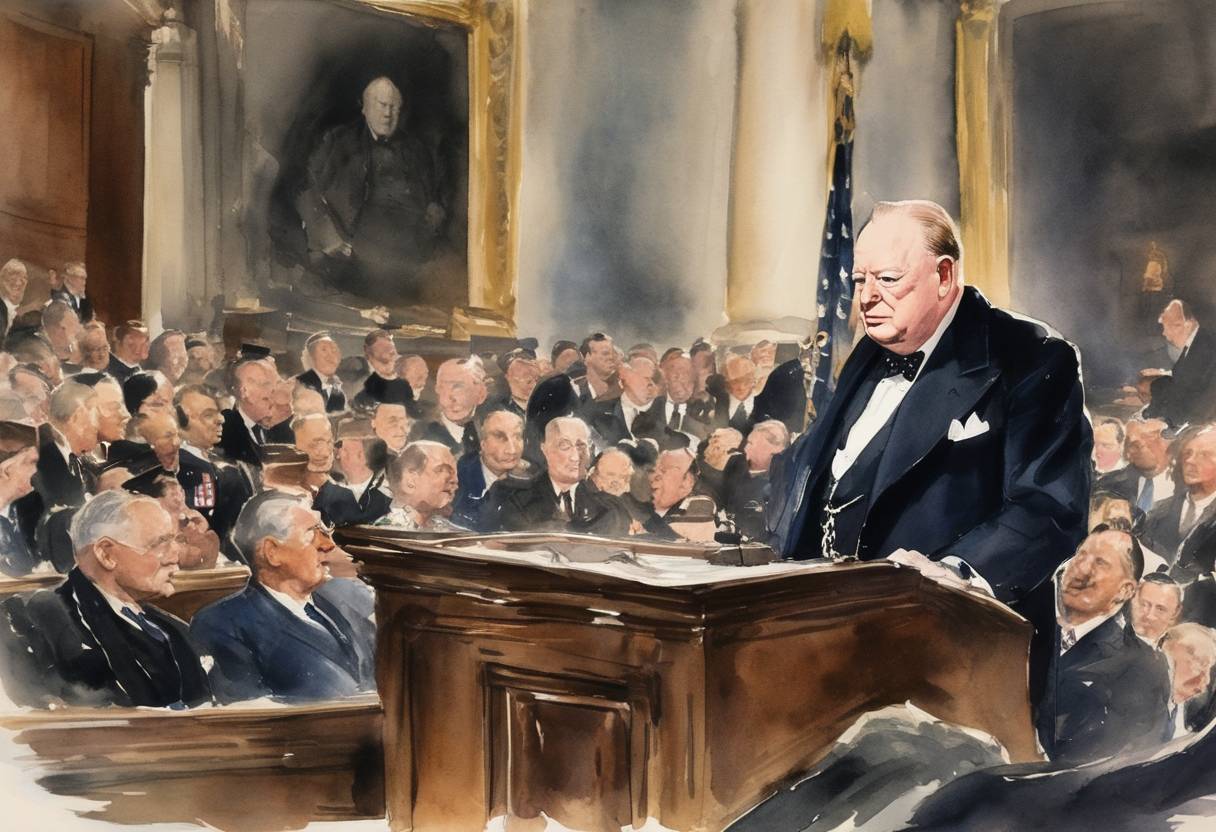
On May 19, 1943, British Prime Minister Winston Churchill delivered his second address to the United States Congress during World War II. This speech marked a crucial moment of unity between the United Kingdom and the United States, highlighting the strengthened Anglo-American alliance during the conflict.
By mid-1943, the Allies had made significant progress in the war. The North African Campaign had recently concluded successfully, with Axis forces surrendering in Tunisia earlier that month. This victory enhanced the momentum of Allied operations and set the stage for future military endeavors.
Churchill’s visit to the U.S. coincided with a period of active strategic planning between Allied leaders known as the Trident Conference, which took place in Washington, D.C., from May 12 to May 25, 1943. The aim was to coordinate Allied military efforts, especially in Europe and the Pacific theater, and to further strategize on the sequence and execution of further operations against Axis powers.
Unity and Cooperation: Churchill emphasized the importance of unwavering unity and cooperation between the United States and the United Kingdom. He stressed that the outcome of the war depended significantly on the continued collaboration of the Allies.
Progress of the War: He outlined the joint achievements to that point, focusing on the successful conclusion of the North African Campaign. This victory laid the groundwork for future operations, notably the planned invasions of Sicily and Italy.
Strategic Planning: Churchill detailed the continued strategic planning necessary to bring about the effective defeat of Nazi Germany and its allies. He assured Congress of Britain’s commitment to shared military objectives and the eventual liberation of occupied Europe.
Morale and Determination: Likely understanding the importance of maintaining high morale, Churchill’s rhetoric served to galvanize support among the American public and reaffirm mutual determination to achieve unconditional surrender from the Axis powers.
Churchill’s speech on May 19, 1943, reinforced the message of solidarity and joint resolve that characterized Allied relations throughout the war. His powerful oratory served to further solidify the commitment of both nations to a common cause, inspiring ongoing collaborative efforts that would be crucial in the subsequent stages of the war.
The address also underscored the critical importance of the U.S.-U.K. alliance, setting an example of international cooperation that influenced diplomatic and military partnerships in the post-war era.
Source: www.winstonchurchill.org