The Occupation of Alcatraz Island by Indians of All Tribes
1969 · San Francisco, United States
The occupation of Alcatraz Island by the group Indians of All Tribes begins, lasting for 19 months.
January 1, 1934
Alcatraz Island became a United States federal prison, known for housing some of the most dangerous criminals.
San Francisco, United States | United States Department of Justice
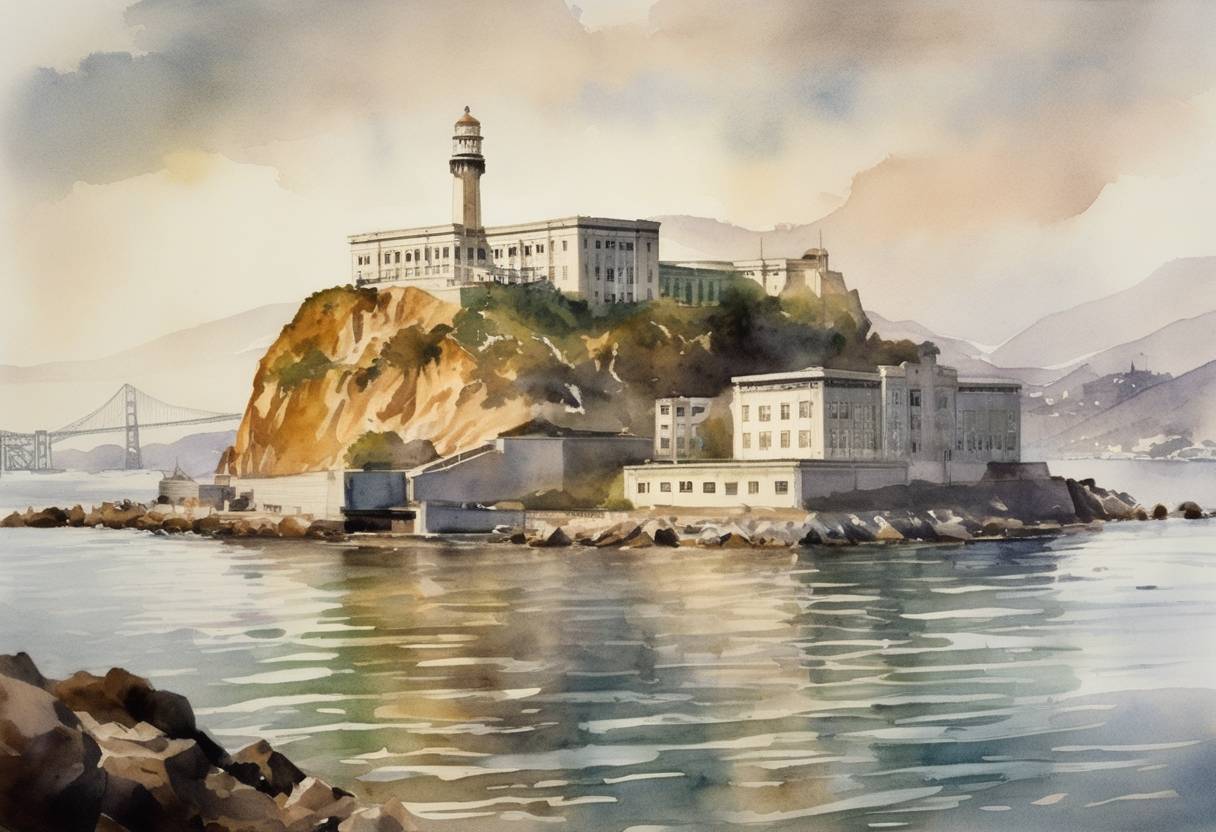
On January 1, 1934, Alcatraz Island in San Francisco Bay officially became a United States federal prison. Known as “The Rock,” Alcatraz quickly gained a reputation for housing some of America’s most notorious and dangerous criminals. The decision to convert Alcatraz into a federal penitentiary was driven by its isolated location, making it an ideal site for a maximum-security prison intended to hold inmates who were difficult to manage in other institutions.
Prior to its transformation into a federal prison, Alcatraz had a rich history. Initially serving as a military fortress in the 1850s, the island was later used as a military prison. The transition to a federal prison in 1934 was part of a broader strategy to establish an institution capable of containing and managing the most challenging inmates during a time when organized crime was rampant in the United States.
Alcatraz operated as a federal prison until 1963, during which time it became synonymous with maximum security and severe discipline. The prison’s existence highlighted the federal government’s commitment to curbing violent crime and managing high-risk offenders during a tumultuous period in American history.
The closure of Alcatraz in 1963 was due to its high operational costs and the deteriorating condition of its infrastructure. Despite its shutdown, Alcatraz remains a significant symbol in criminal justice history and continues to captivate the public imagination as a national historical landmark and popular tourist destination.
Source: alcatrazislandtickets.com