Pope Constantine's Consecration as the 88th Pope
708 · Rome, Italy
Pope Constantine was consecrated as the 88th pope of the Roman Catholic Church.
April 26, 0799
Pope Leo III is attacked by a mob in Rome, leading to his flight to Charlemagne for protection.
Rome, Italy | Roman Catholic Church
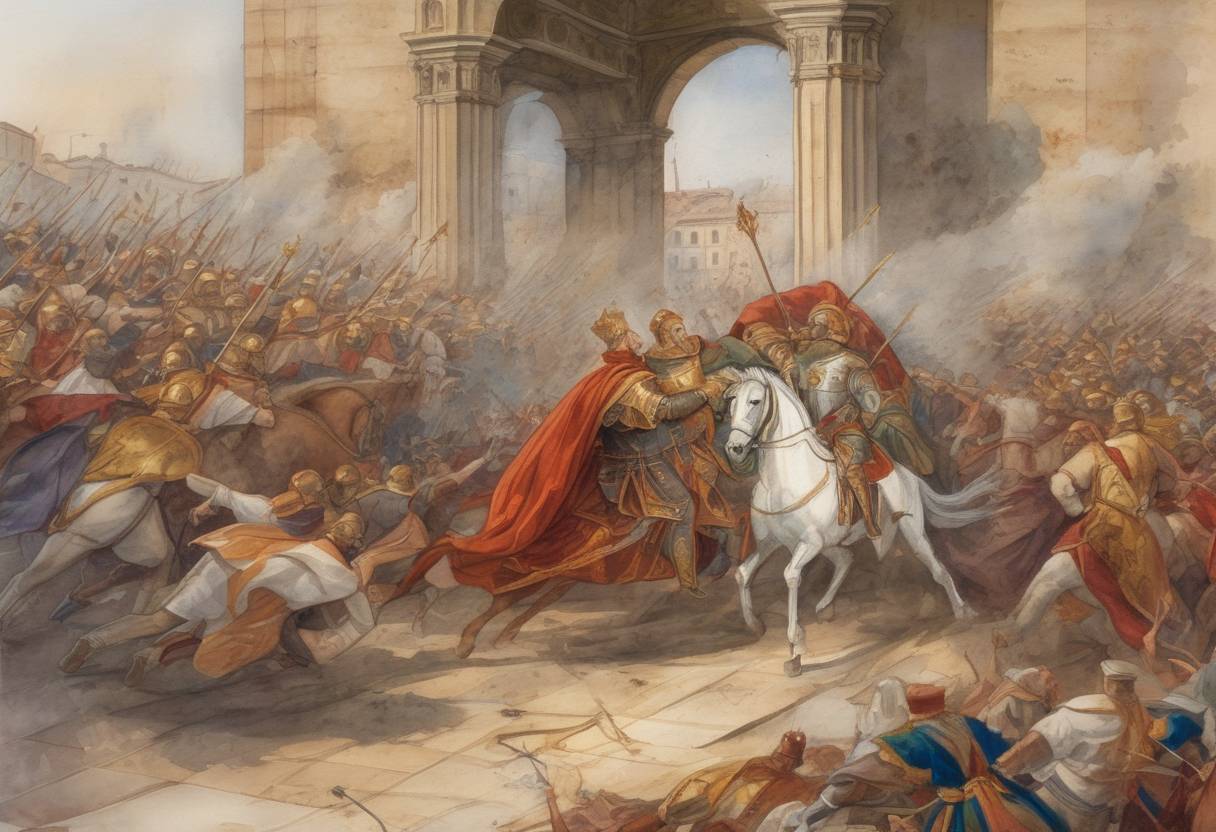
On April 26, 799, Pope Leo III was violently attacked by a mob in Rome, an event that significantly impacted the relationship between the papacy and the Frankish Empire. This incident is a crucial moment in the history of the Catholic Church and the Carolingian dynasty, setting the stage for the eventual crowning of Charlemagne as Emperor.
Pope Leo III ascended to the papacy in 795, succeeding Pope Adrian I. His election was not universally accepted, as he faced opposition from Roman nobility who were loyal to his predecessor. Tensions were high due to Leo’s efforts to assert papal authority and his attempts to reform the Church’s administration, which threatened the established power structures in Rome.
On April 26, 799, during a procession through the streets of Rome, Pope Leo III was ambushed by a group of conspirators. These attackers were reportedly led by relatives of the late Pope Adrian I, who sought to depose Leo. The mob assaulted him, attempting to blind and mutilate him, a common practice intended to disqualify someone from holding office. Leo managed to escape with the help of his supporters and sought refuge in a monastery.
Fearing for his life and unable to regain control in Rome, Pope Leo III fled to the court of Charlemagne, the King of the Franks, in Paderborn. Charlemagne was a powerful ruler who had expanded his empire across much of Western Europe. By seeking Charlemagne’s protection, Leo aimed to secure his position and restore order in Rome.
Charlemagne received Leo with respect and agreed to support him. This alliance was mutually beneficial: Leo needed Charlemagne’s military and political backing, while Charlemagne saw an opportunity to strengthen his influence over the papacy and enhance his legitimacy as a ruler.
In November 799, Charlemagne escorted Leo back to Rome, where the pope was reinstated. The relationship between the two leaders culminated on December 25, 800, when Pope Leo III crowned Charlemagne as “Emperor of the Romans” during a ceremony at St. Peter’s Basilica. This act marked the foundation of the Holy Roman Empire and symbolized the fusion of Roman, Christian, and Germanic elements, shaping the medieval European political landscape.
The attack on Pope Leo III and his subsequent alliance with Charlemagne were pivotal in the history of the papacy and the Carolingian Empire. It reinforced the notion of a united Christendom under a divinely sanctioned emperor and pope, setting a precedent for the medieval relationship between the Church and European monarchs. This event also highlighted the vulnerabilities of the papacy and the complex dynamics between religious and secular powers during this period.
Source: en.wikipedia.org