Nuclear Rocket Propulsion Milestone: May 21, 1946
1946 · Los Alamos, United States
The first U.S. nuclear rocket fuel test occurred, marking a significant early step in nuclear propulsion research.
December 2, 1942
The first controlled nuclear chain reaction was initiated by Enrico Fermi and his team at the University of Chicago, marking the beginning of the Atomic Age.
Chicago, United States | University of Chicago
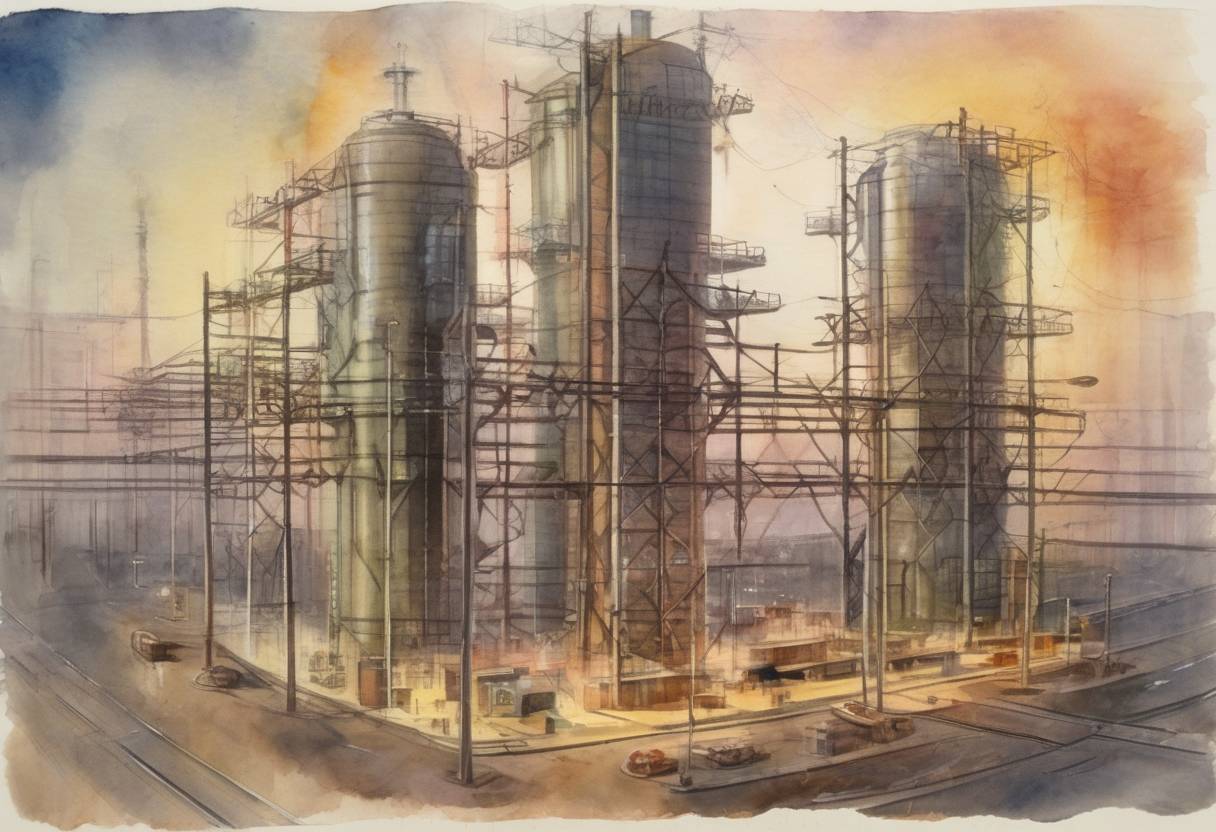
On December 2, 1942, a pivotal moment in scientific history occurred beneath the stands of Stagg Field at the University of Chicago. This event marked the beginning of the Atomic Age, as Enrico Fermi and his team successfully initiated the first controlled nuclear chain reaction. This groundbreaking experiment was part of the broader Manhattan Project, which aimed to develop nuclear weapons during World War II.
The concept of nuclear fission, where the nucleus of an atom splits into smaller parts, releasing a significant amount of energy, was first discovered in 1938 by German physicists Otto Hahn and Fritz Strassmann, with the theoretical explanation provided by Lise Meitner and Otto Frisch. This discovery led to the realization that a controlled chain reaction could potentially release vast amounts of energy, which could be harnessed for both civilian and military purposes.
Enrico Fermi, an Italian physicist who had fled fascist Italy, was a leading figure in nuclear physics. Under his guidance, the team constructed an experimental nuclear reactor, known as Chicago Pile-1 (CP-1). The reactor was a simple yet ingenious design, consisting of a lattice of uranium fuel and graphite blocks, which acted as a neutron moderator to slow down neutrons and sustain the chain reaction.
The reactor was assembled in a makeshift laboratory under the stands of Stagg Field. On the morning of December 2, 1942, Fermi and his team, including notable scientists such as Leo Szilard and Arthur Compton, gathered to conduct the experiment. As the control rods were gradually removed, the neutron activity increased, and at 3:25 PM, the reactor achieved criticality, sustaining a controlled chain reaction for 28 minutes.
The success of the CP-1 experiment demonstrated the feasibility of nuclear reactors and laid the groundwork for the development of nuclear power and weapons. It was a crucial step in the Manhattan Project, which ultimately led to the creation of the atomic bombs dropped on Hiroshima and Nagasaki in 1945, bringing an end to World War II.
The achievement at Stagg Field was kept secret until after the war, but it had profound implications for both science and international relations. The development of nuclear technology has since been a double-edged sword, offering potential for both energy production and unprecedented destructive power.
The event also marked the beginning of the Atomic Age, influencing global politics, leading to the Cold War nuclear arms race, and sparking debates on nuclear ethics and non-proliferation. Today, the site of the experiment is commemorated by the Henry Moore sculpture “Nuclear Energy,” serving as a reminder of this transformative moment in history.
In summary, the first controlled nuclear chain reaction on December 2, 1942, was a monumental scientific achievement that not only advanced our understanding of nuclear physics but also reshaped the geopolitical landscape of the 20th century.
Source: en.wikipedia.org