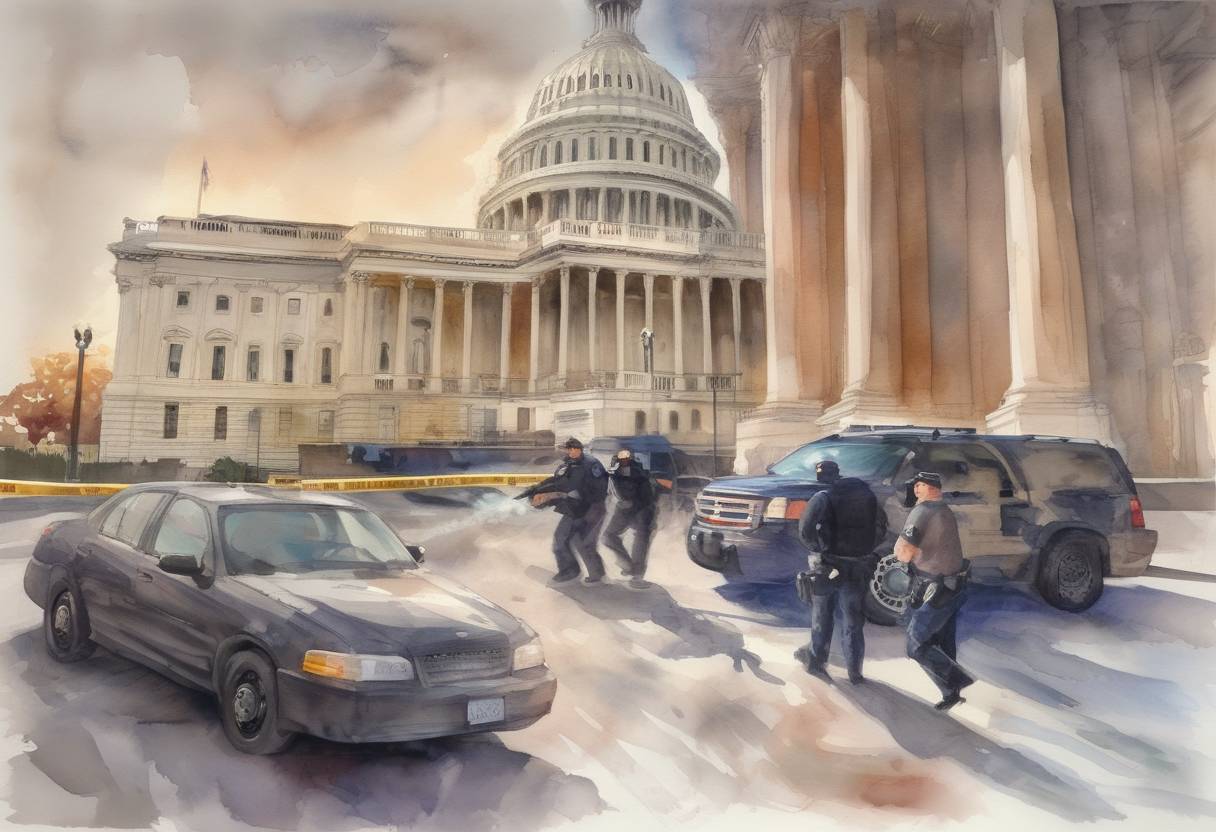
Shooting Incident at the United States Capitol - October 3, 2013
On October 3, 2013, a significant security incident occurred at the United States Capitol in Washington, D.C., involving a high-speed chase and a subsequent shooting. This event unfolded amidst heightened tensions in the capital due to a partial government shutdown.
Key Events Leading Up to the Incident
- The Government Shutdown: At the time, the U.S. government was in the midst of a partial shutdown, which began on October 1, 2013. This shutdown was due to a budget impasse in Congress, contributing to an already tense atmosphere in Washington, D.C.
The Incident
The Initial Breach: The incident began when a woman, later identified as Miriam Carey, attempted to breach a security barrier near the White House. She was driving a black Infiniti sedan and reportedly struck a security barricade, drawing the attention of law enforcement.
The High-Speed Chase: After the initial breach, Carey led law enforcement officers on a high-speed chase through the streets of Washington, D.C. The pursuit moved from the vicinity of the White House towards the U.S. Capitol.
The Shooting: The chase ended near the Capitol building, where Carey was shot and killed by law enforcement officers. The incident caused a temporary lockdown of the Capitol complex, as authorities worked to secure the area and assess the situation.
Aftermath and Consequences
Investigation: Following the incident, an investigation was launched to understand Carey’s motives and the circumstances leading to the chase. It was revealed that Carey, a 34-year-old dental hygienist from Stamford, Connecticut, had a history of mental health issues.
Public and Political Reaction: The incident drew significant media attention and raised questions about security protocols and the use of force by law enforcement. It also highlighted the challenges faced by individuals with mental health issues and the potential for such conditions to lead to tragic outcomes.
Security Measures: In the aftermath, there was a review of security measures around key government buildings in Washington, D.C., to prevent similar incidents in the future.
Broader Historical Significance
This event underscored the complexities of security in a city that serves as the political heart of the United States. It also brought to light the intersection of mental health issues and public safety, prompting discussions on how to better address these challenges within the community and law enforcement agencies. The incident remains a poignant reminder of the unpredictable nature of security threats and the importance of preparedness and appropriate response measures.