The First Meeting of John Lennon and Paul McCartney
1957 · Liverpool, United Kingdom
John Lennon and Paul McCartney met for the first time at a church fete in Liverpool, leading to the formation of The Beatles.
November 13, 1841
James Braid first sees a demonstration of animal magnetism, which leads to his study of hypnosis.
Manchester, United Kingdom | none
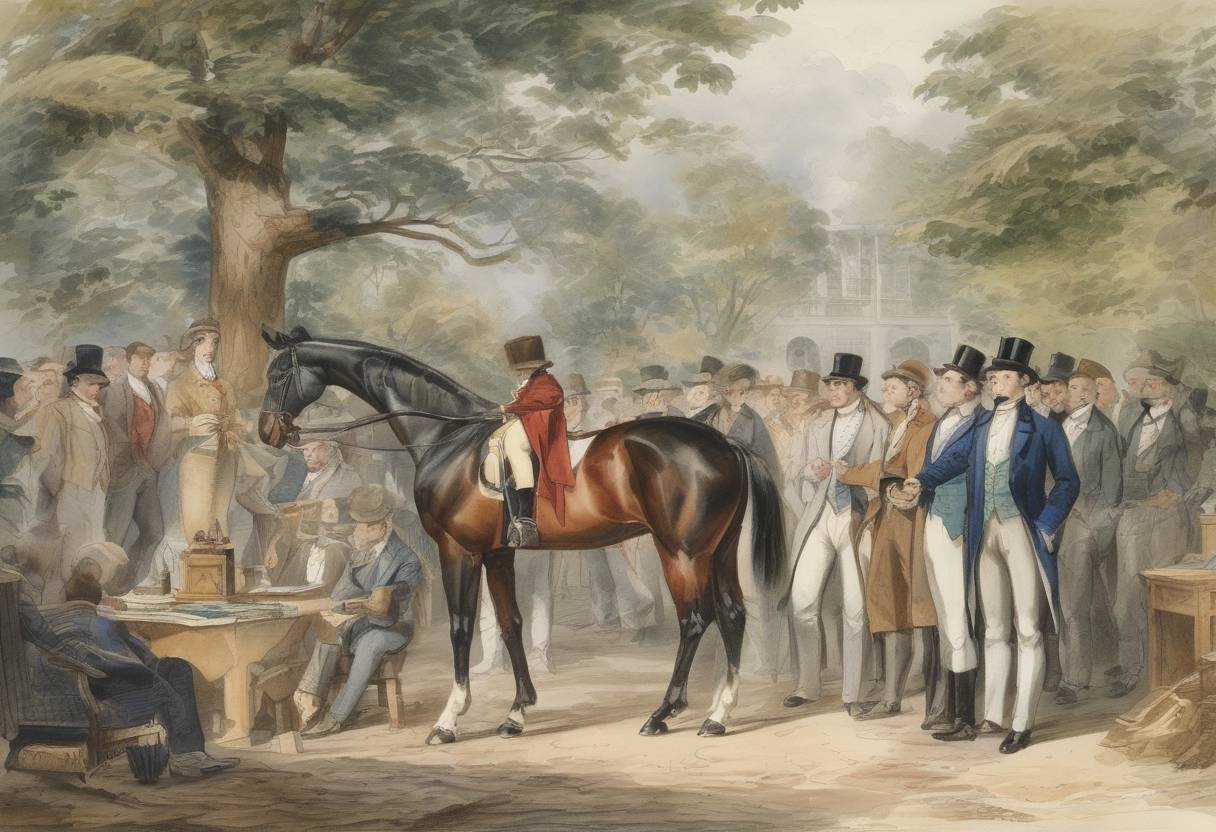
On November 13, 1841, James Braid, a Scottish surgeon, attended a public demonstration of animal magnetism in Manchester, England. This event marked a pivotal moment in the history of hypnosis, as it inspired Braid to embark on a rigorous study that would eventually lead to the development of modern hypnotic practices.
Animal magnetism, also known as mesmerism, was a theory developed by Franz Mesmer in the late 18th century. Mesmer believed that a natural energy transference occurred between all animated and inanimate objects, which he termed “animal magnetism.” He claimed that this force could be harnessed to heal various ailments. By the early 19th century, mesmerism had gained both popularity and skepticism, with many considering it pseudoscientific.
The demonstration that Braid attended was conducted by Charles Lafontaine, a Swiss mesmerist. Lafontaine’s performance involved inducing a trance-like state in subjects, which he claimed was due to the manipulation of animal magnetism. Braid, initially skeptical, was intrigued by the physiological effects he observed in the subjects, such as changes in their breathing and muscle tension.
Following this demonstration, Braid began his own experiments to understand the phenomenon. He hypothesized that the effects were not due to any magnetic force but rather a result of focused attention and suggestion. Braid coined the term “neuro-hypnotism,” later shortened to “hypnotism,” derived from the Greek word “hypnos,” meaning sleep. However, Braid emphasized that hypnosis was distinct from sleep, as it involved a heightened state of focused attention and suggestibility.
Braid’s work laid the foundation for the scientific study of hypnosis. He published several works on the subject, including “Neurypnology” in 1843, where he detailed his findings and methods. His approach shifted the understanding of hypnosis from mystical interpretations to a psychological and physiological phenomenon.
James Braid’s contributions significantly influenced the medical and psychological communities’ perception of hypnosis. His scientific approach helped legitimize the study of hypnosis, paving the way for its use in therapeutic settings. Today, hypnosis is recognized as a valuable tool in clinical psychology and medicine, used for pain management, anxiety reduction, and various other applications.
In conclusion, the demonstration Braid witnessed on November 13, 1841, was a catalyst for his groundbreaking work in hypnosis, transforming it from a fringe curiosity into a respected field of study. His legacy continues to impact the understanding and application of hypnotic techniques in contemporary practice.
Source: en.wikipedia.org